
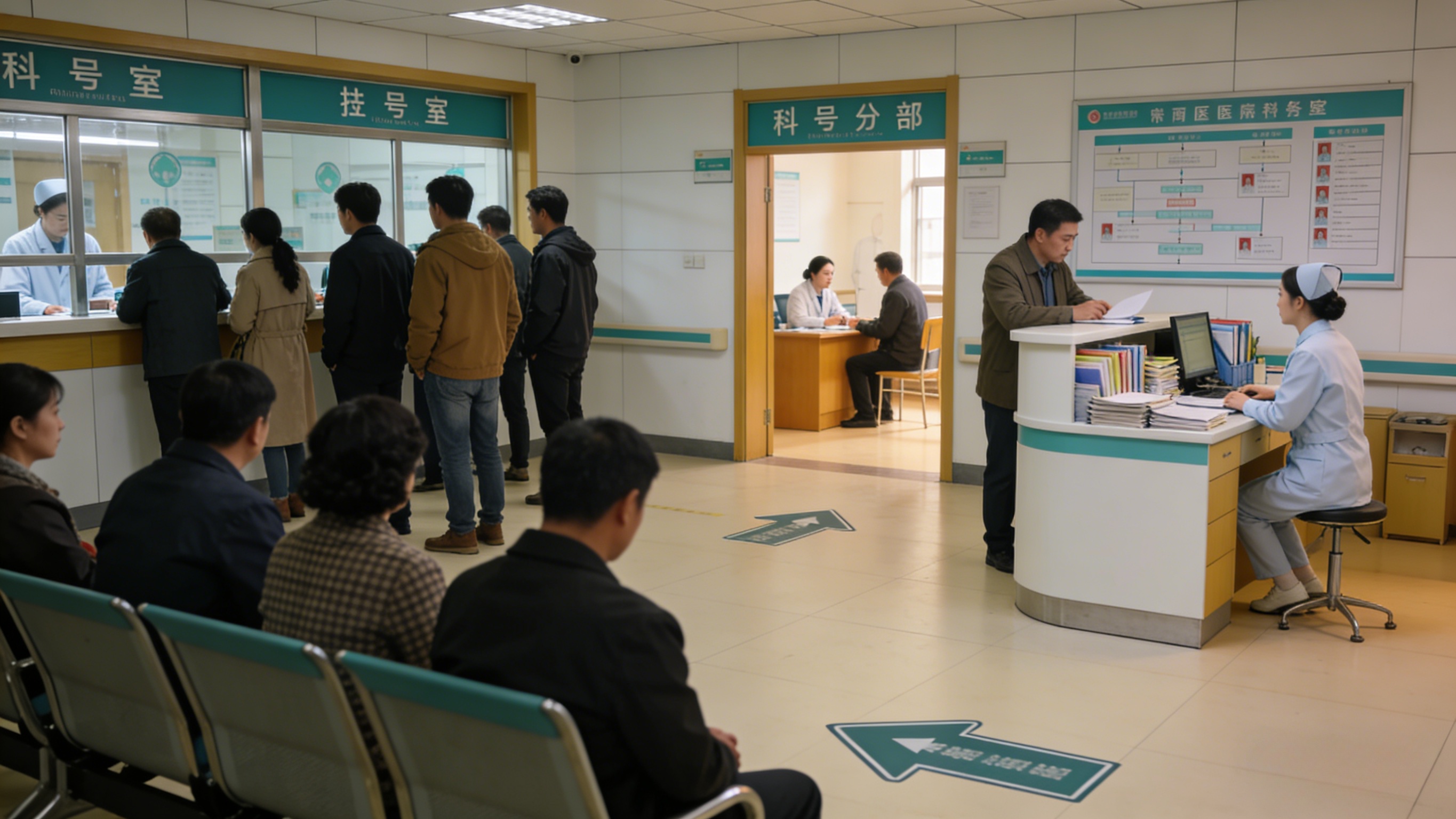
Walking into a large Chinese hospital can feel a bit like stepping into a major transport hub. There are queues, counters, screens calling numbers, people moving briskly between departments, and a steady hum of activity. It is efficient in its own way, but it is not always intuitive to visitors used to GP clinics and scheduled appointment slots.
With a clear picture of how registration, waiting, and time limits work (including the commonly mentioned “3-hour rule”), a hospital visit in China can shift from confusing to manageable, even reassuring.

Why Hospital Waiting Times in China Feel So Different
Many hospitals in China, especially public hospitals in major cities, are built to serve very high daily patient volumes. That scale shapes everything: how people line up, how consults are timed, and why so much of the process starts at a registration desk rather than in a waiting room with a booked appointment.
A common pattern is this: you register for a specific department and doctor, receive a queue number, then wait until your number is called. The “appointment” is often closer to “your place in today’s queue” than a fixed time.
The upside is that you can often see the right specialist quickly without weeks of lead time. The trade-off is that the morning rush can be intense, and the day can involve multiple short waits rather than one long one.
Step-by-Step. What Actually Happens During a Hospital Visit in China
Most outpatient visits follow a predictable rhythm, even if the environment feels hectic at first.
You start by registering (挂号). Registration is where you choose the department (and sometimes the clinician), pay the initial fee, and receive a number. That number governs your place in line.
After the consult, you may be sent to do tests (bloods, imaging) or procedures. Results might be available quickly, or you may need to return later the same day. Prescriptions are commonly filled at the hospital pharmacy before you leave.
A single visit can involve several “micro-queues” at different points: registration, the clinician’s door, payment, tests, then pharmacy. Once you expect that, it becomes easier to plan your time and energy.
What is “3-Hour Rule” to China Hospital
Travellers often hear about a “3-hour rule” and assume it is a formal national policy. It usually is not. In practice, it refers to a local hospital rule that a registration number (or registration slip) is only valid for a limited window, often around a few hours.
In plain terms, it can mean:
· You register, receive your number, and you are expected to present yourself to the department and complete your consult within the validity window.
· If you miss that window (or do not check in with the right desk), your number may expire and you may need to register again.
Why would a hospital do this? Because it keeps queues moving and discourages people from “holding” a place in line while leaving the hospital campus for long stretches. It also helps departments manage the day’s load with fewer no-shows.
Rules vary by hospital and city. Some places have a shorter window, some longer, and some handle it more informally. Even within the same hospital, different departments can apply timing rules differently.
If you are told there is a time limit, treat it as real. Stay close to the department, keep an eye on calling screens, and ask staff what counts as “checked in” for your visit.
What Affects Hospital Waiting Times in China
Two people can visit the same hospital on different days and have completely different experiences. That is normal in a system where volume and timing play such a big role.
After you factor in the “queue number plus time window” approach, the main influences become easier to predict:
· Day and time of day
· Department popularity
· Senior specialist clinics versus general clinics
· Public holidays and school holiday periods
· Whether tests are required before the clinician can finalise advice
· How familiar you are with the process and signage
Some elements are outside your control, yet many are not. A simple choice like arriving early can be the difference between a streamlined morning and a long, stop-start afternoon.

Differences of Public Hospitals & International Clinics in China
Many large hospitals have multiple “lanes” of service. The standard public outpatient system is designed for high throughput, while international departments (or VIP clinics) are designed for comfort, language support, and more time per patient.
Costs, speed, and experience can differ substantially, so it helps to decide what you value most for this specific visit: price, speed, English support, or access to a particular specialist.
|
Feature |
Public outpatient clinics |
International departments / international clinics |
|
Access model |
Registration number and queue |
More appointment-based, often with set times |
|
Typical pace |
Fast-moving, busy waiting areas |
Calmer flow, fewer patients at once |
|
Language support |
Variable; English may be limited |
More likely to have English-speaking staff or interpreters |
|
Fees |
Generally lower |
Higher consultation and service fees |
|
Best for |
Straightforward issues, locals’ pathway to major hospitals |
Travellers, expats, complex explanations, time-sensitive visits |
International departments are not only about comfort. They can be practical when you need clear communication, have limited time in-country, or want support coordinating tests and follow-up.
6 Practical Tips for a Smoother Hospital Visit in China
A hospital visit goes better when you treat it as a process, not a single appointment. Bring patience, yes, but also bring a plan.
These habits tend to help most:
· Arrive early: Morning registration windows can move quickly, and popular departments fill up fast.
· Bring your essentials: Passport, any previous reports, a list of medications (with doses), and a short symptom timeline.
· Confirm the time window: Ask whether your registration number has an expiry and what you must do to remain active in the queue.
· Choose the right lane: If language clarity matters, an international department may be worth the higher fee.
· Plan for testing: Blood tests and imaging can add hours, even when the consult itself is brief.
A single sentence that saves stress: if your issue is non-urgent, avoid Monday mornings when possible.

How Long Does a Hospital Visit in China Really Take?
Even a minor health issue can take time when it involves a large hospital, multiple counters, and on-the-day testing.
Say you arrive early to register for a respiratory clinic. Registration takes 10 to 30 minutes, longer if you are still working out which department is right. You then wait for your number, which could be 15 minutes or well over an hour depending on the crowd.
The consult might be quick, sometimes under 10 minutes. If the clinician orders a blood test or a chest image, you may then queue again, complete the test, wait for results, and return to the clinician. Prescriptions are commonly filled at the hospital pharmacy, which can be another short queue.
It is wise to keep half a day free for anything beyond the simplest consult, even if you feel fine.
How Travel Planning Can Make Medical Visits in China Easier
When you are travelling, time pressure is real. You might be balancing a tight itinerary, jet lag, and the mental load of operating in another language. Hospital logistics can feel like one more moving part.
This is where structured trip planning can be genuinely helpful. Some travellers choose to arrange medical appointments as part of a broader medical tourism plan: health screening, dental work, specialist consults, then recovery time in a comfortable setting.
A boutique travel company like Three Bears Travel may assist by coordinating appointment requests, building the visit into your day-by-day plan, and arranging support like English-speaking guides or interpreters where appropriate. The goal is simple: fewer surprises on the day, and more confidence that you can get care without sacrificing your whole trip.

Quick FAQs travellers ask
Is the “3-hour rule” always exactly three hours? Not always. People use “3-hour rule” as shorthand for “your registration number has a limited validity window”. The exact timing can differ by hospital and department, so confirm at registration.
How long does a hospital visit take? It depends on queues and whether tests are ordered. International clinics and international departments often move faster because they run more on scheduled times and see fewer patients at once.
What should I bring? Passport, payment method, prior reports (paper or digital), a medication list, and a short written summary of symptoms in plain language. If you have allergies, write them down clearly.
Can I pay with foreign cards? Payment options vary. Many hospitals support local mobile payments widely; international departments and private clinics are more likely to accept international cards. If you are unsure, bring a backup option and ask your hotel or local support person what works at that hospital.
What if I do not speak Mandarin? Consider an international department, or arrange an interpreter. Even when a clinician speaks some English, registration and test counters may not, and those steps matter for staying within any time window tied to your number.