
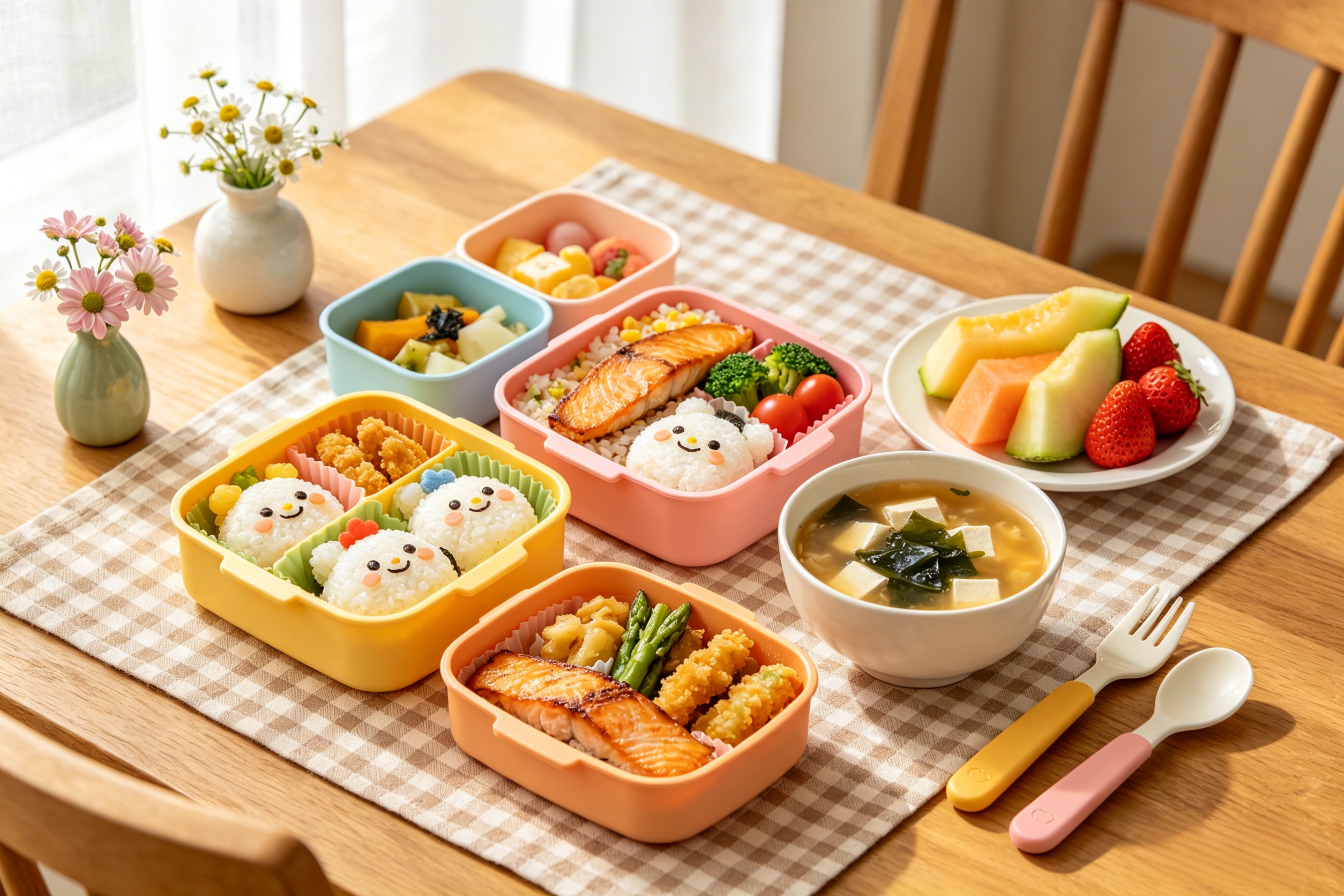
Japanese food can be a joy for families, though it helps to know where the easy wins are before you land. Parents often imagine a steady run of raw fish, unfamiliar textures, and children refusing lunch at 2 pm in the middle of a big sightseeing day. The reality is usually much kinder than that.
A good japan family food guide starts with one reassuring fact: a lot of everyday food in Japan already suits children. Rice, noodles, grilled chicken, mild soups, crisp fried food, soft sandwiches, fruit cups, and beautifully simple snacks are everywhere. If you are wondering what to eat in Japan with children, the answer is often much more familiar than expected.
That matters more than most parents expect.
Japan is also built for efficient eating. Meals arrive quickly, menus often include pictures, convenience stores are genuinely useful, and many restaurants specialise in one thing done well. For families, that creates less negotiation and more momentum. You spend less time searching for a safe option and more time actually enjoying the day. For more family travel insights and practical tips, check out Three Bears Travel.
 Why Japan food works so well for families
Many cuisines ask children to adjust to stronger spice, heavy sauces, or long shared meals. Japan often does the opposite. Flavours can be clean and mild, portions are manageable, and there is a strong culture of set meals, noodle shops, and quick casual dining.
This is one reason the phrase japan food kids family fits so neatly. Family travel in Japan tends to work because the food system itself is practical. A child who wants plain rice can often get it. A child who only wants noodles can usually have them. A child who needs a snack now, not in half an hour, can be sorted in minutes.
Even so, not every famous dish will be a hit. Some children love sushi immediately. Others would rather eat an egg sandwich from Lawson and call it a perfect lunch. That is not a travel failure. It is simply smart feeding children Japan style: flexible, calm, and realistic.
Best Japanese dishes kids will actually eat
When parents ask about what to eat Japan with children, the most reliable choices tend to be the least dramatic ones. Think texture, familiarity, and control. If kids can see the food, recognise the ingredients, and choose their own pieces, the meal usually goes better.
Here are the most dependable options.
|
Dish |
Why kids often like it |
Where to find it |
Typical spend |
|
Udon |
Soft, thick noodles in a mild broth |
Udon chains, food courts, stations |
AU$7 to AU$12 |
|
Ramen |
Comforting noodles, rich flavour, customisable |
Ramen shops in every city |
AU$8 to AU$15 |
|
Conveyor belt sushi |
Small plates, visual choice, fun format |
Kaiten-zushi chains |
AU$15 to AU$25 per child |
|
Onigiri |
Easy handheld rice snack |
7-Eleven, Lawson, FamilyMart |
AU$2 to AU$4 each |
|
Tempura |
Crisp coating, familiar fried texture |
Tempura shops, family restaurants |
AU$10 to AU$18 |
|
Yakitori |
Bite-sized grilled chicken on skewers |
Izakaya, casual eateries, markets |
AU$2 to AU$5 per skewer |
|
Tamagoyaki |
Slightly sweet rolled omelette |
Sushi shops, markets, breakfast spreads |
AU$3 to AU$6 |
|
Egg salad sandwiches |
Soft bread, mild filling |
Convenience stores |
AU$3 to AU$5 |
If your child is hesitant, start with one familiar anchor food and one new food. Rice and karaage. Udon and tempura. Sandwiches and fruit. Japan rewards this kind of gentle approach.
Conveyor belt sushi for family meals in Japan
For many families, conveyor belt sushi is the meal that changes everything. Children can see the food arriving, choose what looks appealing, and eat immediately. That removes a lot of the uncertainty that makes restaurant meals difficult.
It is interactive without being chaotic. Plates are small, so there is very little risk in trying something new, and the bill is simple because each plate colour has a fixed price. Hot items like chips, noodles, fried chicken, and custard desserts are often available from a touch screen menu as well, which helps children who are not ready for sushi itself.
Popular chains you will see across Japan include:
· Sushiro
· Kura Sushi
· Genki Sushi
For families with picky eaters Japan can feel unexpectedly easy in these restaurants. One child may happily eat salmon nigiri, another may only want tamago and chips, and a parent can still enjoy a proper meal. Everyone wins, and nobody has to sit through a long wait while the kitchen works out a special request.
Ramen, udon, tempura and other easy wins for children
Ramen is often the dish that converts cautious eaters. The aroma is familiar, the format is clear, and the bowl feels like comfort food. Soy-based and miso-based broths are usually the safest place to begin. Avoid spicy miso unless your child already likes heat.
Many ramen shops display plastic food models or photo menus outside. That makes ordering much easier than parents imagine. Pointing is perfectly acceptable, and in many places you can choose extra noodles, reduced spice, or simple toppings. In Tokyo and Sapporo, ramen is everywhere, though almost any city will have plenty of family-friendly options.
Udon is even gentler. The noodles are softer and thicker than ramen, the broth is often lighter, and children who dislike complex textures often do well with it. Tempura is another reliable choice because it speaks the universal language of crisp fried food. Prawn tempura, pumpkin, sweet potato, and fish all tend to go down well.
A few dependable menu picks can save the day:
· Udon: soft noodles, mild broth, easy to share
· Karaage: Japanese fried chicken, often a fast success
· Tamagoyaki: slightly sweet egg, soft texture
· Yakitori: grilled chicken pieces, simple flavours
· Plain rice: useful alongside stronger dishes
 Convenience stores and food halls for feeding children in Japan
Australia has good convenience stores in the practical sense. Japan has convenience stores that can rescue an entire family itinerary.
This is where Japan quietly shines.
7-Eleven, Lawson, and FamilyMart sell fresh onigiri, egg sandwiches, hot snacks, yoghurt, fruit packs, noodles, juices, and desserts that are genuinely good. If you need breakfast before an early train, a picnic lunch for a park, or a fast dinner after a long day at Disneyland, they are enormously helpful. A lunch for four can cost less than a single casual meal in many tourist-heavy areas.
Department store food halls, often called depachika, are another strong option. These basement food levels are clean, well organised, and full of choice: sushi boxes, grilled fish, croquettes, salads, fruit, bakery items, and sweets. Parents can assemble a meal that suits different appetites without forcing everyone into one restaurant.
This matters when energy drops late in the day. Instead of pushing on until someone melts down, you can pick up a mix of safe foods and eat back at the hotel or in a nearby public seating area if available. Family travel improves quickly when food stops being a daily test. For more inspiration on how to keep your family happy and healthy on the road, visit Three Bears Travel.
How to handle picky eaters in Japan without turning meals into a fight
Parents often worry that picky eaters Japan will become a bigger problem because the food feels unfamiliar. In practice, many children relax once they see how much choice there is. Small portions help. Visual menus help. So does the fact that trying one bite never commits them to a whole plate.
The best strategy is not to force a cultural performance at every meal. A child does not need to love natto, sea urchin, or octopus to eat well in Japan. They need enough confidence and enough familiarity to stay open.
A steady approach usually works better:
· Start with control: let children choose their own plate at conveyor belt sushi or select their own onigiri at the convenience store
· Use familiar textures: noodles, fried chicken, rice, eggs, bread, and fruit build confidence fast
· Offer one new item: pair a safe favourite with a small taste of something different
· Avoid pressure: enthusiasm from parents works better than insistence
· Repeat gently: children often reject something once and accept it a few days later
Many families notice a shift by the end of the first week. The child who refused sushi on day one may suddenly eat cucumber rolls, salmon nigiri, or miso soup without hesitation. That happens because Japan makes food visible, accessible, and low risk.
Food allergies and dietary restrictions in Japan
This is the area where extra preparation matters. Japan is improving, though allergen communication can still be uneven, especially in smaller independent restaurants. Soy, sesame, wheat, egg, shellfish, and fish stock appear in many dishes, sometimes in places parents would not expect.
Severe allergies need a plan, not guesswork. Carry printed allergy cards in Japanese, keep medication accessible, and avoid relying on improvised explanations during busy meal periods. If the allergy is serious, it is sensible to identify a few reliable restaurants in advance and use convenience stores for simpler packaged items with labels.
Useful precautions include:
· Bring a Japanese allergy translation card
· Check ingredient labels carefully at convenience stores
· Be cautious with broths and sauces
· Ask about fish stock, even in vegetable dishes
Vegetarian travel is more possible now than it once was, though still patchy outside larger cities and temple dining settings. Kyoto is often the easiest place to find vegetarian-friendly meals, including shojin ryori, the refined Buddhist temple cuisine that uses no meat or fish.
Practical ordering tips for feeding children in Japan
A little restaurant strategy goes a long way. Eat slightly earlier than the local dinner rush if you want more space and a calmer room. Carry wipes and a small snack. If a place has vending-machine ordering, take your time and match the photo to what your child is likely to eat rather than what seems most exciting in the moment.
Family restaurants, train station eateries, shopping centre food courts, and specialty noodle chains are usually the lowest-stress choices. Tiny counter-only venues can be brilliant for adults, though not always ideal with tired children and prams.
A few phrases or habits can make meals smoother:
· Point clearly: photo menus and display models are there to be used
· Ask simply: “not spicy” and “plain rice” are often enough
· Share wisely: many children prefer tasting from a parent’s meal before ordering their own
· Snack proactively: do not wait until everyone is exhausted
The best japan food kids family strategy is not to chase perfection. It is to keep meals flexible, easy, and varied enough that the whole family stays in good form for the experiences that brought you to Japan in the first place. When food works, everything else tends to work better too.
 FAQ for Food Guide for Families in Japan
Navigating meals in Japan with children can seem daunting, but it quickly becomes a delightful adventure. Equipped with the right strategies and understanding, you can turn mealtime into one of the most enjoyable parts of your family journey.
What are the best child-friendly meals in Japan?
Udon, ramen, conveyor belt sushi, onigiri, and yakitori are all great choices that kids often enjoy.
How can I find meals if my child is a picky eater?
Allow your child to select dishes from conveyor belt sushi or convenience store items to encourage exploration without pressure.
Are there any budget-friendly meal options in Japan for families?
Absolutely. Convenience stores offer affordable meals, and dishes like udon and ramen are budget-friendly choices.
How can I manage food allergies in Japan?
Carry allergy translation cards in Japanese and frequent places with clear labelling like convenience stores, where ingredients are listed.
Is vegetarian food available in Japan?
While it's more challenging, vegetarian options are available in larger cities and temple dining settings like Kyoto.
What should I do if my child dislikes seafood?
Opt for dishes like tempura, ramen, or egg sandwiches, which can be found throughout Japan and are typically well-received by children.
Can I find Western food options in Japan for kids?
Yes, many convenience stores and family restaurants offer familiar foods like sandwiches, fried chicken, and chips.
How do I order food in Japanese restaurants with a language barrier?
Use photo menus or point to food models outside restaurants. Simple phrases like “not spicy” are often sufficient in assisting your order.
For more expert family travel tips and destination guides, explore Three Bears Travel.