China rewards curiosity, but it can also ask a lot from travellers. Big distances, busy stations, hotel changes, and long touring days can wear people down faster than expected. That is exactly why a Yangtze River cruise stands out so strongly for older visitors.
For many people planning a senior travel China cruise, the real appeal is not only the scenery. It is the pace. You unpack once, settle into your cabin, and let one of China’s great landscapes come to you. The result is a trip that feels rich, calm, and deeply memorable without being physically draining.
Why a Yangtze River cruise works so well for senior travellers
A land itinerary in China can be extraordinary, though it often involves frequent transfers, early starts, and a fair bit of walking through airports, railway stations, and hotel lobbies. A cruise softens all of that. Your room stays the same, your meals are organised, and the river becomes both your transport and your view.
That is the main reason the yangtze river cruise seniors market keeps growing. It offers cultural depth without the logistical strain that sometimes comes with overland touring. For travellers over 60, that balance matters.
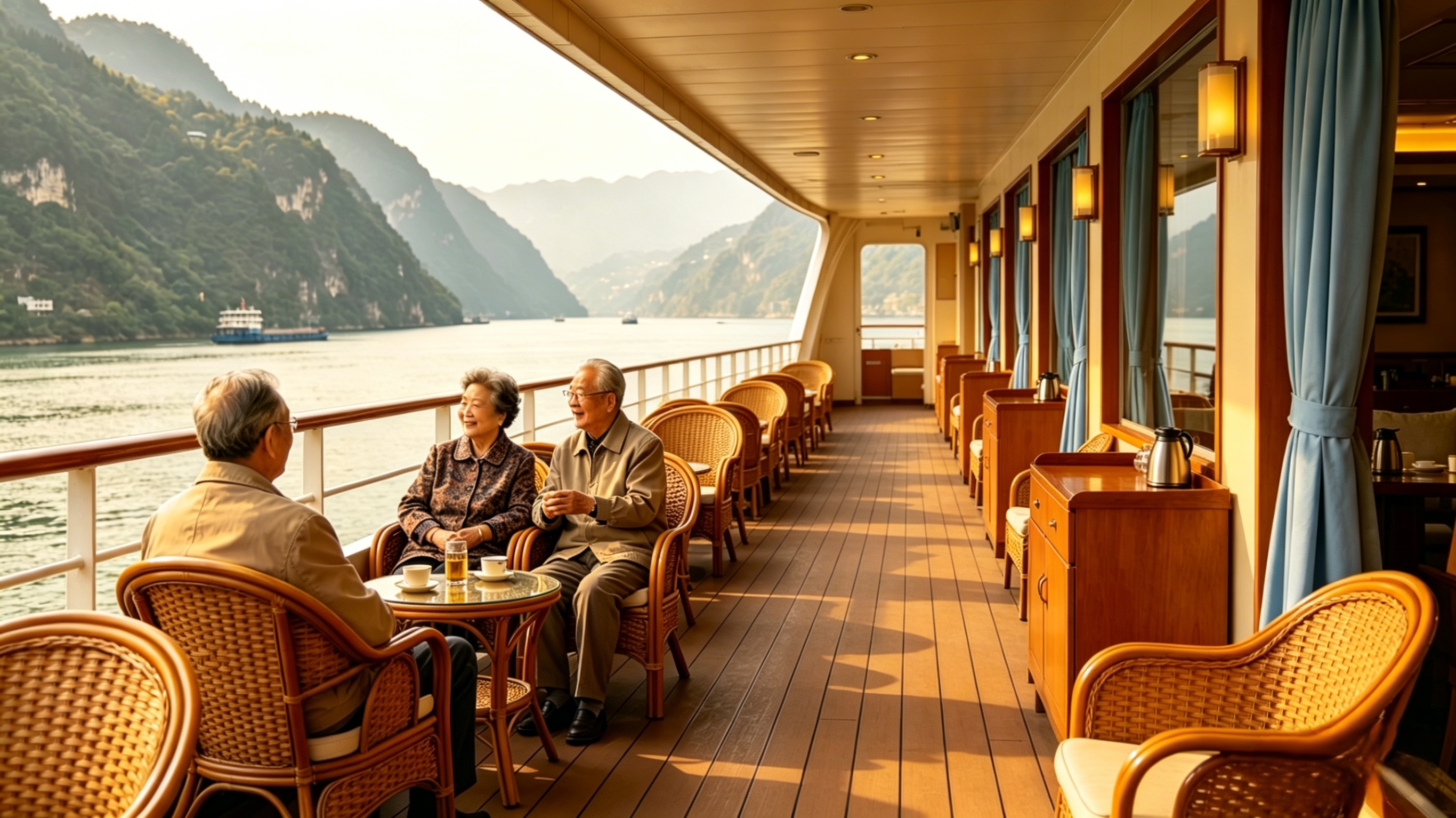
There is also a psychological ease to river cruising. Once you are on board, the rhythm becomes reassuring. Breakfast arrives at a predictable time, public spaces are close by, and there is always somewhere comfortable to sit with tea and watch the landscape pass. Instead of spending energy on getting from place to place, you can spend it appreciating where you are.
A good cruise also builds rest into the trip naturally. Shore excursions are available, but they are not compulsory. If one morning you would rather stay on the observation deck than head out on an excursion, that is perfectly fine. You never feel as if you are “missing” the whole day because the cruise itself remains the experience.
After travellers have considered the practical side, these advantages usually stand out:
· No daily packing
· No constant hotel check-ins
· Meals in one place
· Gentle daily rhythm
· Scenic views from your cabin or deck
 What senior travellers see on a Yangtze River cruise
The scenery is the headline, and it deserves the attention it gets. The Three Gorges, Qutang, Wu, and Xiling, are among the most striking river landscapes anywhere in Asia. Sheer cliffs rise above the water, mist hangs in the valleys, and old settlements appear in places that seem almost impossible to build on.
This is not just pretty scenery. It is a corridor of Chinese history. The Yangtze has shaped trade, agriculture, poetry, warfare, engineering, and migration for centuries. When senior travellers say they want a trip with meaning rather than just movement, this route answers that wish beautifully.
Qutang Gorge is the shortest and often the most dramatic. Its walls feel close and powerful. Wu Gorge tends to feel softer and more atmospheric, especially when the weather brings haze over the peaks. Xiling Gorge opens the story out again, linking the natural beauty of the river with the modern scale of the Three Gorges Dam.
The dam itself surprises many visitors. Even travellers who usually prefer heritage sites often find it fascinating. It is one of the world’s largest engineering projects and gives context to the river’s modern role in Chinese life. On a thoughtful itinerary, the contrast between ancient landscapes and modern infrastructure becomes part of what makes the cruise memorable.
Why a Yangtze cruise is comfortable for travellers over 60
Comfort is often the deciding factor when comparing a cruise with a bus-and-hotel itinerary. Modern Yangtze ships are purpose-built river vessels rather than improvised boats. On stronger cruise lines, cabins are well-sized, bathrooms are private, climate control is standard, and public areas are arranged for long, easy viewing rather than constant activity.
That matters for the china river cruise over 60 market. Travellers are not only asking, “What will I see?” They are also asking, “How will I feel while seeing it?”
A yangtze cruise comfortable enough for older travellers usually includes several features that make daily life straightforward:
· Private cabins: a consistent personal space to rest, unpack, and enjoy the river in peace
· Onboard dining: Chinese and Western choices, with regular meal times and less guesswork
· Heating and air conditioning: useful across changing seasons and for travellers sensitive to temperature
· Observation areas: indoor lounges and outdoor decks for sightseeing without strenuous walking
· Cultural programmes: lectures, performances, and talks that add context without adding physical effort
For travellers who prioritise higher standards, ships such as Sanctuary Yangtze Explorer and Viking’s Yangtze programme are often considered among the stronger options. They tend to appeal to people who want a polished onboard experience, attentive service, and cabins that feel closer to premium hotel accommodation than basic transport.
The atmosphere on these cruises also suits many older travellers. It is social if you want company, quiet if you prefer your own space, and generally much calmer than fast-paced group touring. That flexibility is part of the charm.
Yangtze cruise shore excursions for elderly travellers
Excursions are where many people begin to worry, especially those researching yangtze cruise elderly travellers options. The good news is that not every stop is physically demanding, and most cruise staff are used to questions about pace, stairs, and walking distance.
The key is to ask in advance which excursions are best for travellers who want easier access. If you are booking through a private specialist such as Three Bears Travel, those preferences can be communicated before boarding, which often makes the whole trip feel more relaxed from day one.
Here is a practical guide to some of the best-known stops.
|
Excursion |
Walking level |
Stairs |
Senior-friendly notes |
|
Fengdu Ghost City |
Moderate |
Some, depending on route |
Often manageable when accessible paths are used |
|
White Emperor City (Baidicheng) |
Moderate |
Yes |
Some departures offer options that reduce climbing, including cable car access where available |
|
Lesser Three Gorges |
Light to moderate |
Minimal on the boat itself |
A popular scenic outing with manageable activity for many travellers |
|
Shennong Stream |
Light to moderate |
Minimal to moderate |
Known for beautiful tributary scenery and a gentler sightseeing pace |
|
Three Gorges Dam site |
Light to moderate |
Usually limited |
Good choice for travellers interested in modern China and broad viewing platforms |
This is where realistic planning helps. Some travellers in their late 60s and 70s are very active and happy with steps and uneven paths. Others prefer flatter walking and more frequent rests. Neither style is “better”. The best itinerary is the one that matches your own energy.
A simple set of questions can make excursion planning much easier:
· Ask early: Which shore visits have the fewest stairs?
· Be specific: Mention walking pace, balance issues, or knee concerns
· Check transport: Ask whether shuttle vehicles or cable cars are available
· Choose selectively: It is perfectly sensible to skip one excursion and enjoy the ship
 Embarkation and disembarkation logistics on a senior travel China cruise
The two main cruise gateways are Chongqing and Yichang. Most itineraries travel between these cities in one direction or the other. For older travellers, the point that matters most is not the map. It is how smoothly the transfer from hotel to ship is handled.
Private transfers make a noticeable difference. Rather than dealing with public transport, luggage management, and pier directions, many travellers prefer a pre-arranged vehicle from the hotel to the cruise terminal. For Australians and New Zealanders who want a calmer start, that service removes a great deal of uncertainty.
Boarding usually involves a gangway, and conditions can vary with water level and port arrangements. Most travellers manage this without major trouble, though it is wise to advise your planner in advance if you use a walking stick, need extra time, or prefer close assistance. Cruise staff are accustomed to helping, but advance notice is always useful.
Disembarkation deserves the same care. After several restful days on the river, the next part of the trip should not feel rushed. A private guide or driver meeting you at the end of the cruise can make the transition to a flight, rail connection, or hotel much easier.
If you want a seamless experience from start to finish, Three Bears Travel specialises in arranging private transfers and tailored support for senior travellers, ensuring every detail is taken care of.
How to combine a Yangtze River cruise with Beijing and Chengdu
Many senior travellers do not want the cruise to stand alone. They want it to sit within a broader China itinerary that still feels manageable. A very strong option is to pair the Yangtze with Beijing and Chengdu, creating a trip of around ten days that covers history, scenery, and wildlife without becoming exhausting.
Beijing brings imperial China into focus. The Forbidden City, Temple of Heaven, and Great Wall remain deeply rewarding, especially when touring is planned intelligently. Cable car access at suitable sections of the Wall can reduce strain, and some larger heritage sites offer internal transport that cuts down long walks.
Chengdu changes the tempo again. It is gentler, greener, and widely liked by older visitors for its easier pace. The panda base is a clear highlight, and the city’s tea culture gives the trip a softer rhythm after the grandeur of Beijing and the river landscapes of the Yangtze.
A well-paced version of this combination often looks like this:
· 3 days in Beijing
· 2 days in Chengdu
· 4 or 5 days on the Yangtze cruise
That structure gives travellers three very different expressions of China. You get imperial history, beloved wildlife, and one of the country’s great natural corridors, all without racing from one overnight stop to the next.
What to look for when booking a Yangtze River cruise for seniors
Cruises can look similar on paper, yet the experience can vary quite a lot once you compare ship quality, inclusions, and support on the ground. This is why older travellers often benefit from booking with a specialist that knows both the cruise product and the wider China itinerary around it.
For a yangtze river cruise seniors plan, the strongest arrangements usually include help before and after boarding, clear advice on accessible excursions, and realistic pacing across the full holiday. That is especially useful for first-time visitors to China.
When comparing options, pay attention to a few practical details rather than only the headline price. Cabin category, deck access, meal style, embarkation support, transfer arrangements, and the quality of English-language guiding all shape how comfortable the trip actually feels.
Travellers who prefer a more personal style of planning often choose private travel specialists with local experience, tailored itineraries, and on-the-ground support. That approach can work particularly well for couples and small groups who want the reassurance of structure without the rigid feel of a large coach tour.
For those seeking a truly stress-free experience, Three Bears Travel offers expert guidance and custom itineraries, making your Yangtze River cruise for seniors as comfortable and memorable as possible.
The Yangtze offers a rare mix of grandeur and ease. You can sit with a cup of tea, watch the cliffs slide by, listen to the history behind them, and feel fully engaged with China without being pushed too hard by the mechanics of travel. For many people over 60, that is not a compromise. It is exactly the point.
 FAQ: Yangtze River Cruise for Senior Travellers
Embarking on a Yangtze River cruise is a superb choice for senior travellers seeking an enriching journey through China's stunning natural and historical landscapes. Here are answers to some common questions about this exceptional travel option. Yangtze cruise provides an effortless travel experience with no need for constant packing or navigating complex itineraries. You unpack once and relax as the enchanting scenery unfolds.
Are meals and accommodation included on the cruise?
Yes, your accommodation is on the cruise vessel itself, ensuring a comfortable stay with all meals taken care of, featuring a blend of Chinese and Western options.
How physically demanding are the shore excursions?
Shore excursions vary in difficulty, but many are suitable for senior travellers, with flat pathways and optional activities. Always inquire about accessibility before booking.
How does a Yangtze River cruise compare with a land tour?
Cruising offers a relaxed, gentler pace compared to land tours, which often involve frequent hotel changes and extensive walking.
Can the Yangtze River cruise be paired with other destinations?
Certainly! Many itineraries combine the cruise with visits to Beijing and Chengdu, offering a diverse glimpse into China's imperial history, majestic landscapes, and unique wildlife.
What should I consider when booking a Yangtze River cruise?
Focus on ship quality, accessible excursions, and the level of onboard amenities. Choose reputable cruise lines known for their accommodation and service standards, such as Sanctuary Yangtze Explorer or Viking. For tailored advice and seamless arrangements, consider consulting with Three Bears Travel.