For many travellers, Japan’s hot spring culture is one of the country’s most memorable experiences. For older visitors, it can be even more rewarding: a quiet ritual that supports rest, gentle movement, better sleep, and a slower style of travel that feels restorative rather than rushed.
That is why a good onsen guide over 60 Japan should do more than explain bathing rules. It should also help travellers choose the right setting, understand the health considerations, and build an itinerary that balances comfort with tradition. For those seeking a seamless experience, Three Bears Travel specialises in crafting personalised Japan onsen journeys for seniors, ensuring every detail is tailored for comfort and authenticity.
Onsen have been part of Japanese life for centuries. People visit them not only to bathe, but to pause, recover, and reconnect with the body’s natural rhythm. For couples, friends, and small private groups, they can become the calm centre of a wider trip through Japan.
 Why Japan onsen seniors often enjoy the health benefits
The appeal of onsen begins with the water itself. Natural hot springs in Japan contain minerals that vary by region, including sulphur, bicarbonate, iron, and sodium chloride. Different springs are associated with different effects, and while they are not a replacement for medical treatment, many travellers value the gentle physical relief they can offer.
The most widely discussed onsen health benefits include support for circulation, reduced muscle tension, improved sleep, and relief from stiffness in joints. Warm mineral water can be especially welcome after a long flight, a day of walking, or several busy city stops.
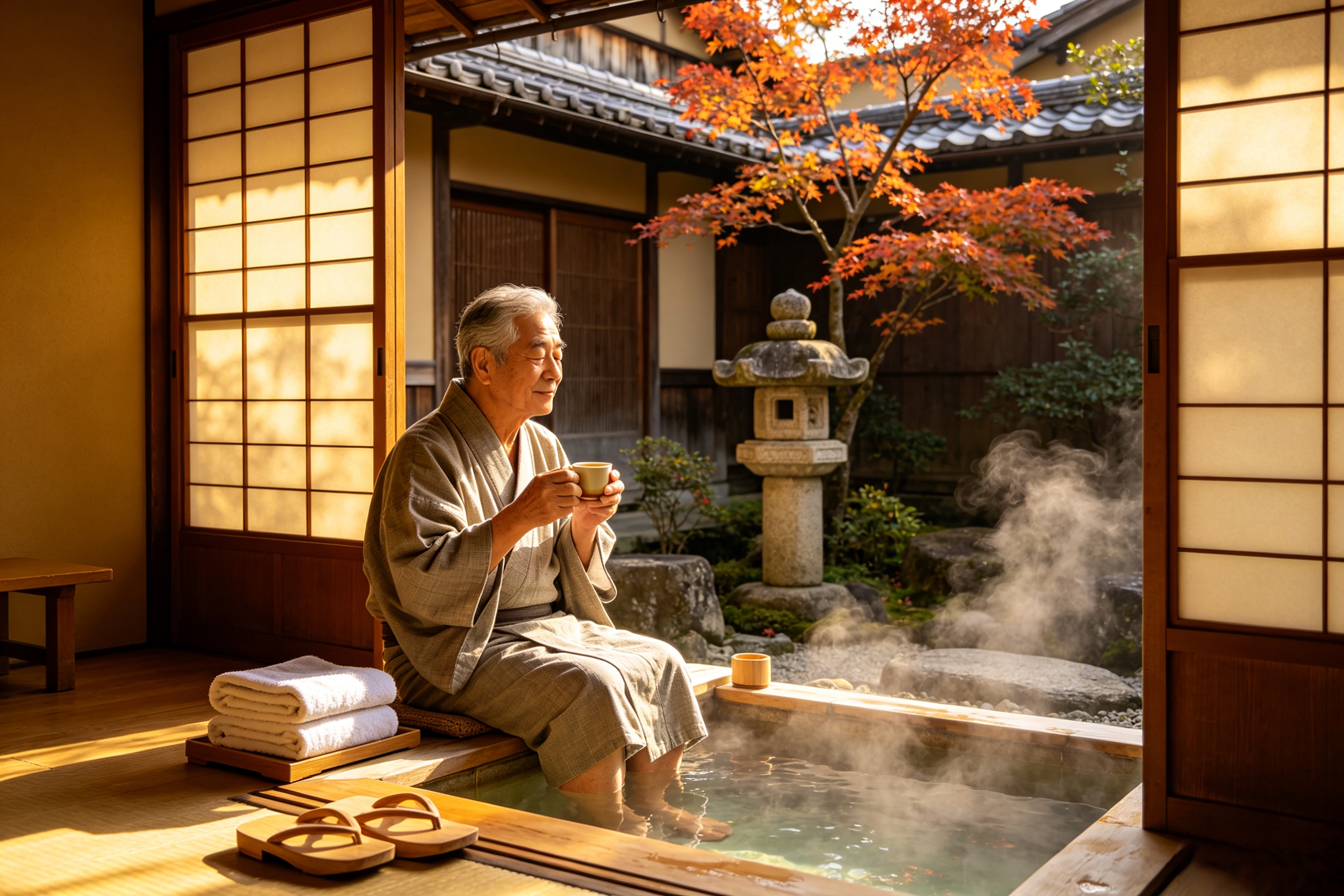
Japanese bathing culture also encourages a pace that suits senior travellers. You wash slowly, enter the bath gradually, soak quietly, then rest. That rhythm matters. Instead of treating a hot spring as a quick activity to tick off, onsen invites stillness.
A few benefits often mentioned by travellers over 60 include:
· Warmer joints and muscles
· A sense of calm after travel days
· Better sleep on onsen nights
· Gentle support for circulation
· Relief from general fatigue
For many people, the emotional effect is just as valuable as the physical one.
Choosing the right types of hot springs Japan elderly travellers can enjoy comfortably
Not every onsen experience feels the same, and this matters a great deal when planning for comfort, privacy, and mobility. Some baths are large and communal, some are attached to elegant inns, and some can be reserved for private use.
A traditional public bath can be charming, though it may feel daunting for first-time visitors. Resort towns with multiple bathhouses offer variety and atmosphere. Ryokan with private bathing facilities are often the easiest and most relaxing option for senior guests, especially those who prefer a quieter setting or need more time to move safely.
When choosing an onsen stay, it helps to think beyond the water temperature. Access to the bath, handrails, steps, floor surfaces, room layout, and the distance between guest room and bath all shape the experience.
Here are the main options many senior travellers compare:
· Public bathhouses: Affordable, traditional, and social, though they may involve stairs or busier changing areas
· Onsen resort towns: Multiple bath choices in one place, often with scenic streets and a classic atmosphere
· Ryokan with shared baths: A balance of tradition and comfort, often with excellent service
· Private family baths: Ideal for privacy, tattoos, mobility concerns, or travellers who feel unsure about communal bathing
Private baths are often the most practical choice for japan spa senior travel, especially for first-time visitors. Three Bears Travel can recommend properties with accessible private baths and help you reserve the right room for your needs.
Best Japan onsen destinations for senior travellers
Japan has hundreds of hot spring areas, though a handful stand out for accessibility, atmosphere, and ease of travel from major cities. These destinations work well for travellers who want cultural depth without complicated logistics.
Hakone is one of the simplest places to begin. Located about 90 minutes from Tokyo, it offers mountain scenery, views of Mt Fuji on clear days, and a strong range of ryokan from classic to contemporary. Many properties cater well to older guests, and private baths are easier to find here than in some more remote regions.
Kinosaki Onsen, near Kyoto, is another excellent choice. The town is known for its seven public bathhouses, linked by a pleasant, mostly flat walk through a charming centre lined with willow trees, bridges, and ryokan. Guests often stroll in yukata between baths, which gives the whole stay a sense of ritual and playfulness without feeling demanding.
Beppu in Kyushu offers scale and variety. It is often called Japan’s onsen capital, with thousands of hot spring sources and a wide range of bathing styles, including sand baths, mud baths, and steam baths. Travellers who want a bigger hot spring destination, with plenty of options and a more regional feel, often find Beppu rewarding.
The table below gives a simple comparison.
|
Destination |
Best for |
Travel style |
Senior-friendly advantages |
|
Hakone |
First onsen stay |
Easy add-on from Tokyo |
Strong ryokan choice, private baths, scenic relaxation |
|
Kinosaki Onsen |
Classic town atmosphere |
Slow two-night stay |
Flat walking routes, charming centre, bath-hopping at a gentle pace |
|
Beppu |
Variety and depth |
Regional hot spring focus |
Broad bath selection, longer restorative stay, unique bathing styles |
If a traveller wants only one onsen stop, Hakone is often the easiest introduction. If they want an onsen town with character and a walkable layout, Kinosaki is hard to beat.
Onsen etiquette for first-time senior travellers in Japan
The etiquette can seem strict from the outside, but in practice it is simple once you know the sequence. Most uncertainty disappears after the first visit.
Before entering the bath, you wash and rinse thoroughly at the shower station. This is essential. The bath itself is for soaking, not for washing. Swimwear is not worn in a traditional onsen, and small towels should not go into the water.
Many older travellers worry that the rules will feel intimidating. In reality, onsen tend to be quiet, respectful spaces. Staff are used to helping visitors, and private baths remove much of the pressure for those who prefer a gentler first experience.
A few etiquette basics are worth keeping in mind:
· Wash first: Cleanse and rinse your body fully before entering the bath
· No swimwear: Traditional onsen bathing is done without bathers
· Towels stay out: Keep your small towel beside the bath or on your head, not in the water
· Check tattoo rules: Some properties allow tattoos, others do not, and private baths are often the easiest solution
· Keep the atmosphere calm: Quiet voices suit the setting
Once the rhythm becomes familiar, many travellers find the etiquette reassuring rather than restrictive.
 Medical advice and safe onsen bathing for travellers over 60
Hot springs are soothing, but they are still a physical activity. Heat affects circulation, blood pressure, and energy levels, so a cautious approach is the best one, especially for older visitors or anyone managing existing health conditions.
Travellers should speak with their doctor before using onsen if they have heart disease, unstable blood pressure, diabetes, open wounds, or infectious skin conditions. It is also wise to ask about heat exposure if there is any recent illness, dizziness, or history of fainting.
Water temperature matters. Some onsen are very hot, and while regular bathers may love that intensity, first-time visitors often do better in baths below 42°C. Enter slowly, sit on the edge if needed, and keep the first soak short. Ten minutes is plenty to begin with.
Safe bathing habits are simple and effective:
· Hydrate well: Drink water before and after soaking
· Start short: Aim for 5 to 10 minutes for the first bath
· Avoid alcohol: Never enter a hot spring after drinking
· Listen to your body: Leave the bath straight away if you feel light-headed or overly warm
· Rest between soaks: A quiet sit in fresh air can be part of the therapy
This is one reason private ryokan baths are so popular with senior travellers. They allow people to bathe at their own pace, without feeling rushed or self-conscious.
Planning a Japan spa senior travel itinerary around onsen stays
An onsen-focused trip works best when hot spring nights are placed between more stimulating city stays. That balance gives the body time to recover and keeps the whole itinerary feeling enjoyable rather than packed.
A very effective pattern is Tokyo, then Hakone for two nights, then Kyoto, followed by Kinosaki Onsen for another two nights. Travellers with more time can continue to Kyushu for Beppu or another southern hot spring region. This structure creates natural pauses, and those pauses often become the highlights of the trip.
The value of this style of travel is not only comfort. It also changes how Japan is experienced. Cities feel sharper and more exciting when they are followed by mountain air, tatami rooms, quiet dinners, and a night soak before bed.
Bedfan’s overview of how body temperature is regulated during sleep notes that a slight drop in core temperature helps many people drift off more easily, which helps explain why an evening soak can be so effective.
When building a hot-spring-centred itinerary, it helps to prioritise:
· Private bath availability
· Easy rail or private transfer connections
· Minimal hotel changes
· Tatami or Western bed preferences
· Room-to-bath accessibility
Travellers looking for a more tailored plan often prefer private arrangements, especially when bathing comfort, mobility, or wellness needs are part of the decision-making. Three Bears Travel can design Japan itineraries around these priorities, combining city stays with carefully chosen ryokan, private guide support, and pacing that suits couples or small groups.
That kind of planning can be especially useful for travellers searching for japan onsen seniors advice that goes beyond generic tips. The right property, the right room type, and the right transfer can make all the difference.
Practical tips for an onsen guide over 60 Japan travellers can rely on
A little preparation makes the first hot spring stay much easier. Many ryokan provide yukata, towels, toiletries, and clear instructions, so there is rarely a need to pack much. The more useful task is checking details in advance.
Ask whether the property has private baths, how to reserve them, whether there are stairs to the bath area, and whether Western beds are available. Some senior travellers love the atmosphere of futon on tatami, while others sleep far better in a standard bed. There is no need to sacrifice rest for authenticity.
It also helps to think about timing. Arriving at a ryokan in the afternoon gives time to settle in, enjoy an early soak, have dinner, then bathe again before sleep. That slower schedule is part of what makes hot springs Japan elderly travellers appreciate so deeply.
Many people expect onsen to be a side activity. Quite often, it becomes the part of the trip they talk about most: the steam rising into cold evening air, the quiet after dinner, the sense of warmth lingering long after the bath is over.
For senior travellers, that is the beauty of onsen culture in Japan. It offers comfort without fuss, tradition without pressure, and a kind of rest that stays with you well beyond the trip itself.
 FAQ: Navigating Japan's Onsen Culture for Senior Travellers
For seasoned adventurers over 60, exploring Japan's onsen culture offers a unique blend of therapeutic relaxation, a touch of adventure, and an authentic cultural experience. Here are concise responses to common queries to help you on your journey.
What are the health benefits of onsen for seniors?
Onsen bathing aids circulation, eases muscle tension, supports restful sleep, and can reduce joint stiffness, offering seniors a therapeutic complement to their existing health regimes.
Are there private onsen options for first-time visitors?
Yes, many ryokans provide private family baths, ideal for those who seek privacy or have specific mobility or health considerations.
Which onsen destination should I choose for my first visit?
Hakone is an excellent starting point due to its proximity to Tokyo, scenic surroundings, and a wide array of ryokan catering to various needs.
What is the correct onsen etiquette seniors should know?
Always wash thoroughly before entering the baths, refrain from using swimwear, keep towels out of the water, and ensure quiet, respectful conduct.
How can I ensure my onsen experience is safe with existing health conditions?
Consult with your healthcare provider before visiting onsen, particularly if you have heart conditions or blood pressure concerns, and choose baths with temperatures below 42°C.
What should I pack for an onsen visit?
Pack minimal personal items, as ryokans generally offer yukata, towels, and toiletries. Confirm in advance about bath accommodations and sleeping arrangements for extra comfort.
How can I incorporate onsen visits into my Japan travel itinerary?
Plan onsen stays between bustling city experiences for natural pauses that refresh and provide respite, enhancing your overall journey through Japan. For a fully customised itinerary, Three Bears Travel offers expert guidance and support for senior travellers seeking the best of Japan’s onsen culture.