At sunrise Tokyo hums, yet within a couple of hours you can trade neon for cedar forests, city bustle for alpine air. A single day is enough to see snow-capped symmetry, mist over ancient lakes, and steam rising from onsen baths. With a smart plan and the right connections, Mt Fuji and Hakone feel close, calm, and deeply memorable.
Mt Fuji and Hakone: Japan’s classic natural escape
Mt Fuji is the mountain that anchors postcards and poems alike. Hakone wraps around it with crater lakes, ropeways, old teahouses, and warm mineral springs. The combination gives you big views and quiet moments, culture and comfort, all in one compact arc that works beautifully by private car or Shinkansen.
Three Bears Travel curates flexible days here, matching tempo, interests, and the season. Whether you prefer a driver at the ready or the speed and reliability of Japan’s bullet train, you can shape a day that feels unhurried yet full.
A route that captures the lot
Think of the day as a loop, beginning high on Fuji’s slopes at the 5th Station, sweeping across to Lake Ashi for a Cruise, then climbing to Komagatake for a cinematic panorama. Along the way you can meet the mountain’s story at the Fuji San World Heritage Centre, walk the thatched lanes of Sato Historical Village, and pause at Oshino Hakkai where snowmelt settles into crystal-clear ponds.
The order here follows the logic of light, crowds, and geography. Start with altitude while skies are clearest, then roll downhill toward the lakes. Keep time aside near sunset for the glow over Hakone’s hills, or for a long soak before the return.
Start high at the 5th Station
The 5th Station sits halfway up the mountain at roughly 2,300 metres, a natural balcony with shrines, lookout points, and that first breath of crisp air. On clear mornings the view runs across the Kanto Plain to the Pacific. You feel close enough to trace the mountain’s lava flanks with your fingertip.
-
Access is straightforward by private car on the Subaru Line outside winter closures, or by bus from Kawaguchiko.
-
Temperatures can be 10 degrees cooler than Tokyo, even in summer. Pack a light jacket.
-
The air is thinner. Take it easy, sip water, and let the views do the talking.
From here you can see the structure of Fuji’s slopes and the symmetry that artists have chased for centuries. Simple shrine gates and a few incense curls give the place a quiet sense of ritual without needing to climb higher.
Lakes and peaks: Lake Ashi Cruise and Komagatake Cable Car
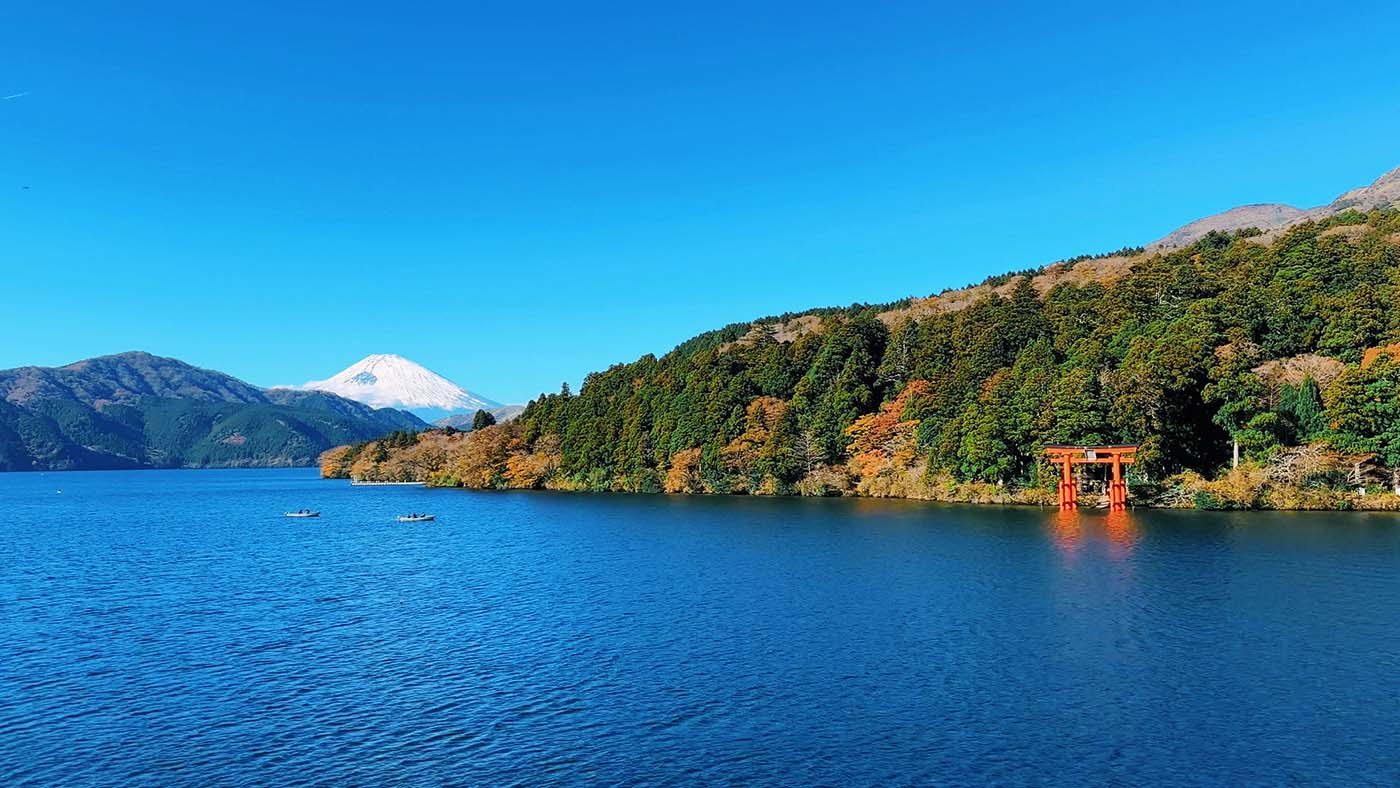
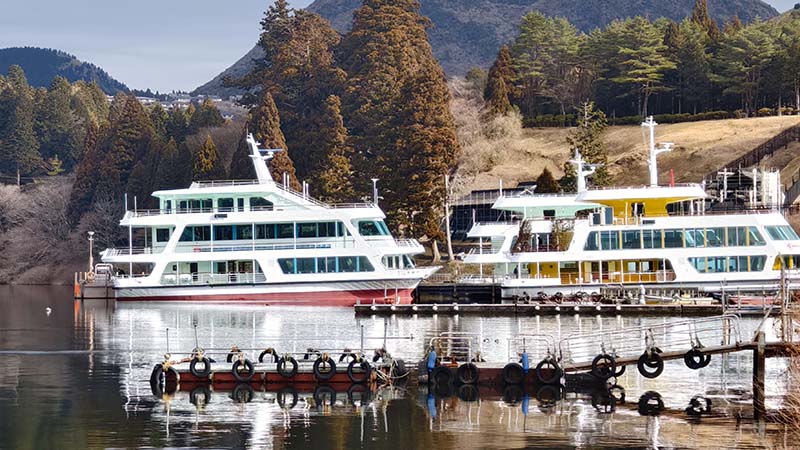
The day folds into gentle water and high ridgelines. Lake Ashi is a caldera lake, ringed with forest and dotted with vermilion torii. Board a boat and slide across dark water, reflections broken by the wake and, when the weather plays along, Fuji mirrored in the distance. A Lake Ashi Cruise turns the landscape into slow theatre.
Step ashore and ride the Komagatake Cable Car. In a handful of minutes you lift to a grassy summit with sweeping views of Fuji San, Sagami Bay, and the green ripple of Hakone National Park. Even if clouds soften the horizon, the movement between elements is part of the joy. Water, cable, sky.
Tip: The light often sharpens toward late afternoon. If your timing is flexible, set Komagatake for later in the day, then head straight to your onsen.
Stories behind the mountain: Fuji San World Heritage Centre and Sato Historical Village
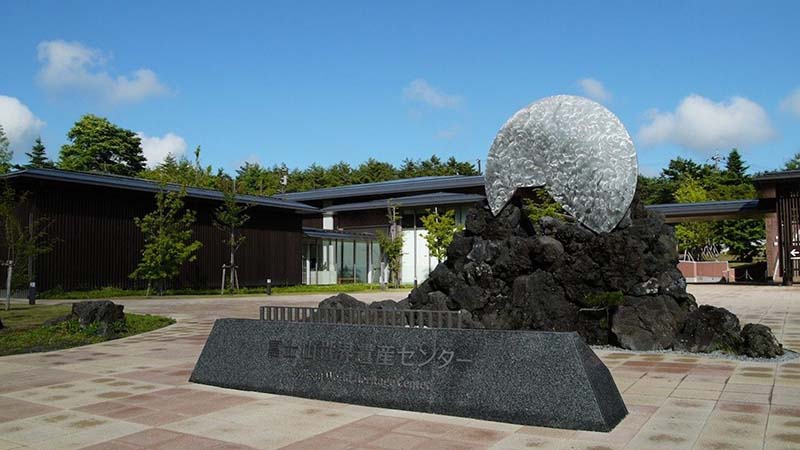
Great mountains collect stories. The Fuji San World Heritage Centre gathers them in one place, with architectural lines that echo a volcanic cone and exhibits that trace geology, faith, art, and climbing history. It is a compact visit that deepens everything you see outside.
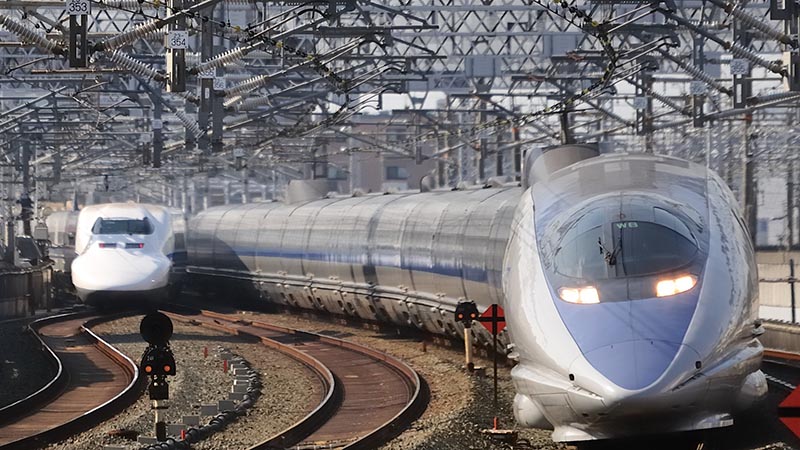
Not far away, Sato Historical Village preserves thatched-roof houses in a setting of bamboo, streams, and little craft studios. Expect quiet lanes, looms and washi, a chance to try on a yukata or browse a potter’s shelves. If you have seen photographs of a thatched hamlet framed by Fuji, you will recognise this spirit. It makes a gentle counterpoint to the high-tech speed of a Shinkansen.
Water shaped by snow: Oshino Hakkai
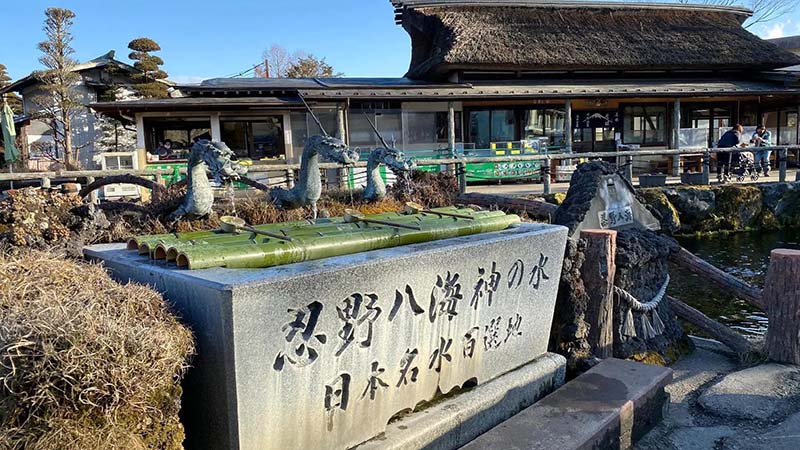
Oshino Hakkai is the pause you did not know you needed. Eight ponds gather water filtered through decades of volcanic rock, so clear you can watch reeds, pebbles, and koi in a slow dance. Small bridges and wooden walkways connect the ponds, and in the right light the mountain sits perfectly behind the rooftops.
-
Bring cash for small bites and local craft stalls.
-
Be mindful where photos are allowed, and step carefully around the water’s edge.
-
Early morning or late afternoon cuts the crowds and polishes the surface for reflections.
Rest and reset: an onsen ryokan in Hakone or Mishima
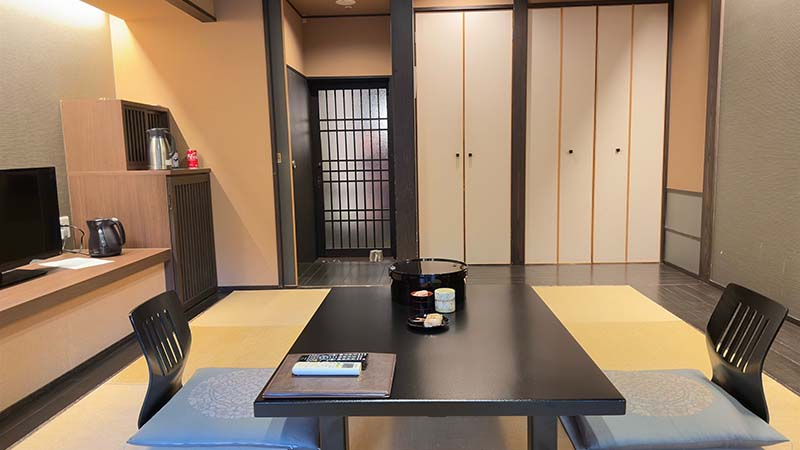
Soaking in mineral-rich water is as much a part of the day as sightseeing. With an onsen ryokan in Hakone, you can slip from bath to tatami room, then to a seasonal kaiseki dinner. In Mishima, springs feed public baths and hotels, and the town sits right on the Tokaido Shinkansen line, which makes the ride back effortless.
Onsen etiquette is simple:
-
Rinse before entering the bath.
-
Towels stay out of the water.
-
Keep voices low, relax, and linger.
If you have tattoos, check policies in advance. Many places now welcome tattooed guests, or offer private baths by reservation.
How to get there and around
Tokyo is your launchpad. You can travel purely by rail and bus, combine the Shinkansen with local lines, or opt for a private car for door-to-door ease.
From Tokyo Station or Shinagawa, the Shinkansen reaches Odawara in about 35 minutes. From there, the Hakone Tozan network covers the lake and cable cars. Alternatively, ride the Shinkansen to Mishima in about 45 minutes, meet a driver, then climb into Hakone from the west with fewer crowds. Private car routes from central Tokyo to Mt Fuji average two hours without peak traffic, then it is a scenic transfer across to Hakone.
Here is a quick snapshot of common approaches.
|
Starting point |
Primary mode |
Typical time to first stop |
Good for |
Notes |
|
Tokyo Station to Odawara |
Shinkansen |
35 min |
Hakone-first loop |
Connect to Hakone Tozan for Lake Ashi and Komagatake |
|
Tokyo Station to Mishima |
Shinkansen |
45 min |
West-to-east arc |
Pickup for Mt Fuji sites, finish in Hakone or Mishima onsen |
|
Central Tokyo to 5th Station |
Private car |
2 hr |
Early summit views |
Direct to altitude, flexible route linking Oshino and Lake Ashi |
|
Shinjuku to Kawaguchiko |
Limited Express + bus |
2 hr 15 min |
Budget rail option |
Good for Fuji San World Heritage Centre and nearby sites |
Three Bears Travel can arrange pick up at either Odawara or Mishima, then tailor the order of stops to suit weather and crowd patterns.
Sample day trip timetable
This timing keeps a steady rhythm with room for coffee stops and photos. Adjust to taste.
|
Time |
Plan |
|
07:00 |
Depart Tokyo by Shinkansen to Mishima, or meet your private car in the city |
|
08:00 |
Coffee in Mishima or service area, quick briefing on weather and visibility |
|
09:00 |
Mt Fuji 5th Station for views, shrine visit, short walk |
|
10:30 |
Fuji San World Heritage Centre, then drive to Sato Historical Village |
|
12:15 |
Lunch near Lake Kawaguchi or Saiko, try hoto noodle stew |
|
13:30 |
Oshino Hakkai for photographs and a stroll |
|
14:30 |
Cross into Hakone, Lake Ashi Cruise |
|
15:30 |
Komagatake Cable Car to the summit, weather permitting |
|
17:00 |
Check in to an onsen ryokan in Hakone or Mishima, soak and recharge |
|
19:30 |
Shinkansen back to Tokyo from Odawara or Mishima, or stay overnight |
Private car or Shinkansen: which suits your style
Both work brilliantly. Your choice depends on pace, flexibility, and how much you want to cover.
Private car
-
Door-to-door pickup, no transfers with luggage
-
Freedom to pivot for weather and light
-
Easy to fit in low-key stops and photo detours
-
Ideal for families, small groups, or travellers with limited mobility
Shinkansen first, local transport later
-
Fast and smooth between cities
-
Predictable schedules, frequent departures
-
Pair with taxis or short transfers for key spots
-
Efficient if you prefer to stay in Hakone for the night
Hybrid
-
Bullet train to Mishima or Odawara, meet a driver for the mountain and lake circuit
-
Shaves time on the outbound leg while keeping flexibility on the ground
Three Bears Travel can book reserved seats, line up drivers who know the best car parks and vantage points, and coordinate timing so you are not stuck waiting between modes.
When to go and what to bring
Clarity and colour swing by season.
-
Winter: Crisp air and the highest odds of a clear Mt Fuji. Cold temperatures on the 5th Station, icy patches possible.
-
Spring: Cherry blossom frames the water and village corners from late March to mid April. Views can be hazy in the middle of the day.
-
Summer: Lush greens and climbing season. Afternoon cloud build-up is common. Aim for morning peaks, then lakes and museums later.
-
Autumn: Fiery maple around Hakone and the Fuji Five Lakes from late October into November. Photographers’ favourite.
Pack light layers, comfortable walking shoes, a compact umbrella, sunscreen, and a small towel for onsen. Cash helps for rural stalls and parking. IC cards and QR payments are widely accepted in Hakone itself.
Weather shifts quickly around mountains. A flexible schedule is your best friend. If clouds cap the peak, slide the high viewpoints later and start with lakes or the World Heritage Centre.
Photography and quiet habits
Great photos often come from a calm routine.
-
Morning at the 5th Station, late afternoon at Komagatake, and golden light on Lake Ashi offer the strongest compositions.
-
If you plan tripod work, keep it compact and be mindful of foot traffic.
-
Avoid stepping into farm plots around Oshino Hakkai. They are working fields.
-
In shrines and museums, check for signage. Some interiors ask for no photos.
Beyond images, give yourself gaps with no lens at all. Five minutes leaning on a railing, watching cloud shadows drift over the mountain, will fix the day more than any burst mode.
Food and drink along the way
Regional flavours carry the landscape into your meal.
-
Hoto noodle stew in Yamanashi, thick handmade noodles with pumpkin and mountain vegetables
-
Fresh water trout and ayu, grilled with salt by the lakes
-
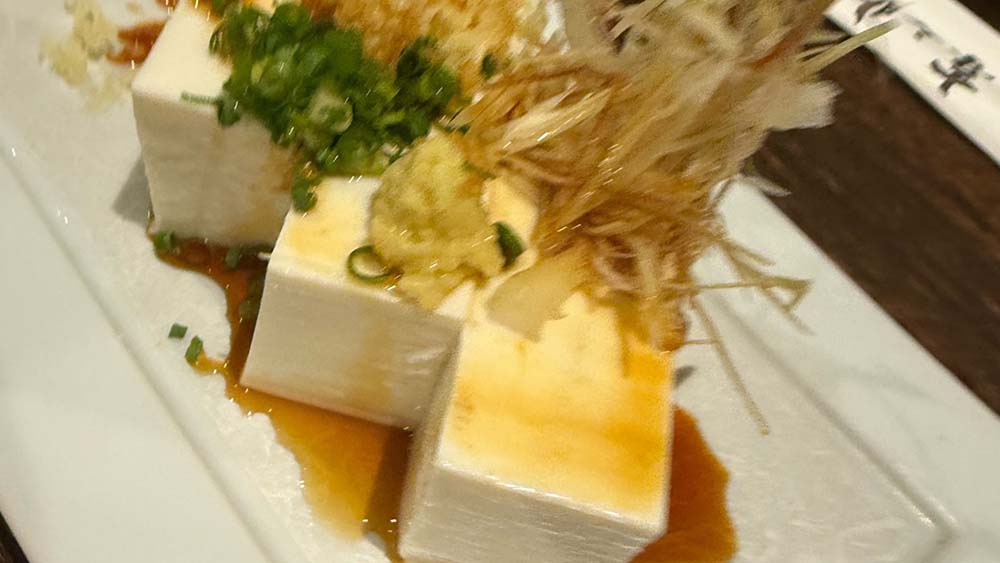
Hakone tofu and yuba, delicate and silky
-
Black eggs from volcanic steam at Owakudani, when open, a fun mark on the day
-
Wasabi ice cream, soba, and local soft-serve at roadside stops
Tea houses around Lake Ashi pair green tea with wagashi sweets. In Mishima, small izakaya near the station pour Shizuoka sake and craft beer for a relaxed post-bath chat.
Small details that refine the day
-
Passes: The Hakone Freepass covers boats, buses, and cableways. The Fuji Hakone Pass is designed for travellers linking both regions. Validity and routes change, so check the latest map.
-
Closures: Ropeways and cables can pause for wind or volcanic gas precautions. Build in an alternate view, like the old Tokaido cedar avenue or the Hakone shrine path.
-
Crowds: Weekdays are calmer. If you need a Saturday, start early, book timed entries where offered, and keep lunch outside peak hours.
-
Luggage: Forward your suitcase to the next hotel and day-trip with a small bag. Three Bears Travel can arrange takkyubin service.
-
Accessibility: Many boats and cable cars are wheelchair-friendly. Drivers can position the car close to entrances and adapt routes for gentle gradients.
A tailored day with Three Bears Travel
Planning is simpler when one team holds the threads. Three Bears Travel builds days around your priorities, from quiet photo stops to hands-on craft sessions and dietary needs. A capable driver-guide, reserved Shinkansen seats, tickets in hand, and rooms booked at a favourite onsen ryokan remove friction so you can devote your attention to the landscape.
Options to consider:
-
Private car from Tokyo with early access to the 5th Station
-
Shinkansen to Mishima, mountain circuit by car, onsen, return by rail
-
Overnight in Hakone after dinner, first light at the lake, and a late morning train back
Call time and pick up point are set around your body clock. If jet lag is in the mix, a mid-morning departure with a late return might feel better than a dawn start.
A day on Fuji’s slopes and Hakone’s shores is a balance of contrasts. Ice-fed ponds and steaming baths, fast trains and quiet boats, grand views and the soft hush of cedar. With a clear plan and thoughtful timing, it feels both efficient and deeply human, the kind of day that stays with you long after you roll back into Tokyo lights.
Want more Japan travel itineraries? Click here
If you have any other questions, feel free to click here and get in touch with us.
If you need a personalized travel plan, feel free to click here and let us help you.