
Getting an eye check while travelling is one of those practical tasks that can quickly turn urgent. A bit of grit under a contact lens, sudden redness, a prescription that feels “off”, or simply wanting a new pair of glasses at a better price can all send you looking for care.
China has a large, well-developed ophthalmology network, from specialist centres focused only on eyes to ophthalmology departments inside major public hospitals. For international visitors, the experience can be surprisingly efficient, but it helps to know what’s realistic to do on a short trip and what’s better left for home.
Understanding Eye Hospitals in China
China’s eye-care landscape is broad. In big cities you can usually choose between specialist eye hospitals and the ophthalmology department of a general public hospital. In smaller cities, you may have fewer choices, but there is still often a public hospital clinic that can handle routine care and common problems.
Specialist Eye Hospitals and Public Hospital Ophthalmology Departments
When people search for eye hospitals in China or ophthalmology hospitals China, they are usually seeing a mix of large specialist institutions, private clinics, and public hospitals with strong eye departments. The best option depends on what you need and how much time you have.
Here’s a simple comparison to help set expectations.
|
Option |
Best for |
Typical strengths |
Possible drawbacks for travellers |
|
Specialist eye hospital |
Eye-only problems, routine checks, quick diagnostics |
High patient volume, focused equipment, streamlined testing |
Busy; English may still be limited outside major cities |
|
Public hospital ophthalmology department |
General medical setting, eye issues with other health concerns |
Access to wider hospital services and referrals |
More steps and admin; clinics can be crowded |
|
International clinic (where available) |
Communication and comfort |
English support, simpler process |
Higher cost; may refer out for diagnostics |
If your need is straightforward, many travellers find a specialist eye hospital the most direct path because everything is organised around eye care only.
How the Public Eye Hospital System Works
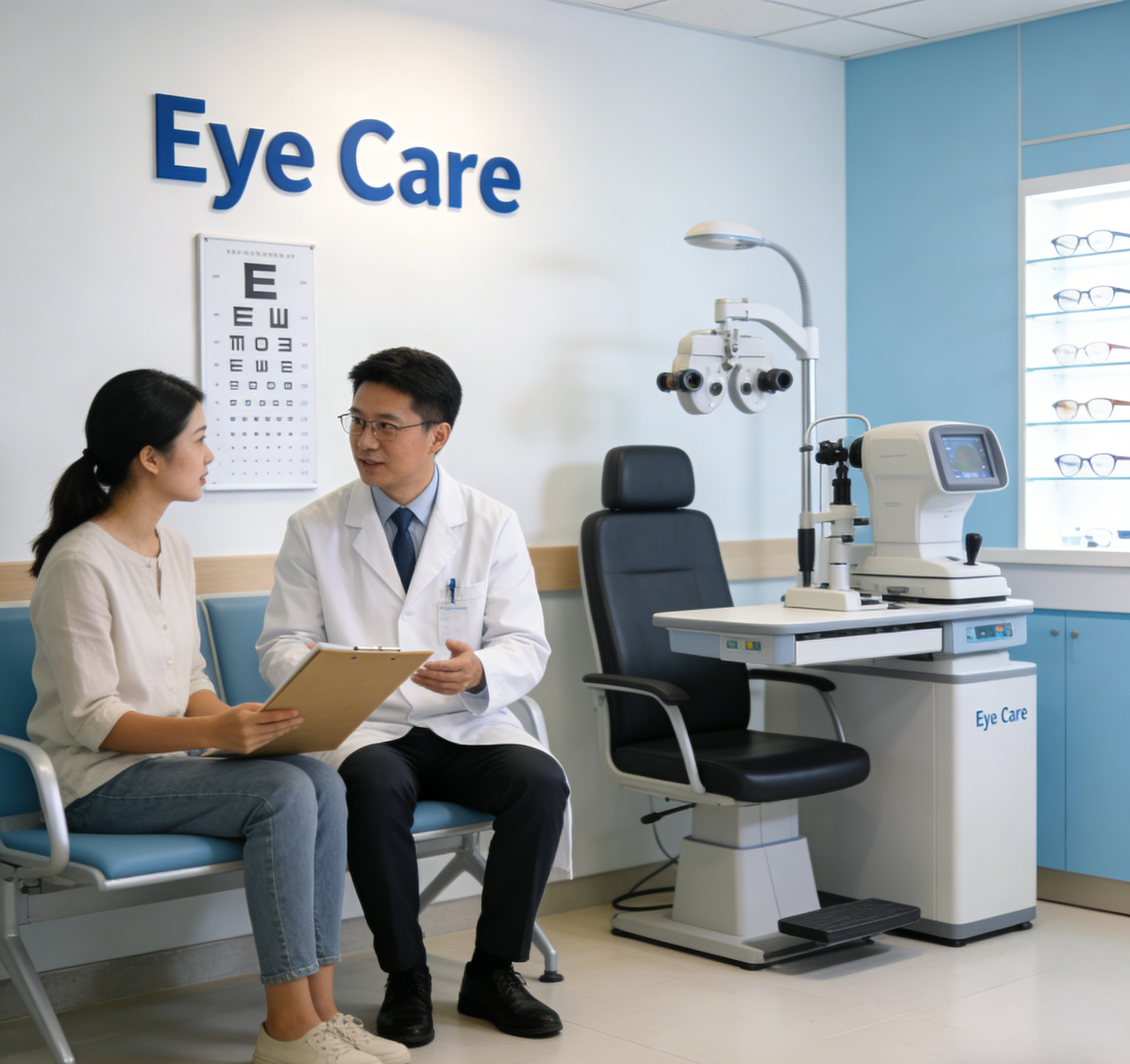
The eye hospitals China public system generally runs through registration, a short triage, consultation, then tests if needed. Payment is often done in stages as you move through the visit. This can feel unfamiliar if you are used to one bill at the end.
In many locations, you may see:
· A registration counter (sometimes with self-service kiosks)
· A consultation room for an initial assessment
· Testing rooms for refraction, intraocular pressure, retinal imaging, or other checks
· A return consultation to review results and plan next steps
Large public hospitals can be extremely busy. That does not always mean slow clinical work, but it can mean more time spent in queues and more effort working through a system designed for locals.
Eye Care Services Most Relevant for Travellers
Short-term travel is not the time to take on complex treatment plans unless it’s genuinely urgent. The most traveller-friendly services are the ones that are quick, clear, and easy to follow up when you return home.
The safest approach is to treat eye care in China as a practical option for checks, basic diagnostics, and optical services, while planning major procedures in your home country where follow-up is simpler.

Routine Eye Examinations and Vision Testing
Routine examinations are widely available and can be a good use of time if you have symptoms or you simply want your eyes checked. In many clinics you can get:
· Visual acuity testing (distance and near)
· Refraction (the prescription test)
· Basic slit-lamp exam (front of the eye)
· Intraocular pressure screening (useful for glaucoma risk)
· Retinal checks if equipment is available
If you wear contact lenses, it’s wise to mention the brand and wearing schedule, and ask whether your eyes show dryness or irritation. Travellers often underestimate how flights, air conditioning, and city pollution can affect comfort.
Prescription Glasses and Optical Services
Getting glasses made is often one of the most convenient eye-related tasks to do while travelling. In many cities, optical shops can produce standard single-vision lenses quickly once you have a prescription, and you can choose from a wide range of frames.
This is especially suitable if you:
· Lost or broke your glasses
· Want a spare pair for travel
· Need a fresh prescription after noticing strain or headaches (often linked to screen use and fatigue)
Before you order, confirm lens type, coatings, and timing for pick-up. If you have a stronger prescription, astigmatism, or need progressive lenses, production can take longer and accuracy matters more, so allow extra time.
It also helps to be prepared so the visit stays smooth.
· Passport or a photo of it on your phone
· Your current prescription or a photo of it: Including pupillary distance if you have it
· Contact lens details: Brand, base curve, diameter
· Symptoms timeline: When it started, what makes it better or worse
· A list of allergies and current medicines
|
Eye Care Service |
China (CNY/USD) |
New Zealand (NZD/USD) |
Australia (AUD/USD) |
USA (USD) |
|
Routine Eye Exam |
¥100–¥300 ($15–$45) |
$60–$90 NZD ($36–$54) |
$60–$90 AUD ($40–$60) |
$80–$200 |
|
Refraction (Prescription Test) |
Often included |
Included or $30 NZD |
Included or $30 AUD |
$40–$80 |
|
Basic Slit-Lamp Exam |
Included in exam |
Included |
Included |
Included |
|
Intraocular Pressure Screening |
Included in exam |
Included |
Included |
$20–$50 extra |
|
Retinal Check (if available) |
+¥50–¥150 ($7–$22) |
+$30–$50 NZD ($18–$30) |
+$30–$50 AUD ($20–$33) |
+$50–$100 |
|
Single-Vision Glasses (standard) |
¥200–¥600 ($30–$90) |
$150–$300 NZD ($90–$180) |
$150–$300 AUD ($100–$200) |
$100–$400 |
|
Progressive/Complex Lenses |
¥800–¥200 ($120–$300) |
$400–$700 NZD ($240–$420) |
$400–$700 AUD ($270–$470) |
$300–$800 |
Prices are approximate and may vary by city, clinic, and frame/lens choices. Currency conversions are rounded for clarity. Always confirm with the provider for the latest rates.
Eye Care Services Best Avoided During Short-Term Travel
Some services are technically available, but short visits are not a great fit. The main issue is follow-up. Eyes can change quickly after procedures, and complications, while uncommon, are much easier to handle with your regular clinician nearby.
If your schedule is tight, it is usually best to avoid:
· Elective vision correction surgery (LASIK/SMILE): Requires screening, careful aftercare, and check-ups over weeks
· Non-urgent cataract planning: Pre-op measurements and post-op monitoring matter
· Complex retinal or glaucoma treatment plans: Often involve staged visits and medication adjustments
· Cosmetic eye procedures: Risk can outweigh convenience when travelling
Urgent care is different. Sudden vision loss, severe pain, trauma, or chemical exposure needs immediate assessment wherever you are.
Ophthalmology Access and Waiting Times in China
Many visitors are surprised by how quickly they can get assessed, especially in major cities with high-volume eye services. The experience varies by city, day of week, and whether you choose a specialist hospital or a general public hospital.
Fast Specialist Access and Short Waiting Times
Searches about ophthalmology waiting times China often come up because the system can move quickly once you are in the right place. In busy clinics, the waiting room may look packed, yet patients cycle through efficiently.
Same-day appointments can be possible for routine checks, though you may still wait during peak hours. Early mornings and weekdays are often easier than weekends and public holidays.
If you are travelling with a private guide or local support, they can sometimes help you choose a suitable facility and reduce the friction of registration and payment steps.
Diagnostic Testing Efficiency in Eye Hospitals
A strong point in many eye hospitals is the availability of on-site testing. It is common to be sent for imaging or measurements immediately after an initial consult, then return to the clinician with results.
For travellers, this can be reassuring because you may get clarity quickly on common issues like:
· Dry eye and irritation
· Conjunctivitis (viral or bacterial patterns)
· Foreign body sensation
· Changes in refraction
· Elevated eye pressure screening results that need follow-up
Even when treatment is simple, ask for a written summary of findings in English if possible, or at least a photo of the Chinese notes and test printouts to share with your optometrist at home.
Eye Care in China for International Patients
The quality of medical care can be high, but your experience as a visitor often depends on communication, paperwork, and how comfortable you feel in a busy clinical setting.
What Foreign Visitors Should Expect at Eye Hospitals
For ophthalmology in China for foreigners, the practical reality is that many hospitals are built around local workflows. You may need to show identification, pay through kiosks, and move between rooms quickly when called.
Expect a few common patterns:
· Short consults that focus on key findings
· Direct referrals to testing rooms
· Payment steps at multiple points
· Prescriptions that may use Chinese brand names for drops
Bring patience and keep your schedule flexible that day, even if the medical side is quick. If you are unwell or anxious, consider attending with someone who can help you keep track of the steps.
Language Support and Communication Considerations
Language is often the make-or-break factor. Major hospitals in Beijing, Shanghai, Guangzhou, and other large cities may have international clinics, English-speaking staff, or at least some clinicians comfortable with basic English. Outside those centres, it can be more limited.
A practical way to reduce misunderstandings is to prepare simple phrases and visuals before you go. Translation apps can work well for symptoms and instructions, but medical nuance can still get lost.
Write down:
· Which eye is affected (left, right, both)
· Pain level and type (sharp, gritty, throbbing)
· Vision changes (blur, double vision, flashes, floaters)
· Contact lens use and last wear time
If you are organising your trip with a boutique travel company like Three Bears Travel, you can access reliable local assistance for medical visits, including eye care appointments. Our support ensures that arranging and attending medical services in China is smooth and stress-free, giving you peace of mind throughout your journey.
Is Ophthalmology Care in China Suitable for You?
A good rule is to match the service to your time, your comfort with follow-up, and the seriousness of the issue. China can be an efficient place to get checked, but it is not always the best place to start a long treatment pathway when you are only visiting briefly.
When Eye Care in China Makes Sense for Travellers
If you want something done promptly and you can reasonably finish the process during your trip, local care can be a smart choice.
· Quick reassurance: A professional check when you are worried about redness, irritation, or a mild vision change
· Practical fixes: Refraction testing, replacing broken glasses, contact lens-related checks
· Fast diagnostics: Same-day imaging or pressure screening when a clinician recommends it
This approach suits many travellers, including first-time visitors who want peace of mind without rearranging their whole itinerary.
When to Consider Eye Treatment at Home Instead
Some situations are better managed in Australia or New Zealand, even if you could access treatment while abroad. The reason is not necessarily quality, but continuity and ease of follow-up.
Consider waiting until you are home if you need:
· Ongoing monitoring over weeks or months
· A procedure with scheduled post-op reviews
· Complex medication changes requiring close supervision
· Detailed discussion of long-term risks and benefits in your preferred language
If you do seek care in China for an urgent issue, aim to leave with copies of results, a clear medication list, and a recommended follow-up timeframe to give your home clinician a strong starting point.
Making Eye Checks in China a Simple, Low-Stress Task
If an eye issue pops up mid-trip, the most helpful move is to keep the goal narrow: get assessed, confirm whether it’s minor or urgent, and decide the next step with clear information.
For travellers who aren’t confident with medical Mandarin, language barriers can make visiting an eye clinic feel daunting. If you’re travelling with a company like Three Bears Travel, having a local guide available can make the experience much smoother and more reassuring. With a bit of support, it’s easier to plan for a half-day window, bring your prescription details, and get the quick testing and advice you need—so you can get back to enjoying your trip with confidence.