Why Smart Pacing Makes Beijing Senior Travel Enjoyable
The challenge of Beijing’s top attractions isn’t their remoteness - it’s their sheer size. This distinction is important. With a well-planned route, early starts, and private transportation between key sites, the city becomes far more accessible for travellers in their 60s, 70s, and beyond.
The most rewarding Beijing itinerary for seniors typically follows a simple principle: visit just one major historical site per day. This approach leaves ample time for quieter cultural experiences, leisurely lunches, and a restful break at your hotel before dinner.
Embracing a slower pace also enhances the journey itself. Imperial Beijing was designed to impress through its scale, ceremony, and symbolism—qualities best appreciated when you’re not in a hurry.
· Begin early, enjoy relaxed afternoons
· Focus on one major site each day
· Keep walking distances short
· Use private transport whenever possible
· Schedule regular rest stops and seating breaks
 A relaxed 4-day Beijing over 60 itinerary
This plan balances Beijing’s grand imperial landmarks with gentler local experiences. Each day has a clear focus, and none of them asks too much of your legs.
|
Day |
Morning |
Afternoon |
Pace notes |
|
1 |
Tiananmen Square early visit |
Forbidden City central axis only |
Flat terrain, large open spaces, return to hotel after lunch |
|
2 |
Mutianyu Great Wall by cable car |
Scenic rest, easy wall walk, early return |
Best done slowly, avoid extra climbing |
|
3 |
Temple of Heaven Park at 8am |
Free time, tea, hotel rest |
Flat and peaceful, plenty of benches |
|
4 |
Hutong rickshaw tour |
Courtyard home visit, dumpling or tea experience |
Mostly seated, intimate and low strain |
Day 1 Beijing imperial history seniors can enjoy without exhaustion
Tiananmen Square is best seen early. Around 7 am, the air is calmer, the light is softer, and the square feels less overwhelming. Its scale is astonishing even for well-travelled visitors: roughly 440,000 square metres, planned to hold immense public gatherings. Seeing it at a quiet hour gives you space to appreciate that scale rather than simply endure it.
If your timing matches sunrise, the flag-raising ceremony adds an extra layer of atmosphere. Even without entering every surrounding building, the Great Hall of the People and the National Museum are striking from the square itself. For many senior visitors, that exterior view is enough.
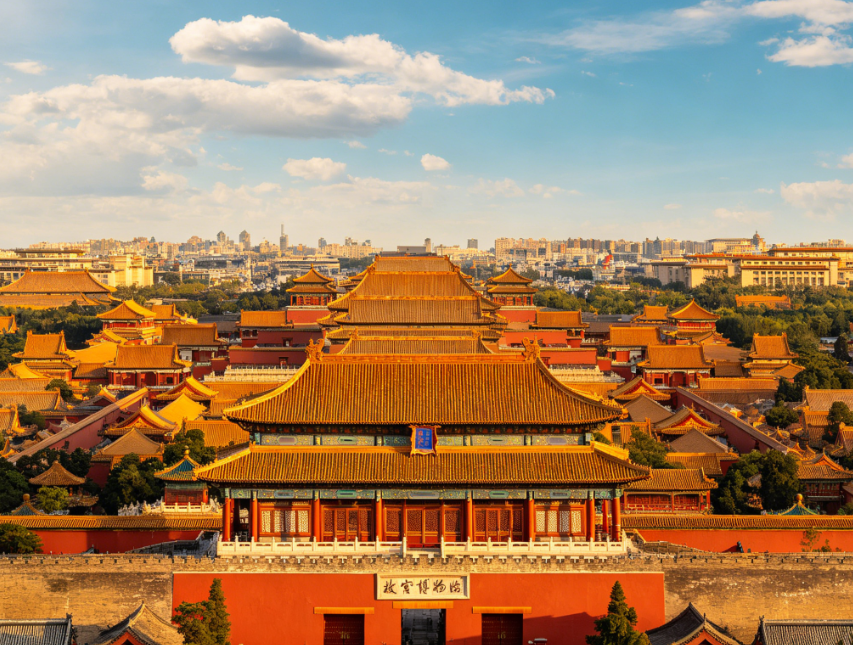
From there, continue to the Forbidden City, but keep expectations disciplined. This is the key to enjoying it. The palace complex covers about 720,000 square metres, and trying to “do it all” is the fastest way to wear yourself out.
A much better approach is to focus on the central axis from the Meridian Gate through to the Hall of Supreme Harmony. This route is broad, mostly flat, and full of the visual drama people come for: ceremonial courtyards, white marble terraces, red walls, and the famous yellow roofs. Golf carts can help reduce walking for some sections, and a private guide is particularly valuable here. Without context, the palace can feel repetitive. With a good explanation, each hall becomes part of a political and ceremonial system that governed China for centuries.
This is where beijing imperial history seniors often find the greatest reward: not in seeing every corner, but in seeing the most important spaces with enough energy left to appreciate them.
Day 2 Beijing accessible tourism at the Great Wall: choose Mutianyu
The Great Wall is the image many travellers hold in mind before they arrive in China, yet not every section suits an older visitor. Mutianyu is usually the strongest option for beijing accessible tourism because it offers a cable car, a restored walkway, and mountain views that feel magnificent without demanding a punishing climb.
The biggest mistake is choosing the wrong section. Badaling is often heavily crowded, which means noise, delays, and a lot of standing. Jinshanling is beautiful but steeper and better suited to active hikers. Mutianyu strikes the right balance between comfort and spectacle.
Take the cable car up, walk in one direction for twenty to thirty minutes, then stop. Sit. Look out over the ridgelines. Let the wall unfold across the mountains rather than turning the visit into a fitness test. Handrails and restored stonework make this area more manageable, though good shoes still matter.
For many travellers, that short stretch is enough. It delivers the emotion of the Great Wall without draining the rest of the day. An early return to Beijing leaves time for a late lunch and a proper rest.
If you’re seeking a tour that prioritises accessibility and comfort, China Beijing Tours - Three Bears Travel specialises in itineraries for senior travellers, ensuring your Great Wall experience is both memorable and manageable.
 Day 3 Beijing slow travel elderly visitors appreciate most: Temple of Heaven and park life
The Temple of Heaven Park reveals a different side of Beijing. Arrive around 8 am and the city seems to exhale. Locals gather to practise tai chi, dance in groups, sing, play instruments, and chat beneath the trees. It is one of the warmest and most memorable scenes in the capital.
For visitors interested in beijing slow travel elderly experiences, this morning can be as meaningful as any museum or palace. The park is flat, spacious, and lined with places to sit. You can pause often, watch life unfold, and enjoy a part of Beijing that feels lived-in rather than staged for sightseeing.
The temple itself is also one of the city’s most elegant buildings. Its circular form, deep blue roof, and precise symbolism offer a striking contrast to the severe geometry of the Forbidden City. After the power of imperial rule on Day 1, the Temple of Heaven introduces the spiritual language of the dynasty.
Keep the afternoon light.
A relaxed lunch, a tea stop, and time back at the hotel often make this day especially restorative. Travellers who pace themselves well here tend to enjoy Day 4 much more.
Day 4 Hutong culture at a senior-friendly pace
Imperial Beijing tells the story of emperors, ceremony, and state power. The hutongs tell the story of everyday life. That contrast gives this final day its charm.
A rickshaw tour through surviving hutong lanes is one of the easiest ways to enjoy old neighbourhoods without long walks. For senior visitors, it is a practical and enjoyable format: seated, shaded at times, and usually around two hours in duration. The best versions also include pauses at a traditional courtyard residence, a dumpling-making demonstration, or a tea house.
This is a strong finish for a beijing senior travel itinerary because it changes the scale of the city. After enormous squares and palace courts, the hutongs feel intimate and human. Narrow lanes, doorway plants, bicycles, and neighbourhood conversation bring a softer texture to the trip.
A well-planned hutong visit often works best with a guide who can explain how courtyard homes were organised and how these districts changed across the twentieth century. That social history adds depth without requiring extra walking.
Practical Beijing accessible tourism tips for older travellers
Comfort in Beijing comes down to planning details well before arrival. Timed entries, traffic patterns, and site layouts have more impact than many first-time visitors expect. A little preparation can remove most of the stress.
Private transport is often the single most useful upgrade for older travellers. Distances between gates, drop-off points, and entrances can be longer than they look on a map. A driver who knows where to stop closest to each site can save a surprising amount of energy across four days.
Summer heat and winter cold both deserve respect. Spring and autumn are generally the easiest seasons for a relaxed historical trip.
· Book major sites early: Beijing’s leading attractions often require advance reservations and passport details.
· Choose morning visits: Cooler temperatures and lighter crowds make a big difference.
· Carry practical extras: Water, tissues, a hat, sunscreen, and a light layer for changing conditions.
· Build in recovery time: A quiet hour at the hotel is often better than squeezing in one more attraction.
It also helps to be realistic about mobility. Many headline sites are flat in parts, yet still involve long approaches and large courtyards. “Accessible” in Beijing may mean manageable rather than fully barrier-free by Australian or New Zealand standards. That is another reason guided private touring can be so effective.
Where to stay in Beijing for senior travellers
Hotel choice shapes the whole experience. A central address reduces time in traffic, while a strong concierge can smooth out everything from restaurant bookings to wheelchair hire. For senior visitors, comfort is not a luxury extra. It is part of good itinerary design.
Properties often recommended for older travellers include The Peninsula Beijing, Rosewood Beijing, and Park Hyatt Beijing. These hotels are known for Western-standard comfort, English-speaking staff, and locations that make city touring easier. They can also usually assist with accessible transport, private guides, and practical support on the ground.
When booking, request a low-floor room with easy lift access if that feels preferable, and ask about step-free entry, shower configuration, and how far the room is from the lifts. These small details matter after a full morning at the Forbidden City or the Great Wall.
A good hotel should make Beijing feel simple. Step outside into one of the world’s great historical capitals, then return to somewhere calm, quiet, and efficient. That rhythm suits senior travel beautifully and helps each day feel generous rather than demanding.
 Beijing Senior Travel FAQ
Embarking on a journey through Beijing's rich imperial history can be a rewarding experience for senior travellers. Here are some frequently asked questions to help you plan a comfortable and fulfilling visit.
How can senior visitors best manage the vast historical sites in Beijing?
Focus on early starts, private transportation, and limiting visits to one major site per day to ensure a relaxed experience.
Which part of the Great Wall is most suitable for seniors?
The Mutianyu section is ideal due to its cable car access, manageable walking paths, and serene mountain views.
What are the best times to visit Beijing's key attractions?
Morning visits are best to take advantage of cooler temperatures and lighter crowds at major sites.
Are there senior-friendly hotel options in Beijing?
Yes, The Peninsula Beijing, Rosewood Beijing, and Park Hyatt Beijing offer Western-standard comforts and central locations.
What should seniors consider packing for a Beijing trip?
Essential items include water, tissues, a hat, sunscreen, and a lightweight layer for variable weather conditions.
How can a rickshaw tour enhance a visit to the hutongs?
Rickshaw tours offer a seated, shaded, and leisurely way to explore the historic hutong neighbourhoods.
For a truly seamless and enjoyable Beijing experience, consider planning your journey with Three Bears Travel, whose expertise in senior-friendly itineraries ensures every detail is tailored for comfort and discovery.