China surprises a lot of hikers. Not because the views are subtle, but because the walking often blends big nature with everyday life, temples, tea stalls, cable cars, and centuries-old stonework. One minute you’re climbing staircases that feel like they never end, the next you’re passing a shrine where locals have stopped to light incense.
If you like walking that comes with stories, scenery, and a strong sense of place, China can be one of the most rewarding hiking destinations you’ll ever visit.
What hiking in China actually feels like
Many of China’s most famous “hikes” sit inside scenic areas or national parks. That often means ticketed entry, clear routes, plenty of facilities, and sections that are intentionally built up with steps and viewing platforms. It can feel very different from hiking in Australia where you might expect a dirt track, minimal infrastructure, and long stretches without anyone around.
That said, China also has remote routes with big days, basic accommodation, and harder logistics, especially in the western provinces and high-altitude regions.
A quick reset of expectations helps. You’re not choosing between “real hiking” and “tourist walking”. You’re choosing the style that suits your fitness, comfort level, and how much time you have.
After you’ve done a few days on Chinese mountain steps, you’ll understand why locals often treat hiking as a social activity. It’s challenging, but it’s also part of daily life in a lot of places.
After a paragraph of planning, here’s what tends to stand out on the ground:
· Stone staircases for long stretches
· Cliffside boardwalks and carved paths
· Teahouses, snack stalls, and rest stops
· Cable cars that can shorten an ascent
· Busy weekends and public holidays
Iconic trails worth building a trip around
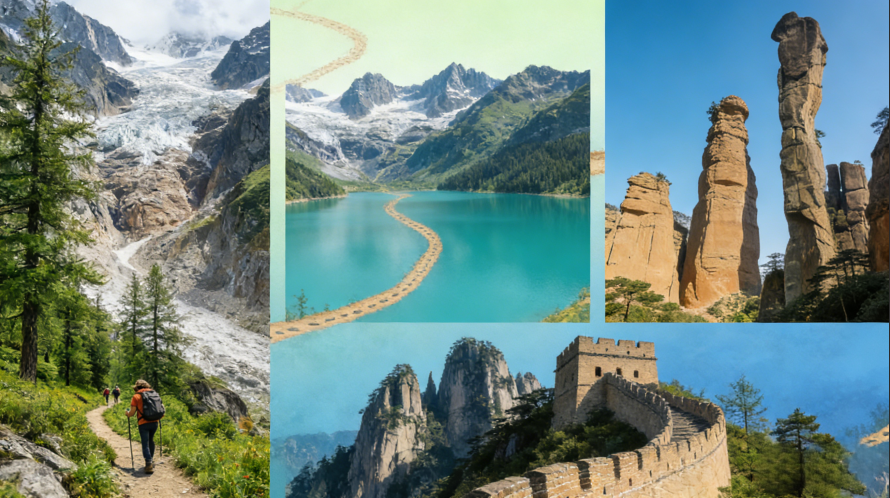
China is huge, so “best trails” depends on what you’re chasing: mountain drama, cultural landmarks, high altitude, or relaxed walking through lived-in landscapes. These are consistently strong choices for first-time visitors and returning hikers.

The Great Wall (wild and restored sections)
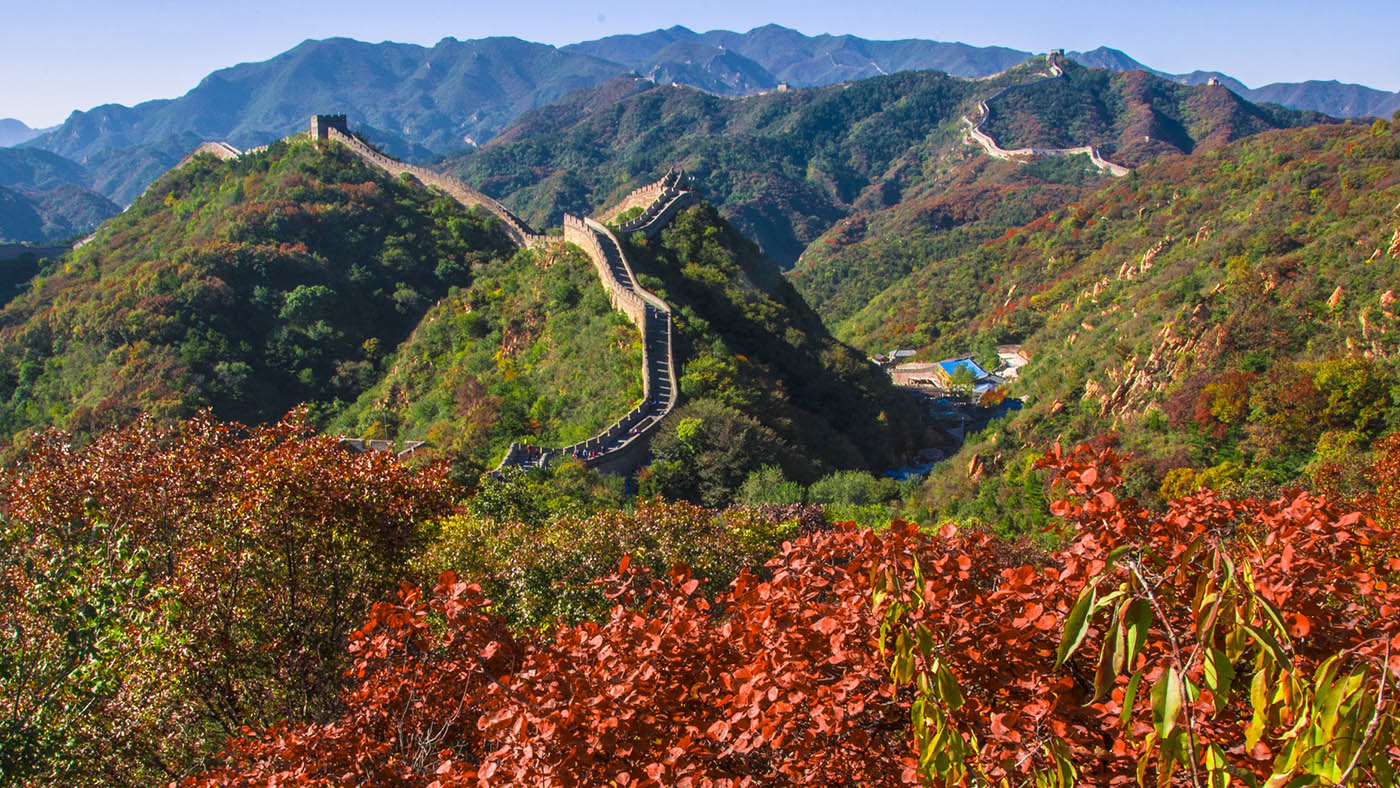
Walking the Great Wall is not one single trail. It’s a patchwork of sections ranging from fully restored promenades to crumbling ridgelines where you’ll scramble over loose stones.
Restored sections near Beijing can suit casual walkers, with wide steps, handrails, and easy access. Wild sections can be steep, uneven, and exposed, and they demand steady footing and good pacing, especially in summer heat or winter ice.
A good approach is to match the section to your comfort level, then build the day around good light, fewer crowds, and a realistic finish time.
Huangshan (Yellow Mountain), Anhui
Huangshan is famous for granite peaks, pine trees clinging to rock faces, and “sea of clouds” mornings. The walking is step-heavy and can be demanding even if you’re not covering big distances.
Cable cars help, but Huangshan still rewards people who start early, take their time, and plan at least one night nearby so you’re not rushing in and out in a single day.
Huashan, Shaanxi
Huashan has a reputation, and it earns it. The ridgelines are narrow in places and the height can feel confronting, even if you’re not scared of heights.
It’s not a technical climb for most routes, but it is steep, and the exposed sections are not where you want to discover you’re uncomfortable with drop-offs. Choose your route carefully, go on a clear day, and avoid peak holiday crowds if you can.
Tiger Leaping Gorge, Yunnan
This is one of the classic multi-day hikes: a deep canyon, big river, and village guesthouses along the way. It’s popular for a reason. The scenery is huge, and you can choose a route that suits your legs and your time.
It can still be tough. Heat, dust, and uneven paths add up, and landslides can affect sections depending on the season.
Longji Rice Terraces, Guangxi
Longji is ideal if you want a gentler walking day that still feels special. The trails link villages and viewpoints across layered rice terraces, and the pace is naturally slower because you’ll stop often for photos.
This is a strong pick for couples who want a beautiful hike without a punishing ascent.
Zhangjiajie National Forest Park, Hunan
Zhangjiajie’s sandstone pillars look otherworldly, and the park has a mix of forest tracks, steps, and elevated walkways. It can be busy, but there are quieter corners if you plan your timing and accept that the most famous lookouts draw crowds.
It’s also a place where smart routing matters. The park is large, and travel time between areas can surprise people.

Mount Emei, Sichuan
Emei blends forest hiking, misty ridges, and significant Buddhist sites. Some sections are tranquil and shaded, while others are long stair climbs that feel endless. It’s a good choice if you like nature with cultural stops built in.
Yubeng Village trek, Yunnan (high altitude)
Yubeng is for people who want something more remote and are ready for altitude. It’s not the longest trek in the world, but the elevation changes can bite, and weather can shift quickly.
If you’re flying in from Australia or New Zealand, give yourself time to adjust to the altitude before you attempt the bigger days.
Danxia landforms (various provinces)
Danxia areas feature striking red rock ridges and layered cliffs. Trails are often well maintained, with stairs and viewpoints that make it accessible to a wide range of walkers.
If your trip mixes city time and nature time, Danxia can work nicely as a one-day or two-day add-on.
Quick comparison table: choosing the right trail
|
Trail |
Region |
Style of walking |
Fitness feel |
Best time of year |
Typical time needed |
|
Great Wall (wild) |
Near Beijing |
Rugged ridge walking, uneven stone |
Tough on knees and ankles |
Spring, autumn |
Half to full day |
|
Huangshan |
Anhui |
Steep stair climbs, peak viewpoints |
Hard, lots of steps |
Spring, autumn, winter views |
1 to 2 days |
|
Huashan |
Shaanxi |
Steep ridgelines, exposed sections |
Hard, height factor |
Spring, autumn |
Full day |
|
Tiger Leaping Gorge |
Yunnan |
Valley and cliff paths, village stays |
Moderate to hard |
Spring, autumn |
2 to 3 days |
|
Longji Rice Terraces |
Guangxi |
Village-to-village tracks |
Moderate |
Spring, early autumn |
Half to full day |
|
Zhangjiajie |
Hunan |
Steps + walkways + park transport |
Moderate |
Spring, autumn |
2 to 4 days |
|
Mount Emei |
Sichuan |
Forest paths + long stair stretches |
Moderate to hard |
Spring, autumn |
1 to 2 days |
|
Yubeng |
Yunnan |
High-altitude trekking |
Hard, altitude |
Autumn (often clearest) |
3 to 5 days |
How hard are China’s hikes, really?
Difficulty in China is often less about distance and more about vertical gain and repetitive steps. A 6 km day with constant stair climbing can feel harder than a much longer Australian bushwalk with a steady gradient.
Crowds also change the feel. On a busy day, you may move slower and spend more time waiting at bottlenecks, which can be surprisingly tiring.
Weather is another major factor. Summers can be humid and hot in many regions. Winters can bring icy steps in the mountains. If you’re used to “four seasons in one day” conditions, you’ll still want to plan for very local patterns and microclimates.
Common mistakes first-time hikers make (and how to avoid them)
Many visitors build their plan around famous names, then get caught out by travel time and terrain. A “quick day trip” can turn into a 14-hour day once you add transfers, ticket queues, and the distance from the station to the entry gate.
Starting too late is another classic issue. In many scenic areas, early mornings are calmer and clearer, and you avoid the peak crowds that arrive mid-morning.
These practical habits help:
· Start time: aim to be at the gate near opening, not arriving in the nearby city
· Route choice: pick one major ascent per day, not multiple “must-see” lookouts
· Season planning: avoid national holidays if you want quieter trails
· Recovery: schedule lighter days between big stair climbs
· Transport buffer: keep spare time for slow traffic, queues, and last-minute changes
What to pack for comfort on step-heavy trails
Packing for China is mostly about staying comfortable while you’re going up and down, often on hard surfaces. Trail runners work for many routes, though boots can be better on rough Great Wall sections or after rain.
After a paragraph of “less is more”, a simple packing list usually covers it:
· Comfortable shoes with grip
· Light rain jacket
· Sunscreen and hat
· Water and snacks
· Gloves in cooler months (stone steps get cold)
· Small towel for humidity and sweat
· A spare layer for cable car descents
Getting logistics right: permits, tickets, and local timing
A lot of China’s best hikes require entry tickets, and some have timed tickets, shuttle buses, or set routes within the scenic area. That can be a relief because it reduces navigation stress, but it also means your day runs on local systems, not just your legs.
Language can be a hurdle in smaller towns. It’s manageable, but it can slow things down when you’re trying to confirm the correct bus, find the right gate, or arrange a transfer at short notice.
If you’re travelling as a couple or pair and want the walking to feel relaxed, planning matters. When transport and entry details are sorted in advance, you can focus on the hike instead of problem-solving every step.
Three Bears Travel designs private, custom trips to China and Japan with end-to-end planning and on-the-ground support. For hikers, that often means fitting one signature trail into a wider itinerary, choosing accommodation that reduces early starts, and matching routes to fitness levels rather than squeezing in the longest option.
Quick FAQ for hiking in China
Are there proper hiking trails in China?
Yes. There’s a wide mix, from built scenic-area routes with steps and facilities through to multi-day treks in remote regions.
Is walking the Great Wall difficult?
It depends on the section. Restored areas can be an easy walk. Wild sections can be steep, unstable, and physically demanding.
Is hiking in China safe for tourists?
Generally, yes, when you choose routes that match your ability and avoid poor weather. The bigger risks tend to be slips on steep steps, heat stress in summer, and crowd pressure on peak days.
Do I need to be very fit?
Not always, but you should respect the stairs. Many popular trails are short in distance and still feel tough because the climbing is continuous.
What’s the best time of year?
Spring and autumn are often the most comfortable. Summer can be hot and humid in many regions, while winter can bring ice on mountain steps in the north and at higher elevations.