Medical tourism in China is rapidly gaining popularity, attracting travellers who want to combine world-class healthcare with the adventure of exploring a new country. For those planning a trip to China with both treatment and travel in mind, understanding the local healthcare landscape is key to making the most of your experience.
Whether you’re seeking specialised medical services, routine check-ups, or wellness treatments, China offers a wide range of options that can be seamlessly integrated into your travel itinerary. By learning how the healthcare system works, what services are available, and how to plan appointments around sightseeing, you can enjoy a smooth, rewarding journey that prioritises both your health and your holiday.
China healthcare in plain terms (for international travellers)
China’s system is often described as hospital-centred. That matters because many services that might be handled in small suburban clinics at home are commonly completed through hospital outpatient departments in China. It can look busy, yet the process can move quickly once you’re in the right place.
In major cities, you’ll also find international clinics and VIP departments attached to top hospitals. These can be appealing for international travellers who want English-language support, clear pricing, and a familiar consultation style. They can cost more, but they often simplify communication and paperwork.
A key mindset shift helps: for non-urgent needs, you’re usually not “admitted to hospital”, you’re using the hospital as a one-stop hub for outpatient services.
Why medical services don’t have to derail your itinerary
A flexible travel plan is the difference between “we can’t possibly fit that in” and “we’ll do it after breakfast”. Many routine services have predictable time requirements, and they can sit neatly in a morning window before sightseeing, or later in the day when you might otherwise be shopping or resting.
If you’re travelling privately, it’s also easier to build around real-life timing. You can start earlier, take a slower lunch, or swap one neighbourhood for another without the pressure of keeping 25 people together.
That flexibility becomes even more valuable if you’re dealing with travel fatigue, jet lag, or a minor issue you’d rather sort out early than carry for the rest of the trip.
Simple, traveller-friendly services that often fit easily
Not every health-related stop needs to become the focus of your holiday. Many travellers choose basic, non-invasive services that are time-bound and low stress, especially in big cities where options are plentiful.
Here’s a practical guide to how common services can fit into a day:
|
Service type |
Typical time on the day |
Best fit in a travel schedule |
Notes for travellers |
|
Pharmacy visit for cold/skin remedies |
15 to 40 mins |
Late afternoon or after dinner |
Bring a photo of the product you use at home if relevant |
|
Dental cleaning or check-up |
45 to 90 mins |
Morning, then lunch nearby |
Confirm language support if you’re not comfortable in Mandarin |
|
Physiotherapy / sports massage |
60 to 120 mins |
After a walking-heavy day |
Great for neck/shoulder tightness from flights and phones |
|
Basic blood tests or routine check |
1 to 3 hours |
Early morning |
Fasting may be required; plan breakfast afterwards |
|
Eye test / glasses adjustment |
30 to 90 mins |
Shopping areas |
Handy if contact lenses are irritating in dry air |
|
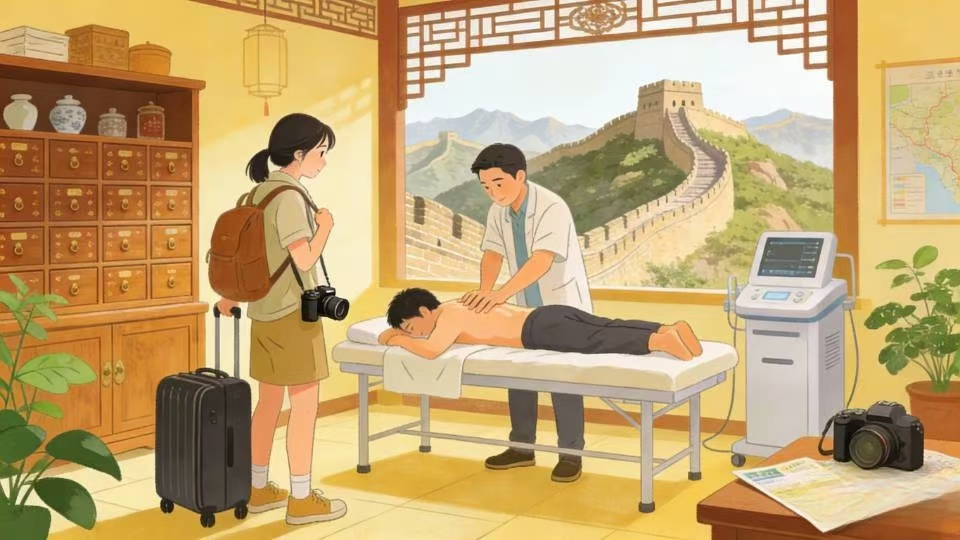
Wellness-style Traditional Chinese Medicine session |
60 to 120 mins |
A lighter sightseeing day |
Consider it as culture plus self-care, not a “treatment plan” |
One appointment can also influence the rest of the day in a good way. It might steer you to a neighbourhood you wouldn’t have visited, or create a natural reset before an evening food tour or performance.
This is why having a local guide is invaluable - they can help you seamlessly coordinate your medical appointments with your travel plans. A knowledgeable China guide not only assists with language and logistics but also ensures you make the most of your time, discovering hidden neighbourhoods, local eateries, or cultural experiences that you might otherwise miss. With expert support, your healthcare visit becomes a natural, enriching part of your journey, rather than a disruption.
Traditional Chinese Medicine as culture, not a “medical trip”
Traditional Chinese Medicine (TCM) is part of daily life for many people in China. For visitors, it can be interesting as a cultural experience because it reflects a different way of thinking about comfort, balance, and recovery after long travel days.
TCM experiences vary widely, from herbal teas and cupping through to acupuncture. Some travellers enjoy it for managing stiffness or sleep disruption, while others are simply curious and want to try something local in a reputable setting.
If you’re considering TCM, it helps to be clear on your goal. Are you after relaxation? Help with travel fatigue? A one-off “try it once” session? A good provider should explain what they’re doing and check you’re comfortable at every step.
Choosing where to go: public hospitals, international clinics, and pharmacies
Where you go depends on what you need, how confident you feel with language, and how much time you want to spend on the process.
Public hospitals can be excellent for straightforward outpatient care, and they are common in every city. They can also be busy, with procedures that feel unfamiliar. International clinics and VIP departments can feel calmer and more guided, with pricing that’s clearer upfront.
Pharmacies are often the simplest first stop for minor issues. If you’ve got a mild cold, a blister that’s become angry, or you’ve run out of a familiar item, a good pharmacy can save you an unnecessary appointment.
A little preparation reduces friction. Before you leave your hotel, it helps to have:
· Passport or a clear photo of it
· Hotel name and address in Chinese
· A short written description of symptoms
· Photos of any medications you already use
· Your travel insurance details
If you’re travelling with a private guide, this is also where local support can take pressure off. Even when you choose an international clinic, having someone who can help confirm the right location, timing, and expectations can keep the day running smoothly.
What “efficient” can look like in practice
Efficiency in China healthcare often shows up as “do it all in one place”. A consultation, a test, and a result may happen within the same half-day, especially for basic checks. That’s very different from the multi-visit rhythm many travellers expect.
There are still variables, including time of day, day of week, and local holidays. Some services work best early in the morning. Others are smoother mid-afternoon when commuter traffic is lighter and popular attractions are busiest anyway.
If your trip is short, efficiency matters even more. A two-hour appointment window can be manageable if your itinerary has deliberate gaps. If every hour is packed, it will feel disruptive even if the hospital itself is quick.
How a flexible private itinerary makes this easier
Private, tailor-made touring is not only about comfort. It can also be a practical way to keep travel calm when real life pops up.
Three Bears Travel plans private itineraries in China and Japan for couples, pairs, families, and small groups, with pacing that leaves room to breathe. That breathing space is what lets you handle a pharmacy stop, a dental appointment, or a wellness session without feeling like you’re “behind” for the rest of the trip.
It also changes the tone of the day. Instead of cancelling experiences, you can reshuffle: a morning appointment, a relaxed lunch nearby, then a museum or neighbourhood walk that matches your energy.
Many travellers appreciate having choices that feel simple:
· Keep it light: Switch a busy attraction to a slower scenic area
· Start earlier: Use the quiet morning for appointments, then sightsee after
· Stay close: Pick experiences in the same district to avoid crossing the city
· Build in recovery: Add a rest break back at the hotel before dinner
· Decide on the day: Leave one flexible block where plans can change easily
This approach works well for first-time visitors who want reassurance, as well as independent travellers who like autonomy but prefer not to handle every phone call and address check on their own.

A realistic example: fitting a check-up into a Beijing day
Imagine you wake up with a sore throat and you’re due to visit the Temple of Heaven, a hutong walk, and a Peking duck dinner.
A calmer version of the day might look like this: quick breakfast, pharmacy or clinic visit in the morning while you still have energy, then a relaxed lunch nearby. After that, you keep the afternoon lighter with the hutong walk (lots of tea stops and sitting breaks) and decide whether Temple of Heaven is better that day or tomorrow. Dinner stays in place because you’re no longer worrying about your symptoms.
The point is not that every day goes to plan. It’s that your plan can absorb a change.
Costs, payments, and travel insurance: what to think about
Costs vary significantly depending on city, facility type, and service. International clinics generally charge more, and some require payment upfront. Public hospitals can be more economical, but the process may feel less familiar.
Travel insurance is still essential, even if you’re only thinking about minor care. Keep your insurer’s contact details accessible and understand what your policy expects in terms of documentation. Receipts, itemised invoices, and medical notes can matter if you claim later.
If you’re arranging anything beyond a pharmacy visit, it’s wise to ask the provider for paperwork in a clear format. If English documentation is available, it can make claims simpler.
Safety and suitability: keeping expectations sensible
Most travellers who seek care during a trip are handling minor issues: muscle soreness, dental maintenance, travel-related skin irritation, or checking something that’s been nagging for a while.
If you have a complex medical condition, are pregnant, or require ongoing prescription management, planning ahead is critical. Talk with your GP before departure, carry a medical summary, and ensure you have enough medication for the full trip plus a buffer.
Emergency care is a different category. If you suspect anything urgent, seek immediate help and contact your insurer as soon as practical.
FAQ: combining healthcare services with travel in China
Will an appointment make the itinerary feel rushed?
Not if the trip has been planned with time buffers. A rigid schedule is what creates pressure, not the appointment itself.
Are these services meant to replace care at home?
No. Most travellers use them to handle small issues, reduce discomfort, or enjoy a wellness experience. Ongoing or complex care should be discussed with your doctor at home.
Is this realistic on a short trip?
Yes, for time-bound services like a pharmacy visit, basic dental care, or a one-off wellness session. The key is to avoid packing every day from early morning to late night.
Do I need to speak Mandarin?
Not always. International clinics often offer English support. In public settings, having written notes, translation apps, or local assistance can make the process smoother.
Seeing local life through everyday services
Travel isn’t only temples, towers, and tasting menus. Sometimes it’s also seeing how a city looks on a normal weekday, how people book appointments, and how pharmacies are set up.
When medical and wellness stops are approached as optional and practical, they can become another window into local life, while still keeping the holiday enjoyable, calm, and shaped around what you want to do that day.