
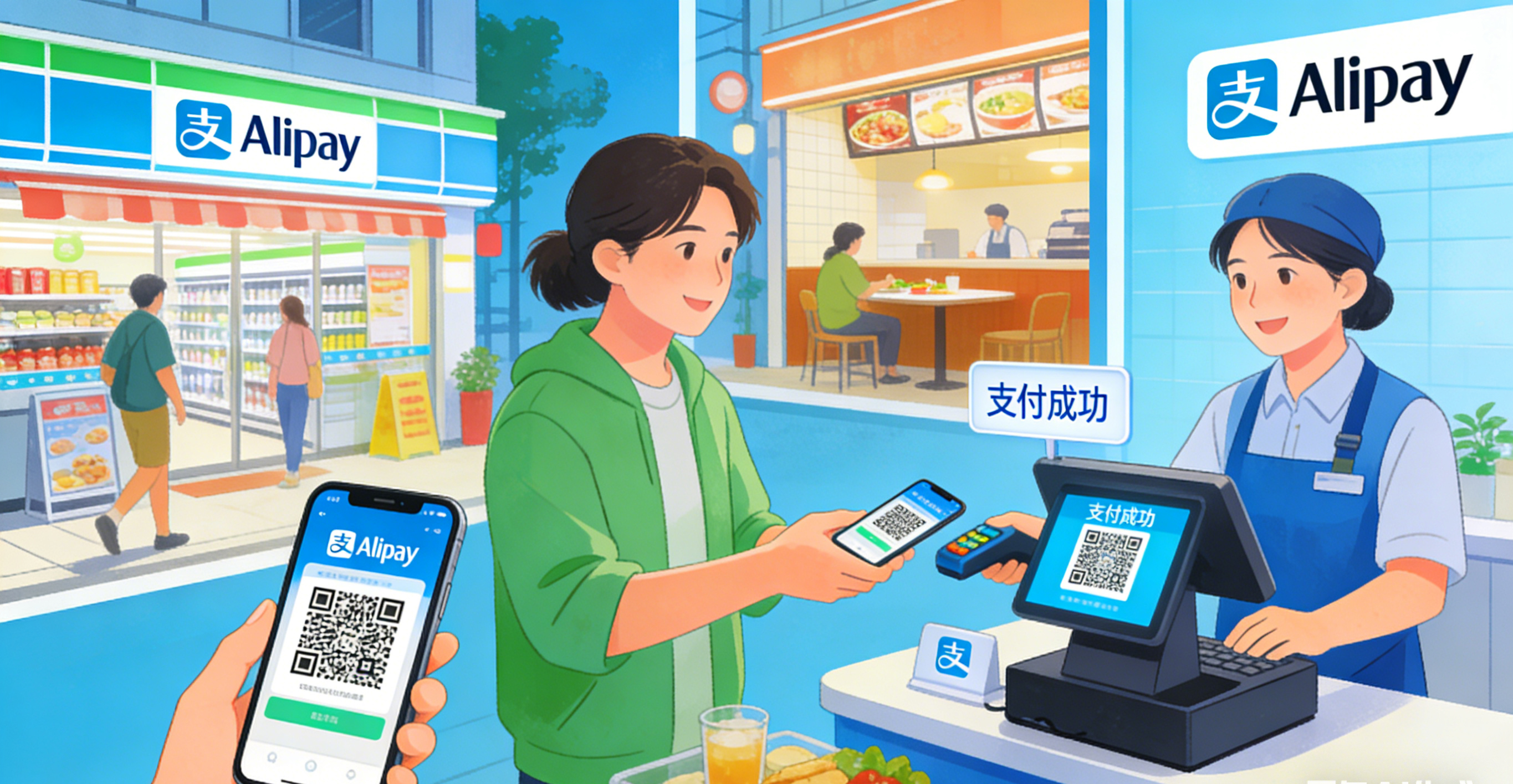
Arriving in China with only cash and an international credit card can feel a bit like turning up to a busy café after everyone’s switched to tap-and-go. You can still get by, but you’ll spend more time figuring out how to pay than enjoying your China trip. For anyone planning to travel to China, understanding local payment options can make your experience much smoother.
Alipay is one of the main ways locals pay for everyday life in China, from train tickets and taxis to small cafés, pharmacies, and convenience stores. Setting it up before you leave Australia or New Zealand gives you time to sort out identity checks, card linking, and a few settings that are much easier to tackle on home Wi Fi than in an airport queue.
Why mobile payments matter so much in China
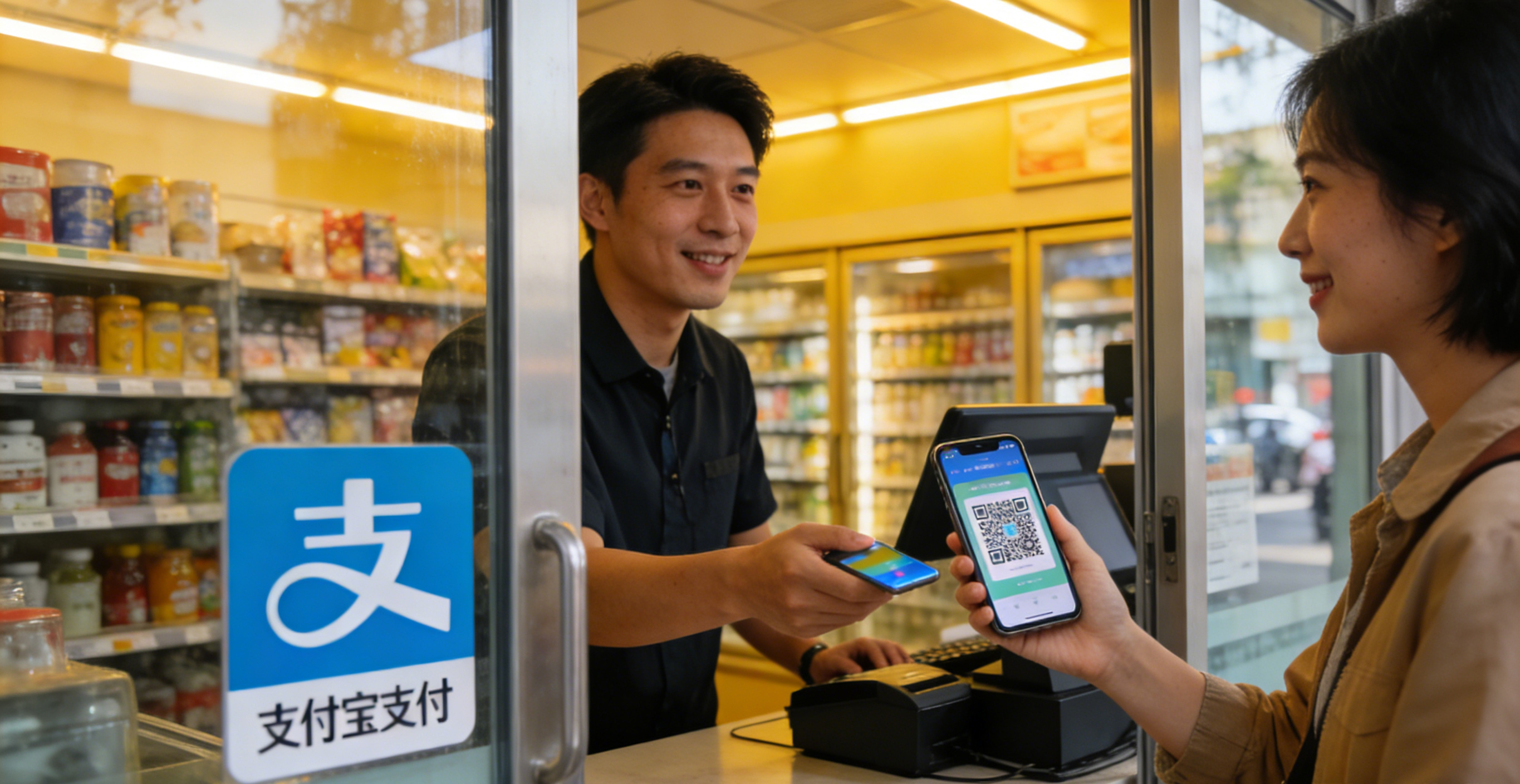
China has moved quickly to QR code payments. Many businesses still accept cash, and some larger retailers accept international cards, but day-to-day purchases often assume you can scan a code and pay on your phone.
A few common moments where Alipay helps:
· Buying metro tickets or topping up transit cards in major cities
· Paying at small restaurants that do not run card terminals
· Picking up basics at convenience stores
· Paying for over-the-counter medications, clinic fees, or pharmacy items in many locations
You do not need Alipay for every trip, yet having it ready can remove a lot of friction, especially on short stays when you do not want payment problems slowing you down.
What Alipay is (and what tourists can use it for)
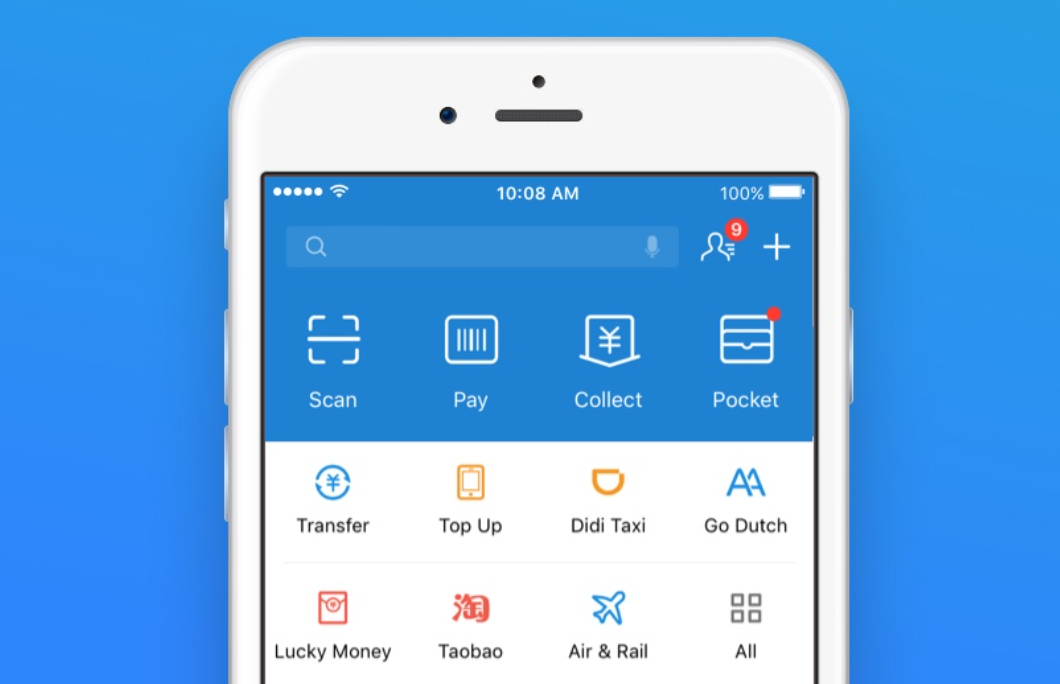
Alipay is a mobile payment app run by Ant Group. For travellers, the practical feature is QR code payments: you either scan the merchant’s QR code, or they scan yours.
Tourist access has improved a lot. Many visitors can now:
· Add an overseas bank card (often Visa, Mastercard, or similar)
· Pay at many merchants that accept Alipay
· Use in-app services in some cities (these vary and can change)
Some features may remain limited compared with a local resident account, and availability can differ by region or by merchant system. Still, for everyday payments, a well-prepared setup covers most needs.
What you’ll want ready before you download
A few minutes of preparation saves a lot of back-and-forth later. Before you start, gather the essentials and check your phone basics.
Here’s a quick checklist of what most travellers need on hand:
· A smartphone with a current operating system
· Your passport (for identity verification)
· A mobile number that can receive SMS (often your home number is fine for setup)
· A compatible payment card that allows international transactions
· A reliable email address you can access
If you use a VPN, password manager, or extra security app on your phone, keep them on, but be ready to temporarily disable anything that blocks verification screens or SMS delivery during setup.
Step-by-step: set up Alipay before you fly
Do the initial setup at home so you can take your time and get comfortable with the layout. The app changes occasionally, but the flow below matches what most travellers see.
1. Download the official app from the Apple App Store or Google Play Store (search “Alipay”). Confirm the developer is the official Alipay/Ant listing.
2. Choose language settings if prompted. Many versions offer English, though some menus may still include Chinese labels.
3. Create your account using your mobile number and the SMS verification code.
4. Set a login password and follow prompts for account protection options.
5. Complete identity verification (often labelled “Verify now”, “Identity information”, or similar). Use your passport details and follow the photo or scan prompts carefully in good light.
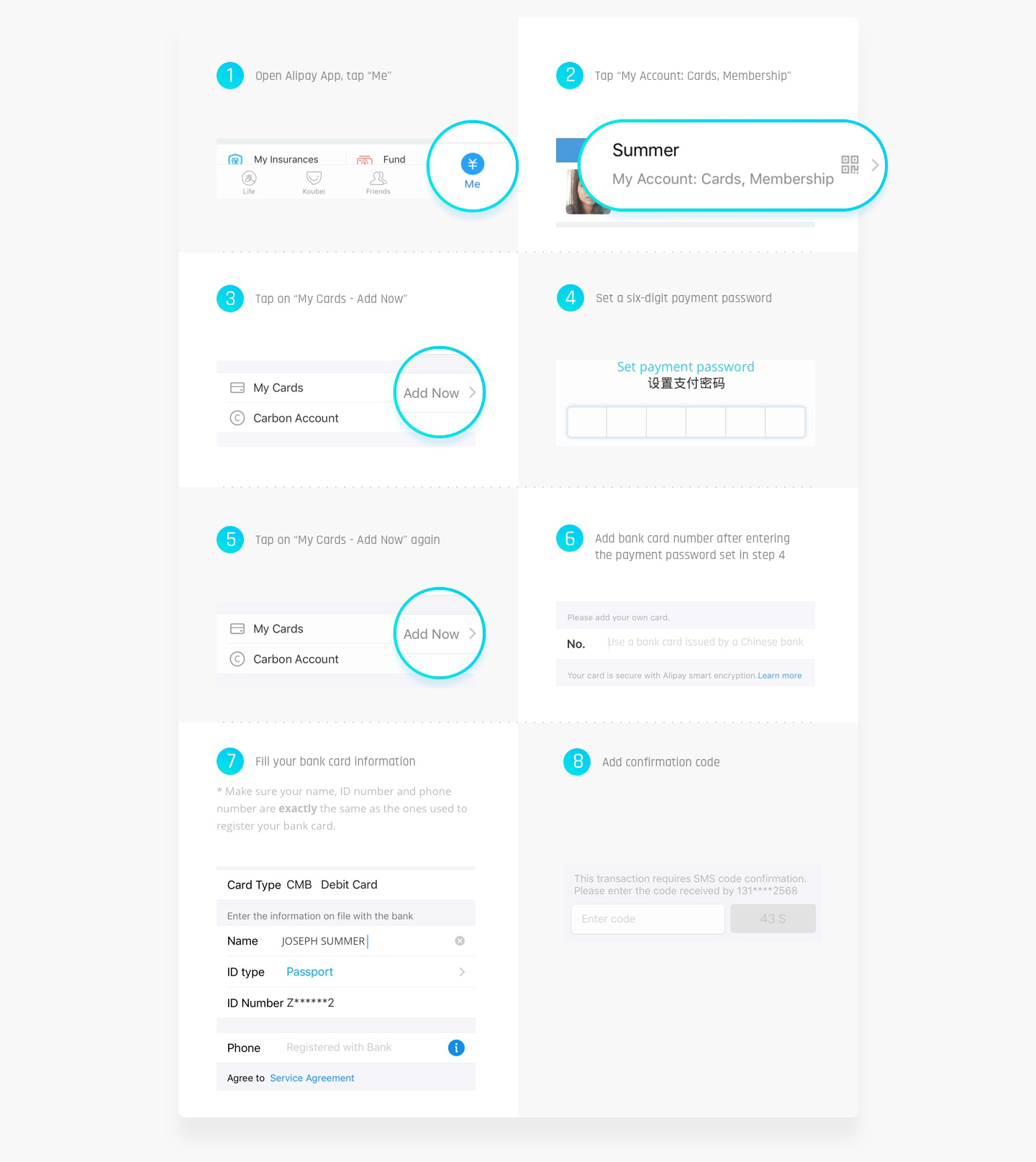
6. Add a bank card (usually under “Cards” or “Bank Cards”). Enter your details exactly as shown on the card.
7. Set a payment password if requested. This can be separate from your login password and may be required to confirm payments.
8. Test the interface by finding the “Scan” and “Pay/Receive” functions. You may not be able to fully test a purchase at home, yet you can at least confirm the tools are visible and working.
If your verification fails, slow down and retry with better lighting, a plain background, and a clean camera lens. Many issues come down to image quality.
Linking an overseas card: what usually works (and what can go wrong)
Linking a foreign card is the step that causes most of the pre-trip stress, mainly because banks and security systems can be cautious with new payment patterns.
A few practical tips:
· Tell your bank you’re travelling and expect transactions linked to China-based merchants.
· Check that international and online payments are enabled.
· Try a second card if the first fails, ideally from a different bank.
The table below summarises common hiccups and straightforward fixes.
|
Issue you see |
Likely cause |
What to try |
|
Card won’t add, or “card not supported” |
Some card types or issuers are blocked |
Try a different Visa/Mastercard, or contact your bank to confirm compatibility |
|
SMS codes never arrive |
Mobile carrier filtering or roaming settings |
Confirm your number is correct, check spam/blocked messages, try again later on stable Wi Fi |
|
Payment fails after card is added |
Bank fraud controls |
Notify the bank, attempt a smaller first transaction, confirm international payments are enabled |
|
Verification keeps failing |
Passport photo scan quality |
Retake images in bright light, avoid glare, use the exact passport name order |
|
App language is hard to follow |
Mixed English and Chinese menus |
Use the app’s search bar for keywords like “Card”, “Passport”, “Settings” and save key icons (Scan/Pay) to your home screen |
If you are travelling as a couple, it can be worth setting up Alipay on both phones. That way, if one account has a temporary issue, the other person can still pay.
Is Alipay essential, or just nice to have?
You can still travel in China without Alipay, especially if your itinerary sticks to major hotels, big tourist attractions, and higher-end restaurants. Cash is still legal tender and accepted, and some larger retailers accept international cards.
The pinch points are smaller, everyday transactions. A small family-run noodle shop may not have a card terminal. A local taxi might prefer QR payment. A pharmacy counter may move faster when customers scan and go.
A simple way to think about it is coverage versus convenience:
· Cash can work broadly, yet you may need to carry more than you like and manage change.
· International cards are useful in some places, yet acceptance is uneven outside larger venues.
· Alipay and WeChat Pay often cover the “small payments” category that pops up repeatedly each day.
Alipay isn’t strictly necessary—WeChat Pay is another popular option for travellers in China, and both platforms are widely accepted for everyday purchases.
If your trip is short, even light use of Alipay or WeChat Pay can be enough: transport, convenience stores, quick meals, and top-ups.
How payments work in real life (without feeling awkward)
Once you’re in China, most payments come down to two actions: you scan, or they scan.
In many shops, the cashier will point at a QR code on a stand. You open Alipay, tap “Scan”, and confirm the amount. In other places, you show your own QR code and the staff member scans it.
A few everyday scenarios:
· At shops and cafés: open “Scan”, scan the merchant code, confirm the amount.
· In taxis: scan the driver’s QR code, or ask if they accept Alipay before the ride starts.
· At attractions: some ticket counters accept Alipay, though larger sites may still funnel you to official ticket apps or kiosks.
If a venue asks for WeChat Pay only, do not panic. Many tourist-heavy places accept both. If they truly only accept WeChat, you may need to switch payment method, use cash, or ask your hotel concierge for help with a one-off payment.
Using Alipay for pharmacies and healthcare payments
Many travellers first notice how useful mobile payments are when they need something practical: a pharmacy visit, basic medical supplies, or a clinic fee.
In larger cities, hospitals and pharmacies often have QR codes at payment windows, self-service kiosks, or counter terminals that accept Alipay. Still, healthcare systems vary by city and facility.
What helps:
Bring your passport and keep your phone charged. If you’re dealing with medication names or instructions, a translation app is handy, and so is having a local guide who can assist with communication and process.
If you have travel insurance, keep your insurer’s contact details accessible. Payment is only one part of the experience, and clear records matter if you need to claim later.
Safety and privacy: simple habits that reduce risk
Alipay is widely used, but good digital hygiene is still worth it, especially while travelling.
A few sensible habits:
· Use a strong phone passcode and keep biometric unlock turned on
· Avoid public Wi Fi for account changes (passwords, card updates)
· Turn on account security settings offered inside the app
· Keep a second payment method available (cash and a card)
· Save screenshots of key booking details in case your data connection drops
If you lose your phone, act quickly: contact your bank to block the card if needed and use Alipay’s account recovery tools. Planning this ahead of time, even briefly, makes it easier to stay calm if something goes wrong.
Quick troubleshooting if something won’t work on arrival
Even with perfect preparation, travel can trigger security checks. If Alipay refuses a payment, try the basics in order:
Check your internet connection, then restart the app. If that fails, switch between mobile data and Wi Fi. Confirm your bank has not blocked the transaction, and attempt a small purchase first, like a convenience store item.
If the app prompts you to re-verify identity, do it as soon as you can in a well-lit place. Leaving it until you’re standing at a counter with a queue behind you makes everything feel harder than it needs to be.
Fitting Alipay into a well-planned itinerary
Payment tools are only one part of travelling smoothly, yet they affect almost every day. When your transport, dining, and sightseeing are planned around your pace, you spend less time troubleshooting and more time enjoying the moments you came for.
For travellers booking private, tailor-made time in China, it’s common to build a short pre-departure checklist: apps to install, documents to carry, and a quick run-through of what to expect at hotels, stations, and ticket gates. Many people appreciate having local support available when a system behaves differently from what they’re used to at home. Choosing a reputable China travel agency like Three Bears Travel can make your journey even smoother, providing expert guidance and on-the-ground assistance whenever you need it.
Getting Alipay ready before you land is a small task that can make China feel immediately more approachable, whether you’re grabbing breakfast on the go, paying for a train connection, or picking up something important at a pharmacy counter.