

Minimum Guests
2 Person
Activate Day
14 Nights/ 15 Days
Fully Inclusive
Touring with Guides and entrance fees
Included Meals
Breakfasts:15, Lunches:12, Dinners:0
Accommodation
14 nights in 4-star accommodation (city center/scenic area locations)
Guide
English-speaking guide services as per the itinerary
Activies
Entrance fees for all mentioned sights and attractions· 15-day in-depth ethnic tour covering south and west China
· Immersive exploration of Miao, Dong, Bai, Naxi and Tibetan cultures
· Stunning natural landscapes: Li River, Huangguoshu Waterfall, Erhai Lake, Yamdrok Lake
· Iconic landmarks: Potala Palace, Jokhang Temple, Tashilhunpo Monastery
· Private transfers, knowledgeable English guides and relaxed travel pace
Tour Timeline
If you need to increase or reduce the number of travellers, please contact us for customised arrangements.
- Enjoy a private pickup from your airport/train station, with a guide accompanying you and providing support throughout the transfer.
Recommended activities
- None
- Private Van
- English-speaking guide services as per itinerary
-
Lijiang Cruise
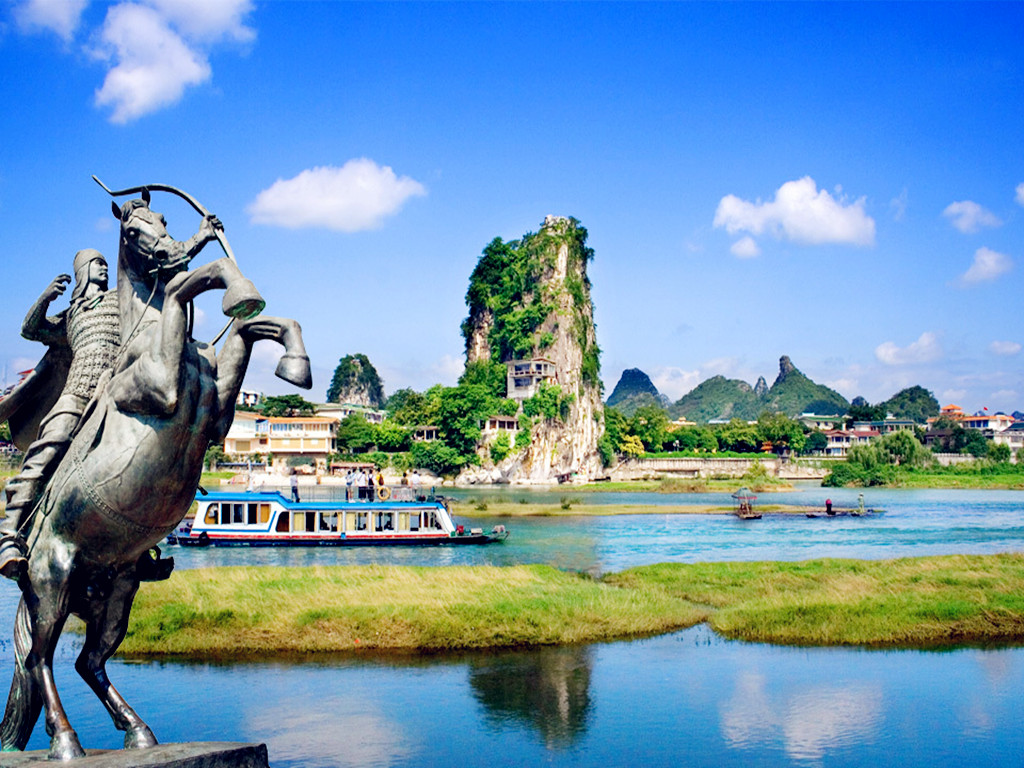
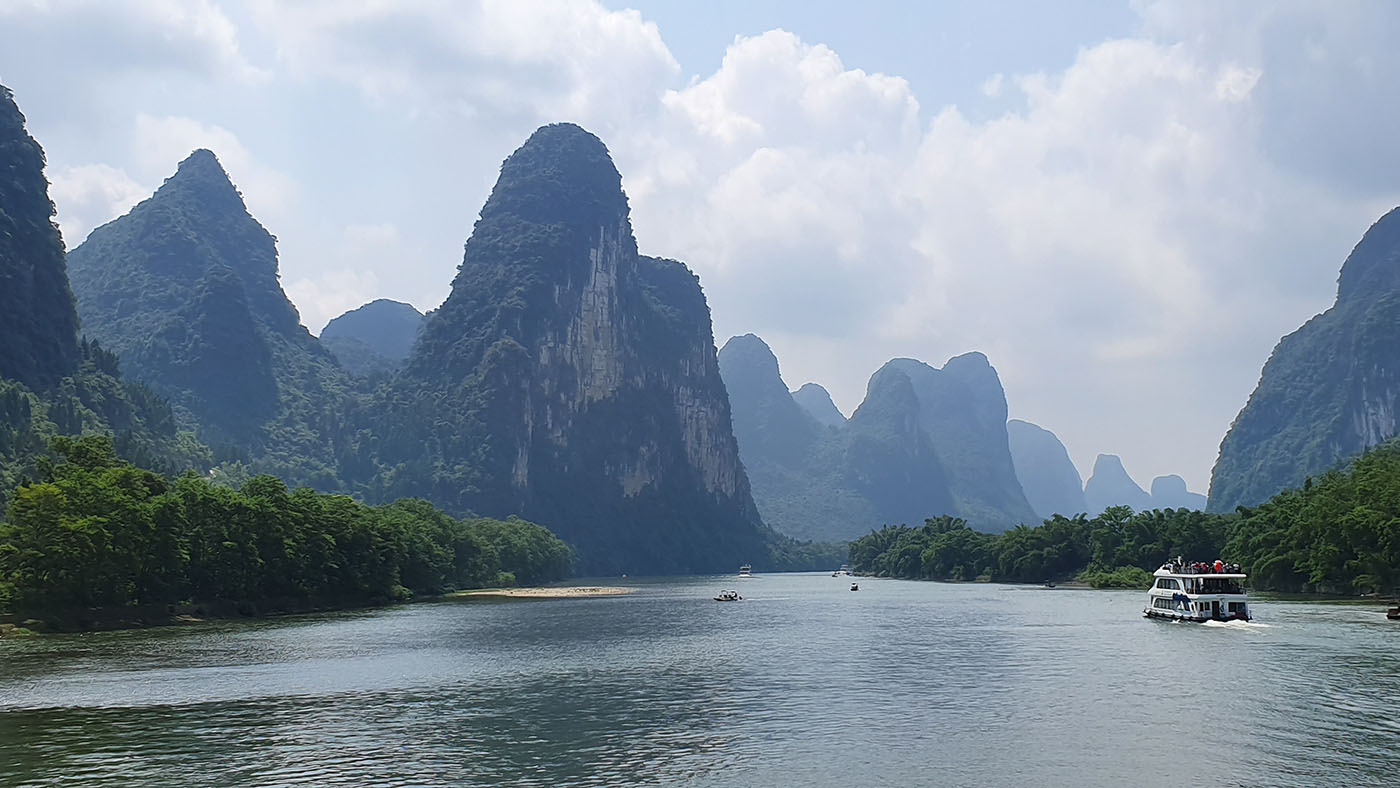
Embark on a scenic Li River Cruise from Guilin to Yangshuo. Glide past towering karst peaks, rice paddies, and tranquil villages, capturing iconic landscapes seen in Chinese ink paintings. This immersive cruise is one of the most scenic Guilin attractions and offers a peaceful way to admire the region’s natural beauty.
-
Yangshuo Countryside Biking
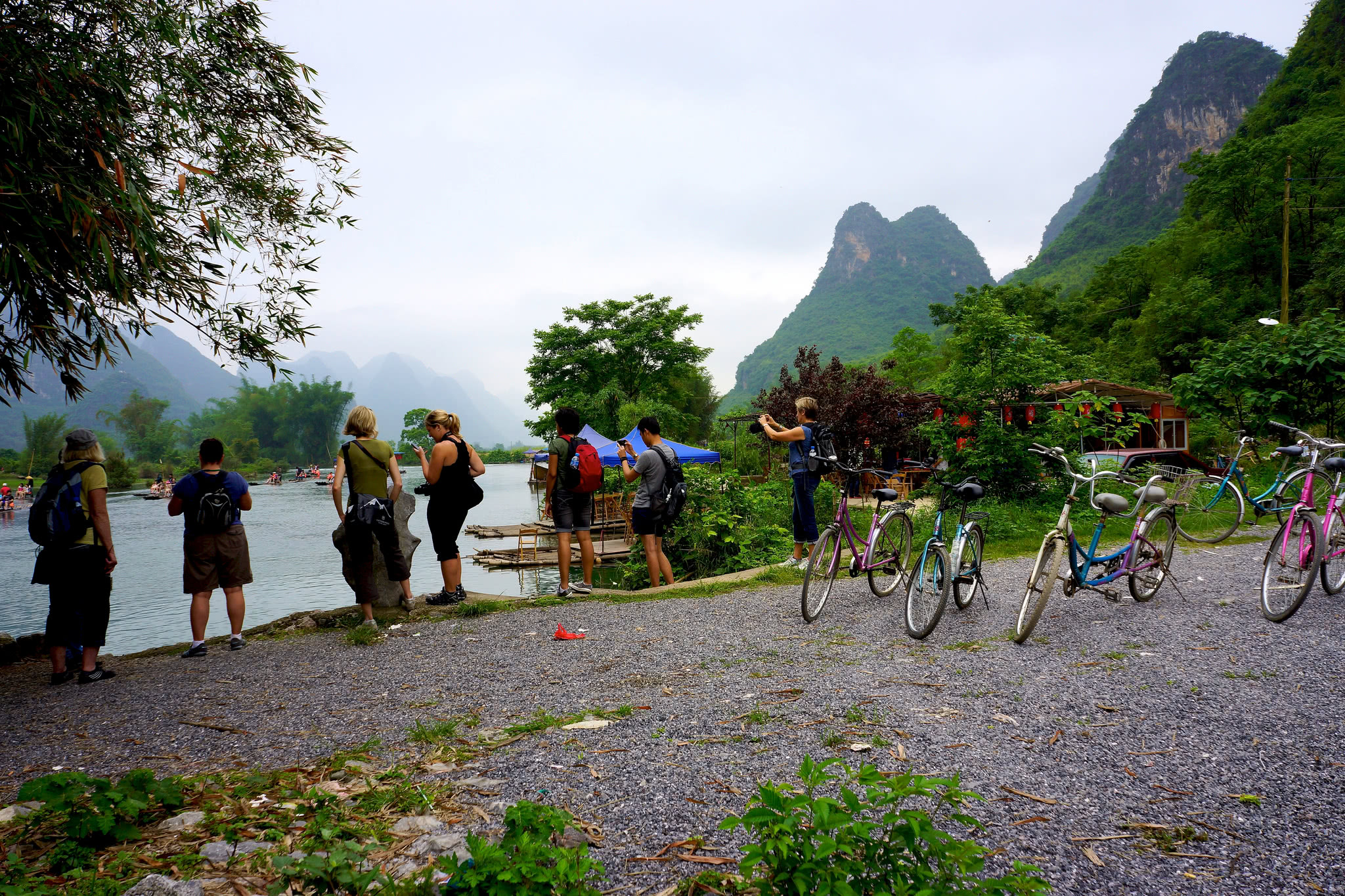
Spend the day in the enchanting countryside of Yangshuo with a family biking adventure, following parts of the renowned "Thousand Miles of Rivers and Mountains, Riding in the Painting" outdoor sports route. Rent comfortable bicycles suitable for all ages, including child seats or tandem bikes, and discover quaint villages, vibrant farmland, and gurgling streams with floating bamboo rafts. The flat, well-maintained country roads offer a safe and enjoyable biking experience, with stunning karst scenery surrounding you at every turn, and you can even catch a glimpse of the majestic Jiuma Huashan from different angles along the way.
- Breakfast , Lunch
- Private Van
- English-speaking guide services as per itinerary
- yangshuo to zhaoxing by Bullet Train (Yangshuo to Zhaoxing)
-
Zhaoxing Dong Village
Zhaoxing Dong Village was first built in the third year of Yongxi in the Northern Song Dynasty (986 AD), with a history of more than 1000 years. During the 11th Five Year Plan period, Liping County officially included the development of Zhaoxing Dongzhai Scenic Area in its planning, and began large-scale construction after the 12th Five Year Plan period. It was officially opened to the public in January 2014
Zhaoxing Dong Village is surrounded by mountains on all sides, and the village is built in a central basin. Two small streams converge to form a small river that runs through the village. The houses in the village are stilted buildings in the form of dry railings. They are arranged in rows and are all made of fir. The gable roof is covered with small green tiles, which is simple and practical. Zhaoxing Dong Village is divided into internal surnames and external surnames, with all members being the Lu Dong ethnic group. It is divided into five major Fang ethnic groups and is located in five natural areas, known locally as "Tuan". It is divided into five groups: benevolence group, righteousness group, ritual group, wisdom group, and faith group.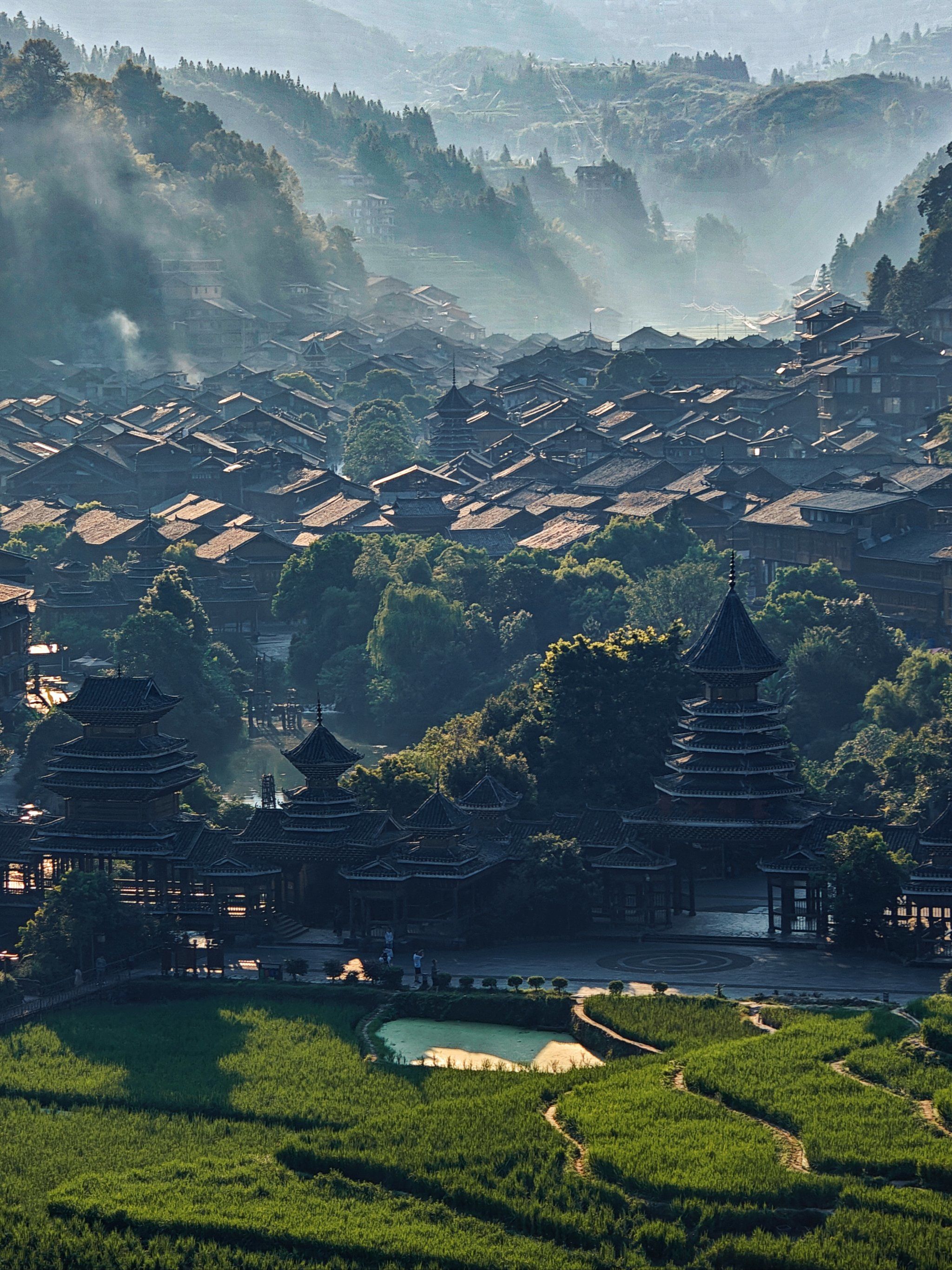
- Breakfast , Lunch
- Private Van
- English-speaking guide services as per itinerary
-
Basha Miao Village (English name: Biasha)
Basha Miao Village (English name: Biasha), also known as the "Last Spearman Tribe", is located in Bingmei Town, Congjiang County, Qiandongnan Prefecture, Guizhou Province. It consists of five natural villages including Dazhai and Zaigexin Village, with a total area of 15 square kilometers and a permanent population of about 2548 people. Miao language is the main language of communication. Located at an altitude of 550 meters at the foot of the Moon Mountain, it belongs to a subtropical humid climate. The village preserves customs such as sickle shaving, wearing firearms (approved by the public security organs), and worshiping ancient trees. The male hair bun "hu stick" is an ancient hairstyle inherited from the Chiyou era. In 1976, the millennium camphor tree was presented as a tribute to Chairman Mao's Memorial Hall and a memorial pavilion was built.
The local traditional festivals include the Lusheng Festival and the Eating Festival, and the "girl making" activity in wedding customs is unique. Basha implements tree burial, planting trees in tombs as monuments, and forest protection regulations stipulate that loggers must be fined "three hundred and twelve". The village strictly prohibits indiscriminate logging and is a national 4A level tourist attraction and a famous historical and cultural village in China. In recent years, measures such as optimizing the format of scenic spots and forming intangible cultural heritage performance teams have been taken to promote the integration of culture and tourism, and villagers have achieved income growth through tourism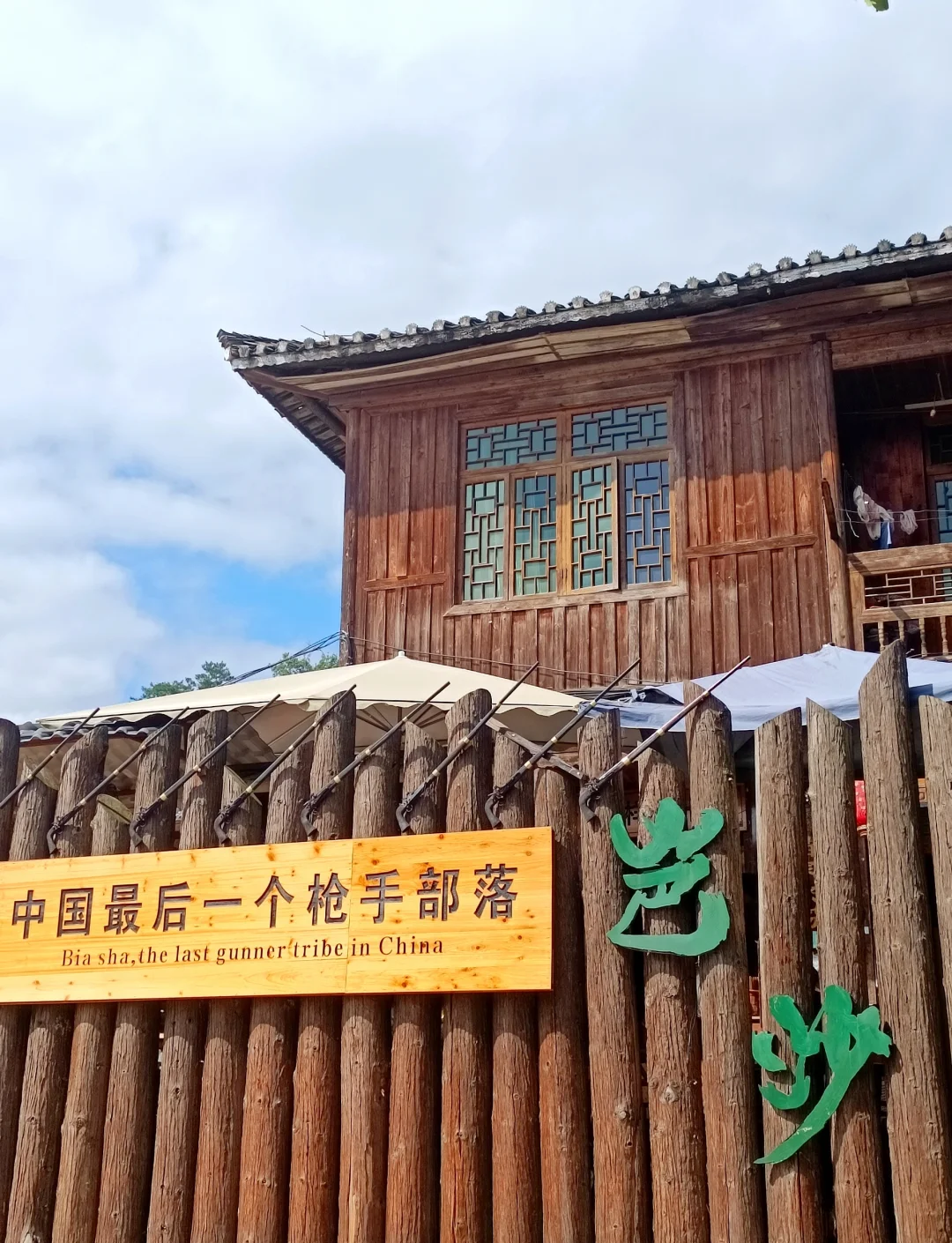
-
Zhanli Dong Village
Zhanli Dong Village is located in Gaozeng Township, Congjiang County, Qiandongnan Miao and Dong Autonomous Prefecture, Guizhou Province, with a land area of approximately 15.97 square kilometers. The village is located in a valley between mountains at an altitude of 380 meters, surrounded by lush forests of Cangshan. Clear streams flow through the village, and there are more than 150 hanging wooden buildings built along the mountain, including drum towers, wind and rain bridges, and drying racks with Dong ethnic characteristics.
Since the Qing Dynasty, the village has implemented a tradition of population control, which stipulates that each couple should not have more than two children and limits the number of children based on grain production. The annual fertility oath ceremony is held on the first day of the second lunar month and the first day of the eighth lunar month, following the traditional marriage custom of "men not marrying, women not marrying". As of 2012, the gender ratio of the entire village population has maintained a long-term balance.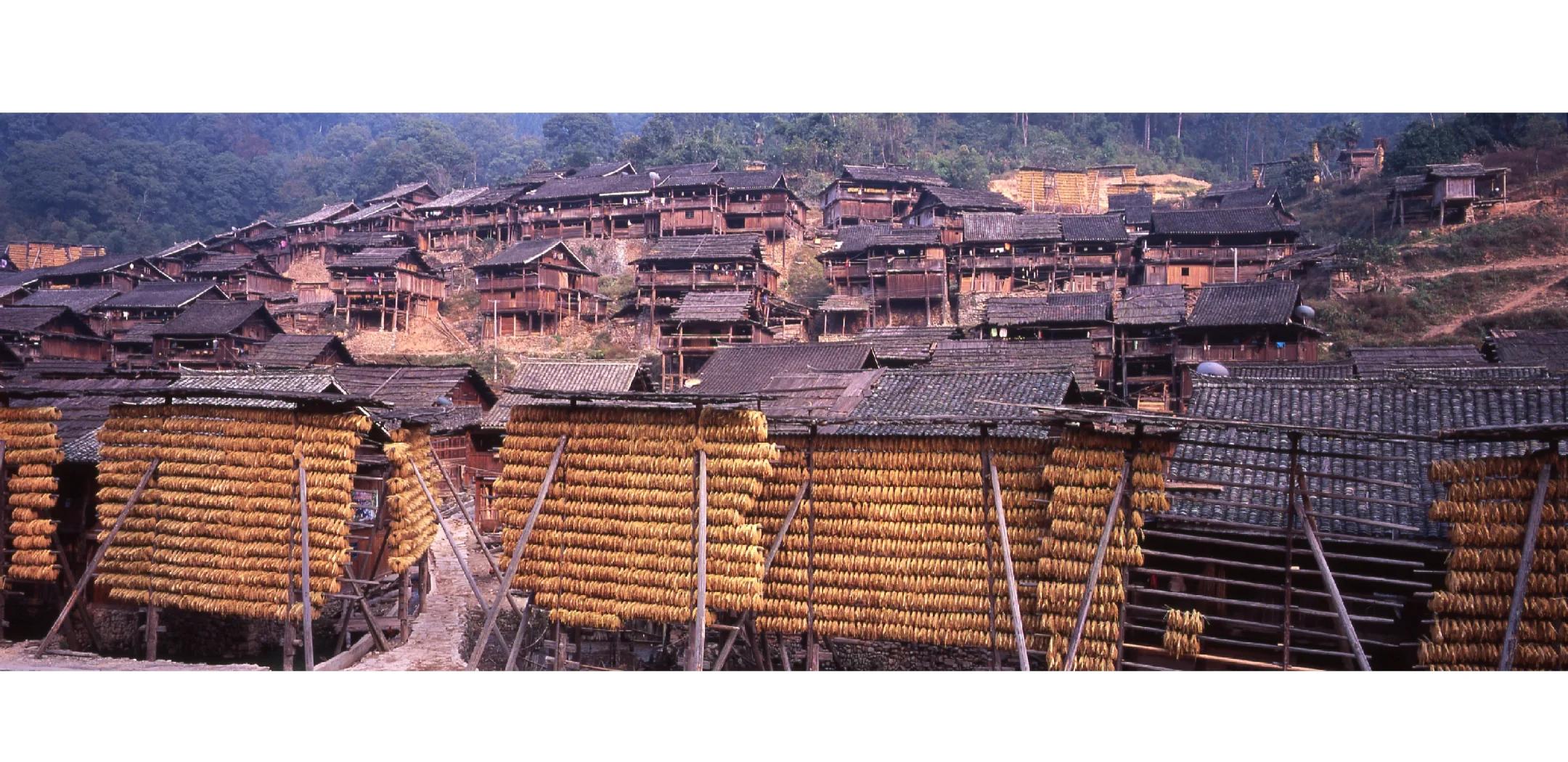
-
Xiaohuang Dong Village
Xiaohuang Dong Village is located on the top of Houpo Mountain in Gaozeng Township, Congjiang County, Guizhou Province. It is about 15 kilometers away from Gaozeng Township and more than 20 kilometers away from the county seat. It consists of three natural villages: Xiaohuang, Gaohuang, and Xinqian. There are currently more than 600 households and 3000 Dong residents. The village is based on the core cultural tradition of the Dong ethnic group's big song ("Ga Xiao Huang"), with more than 20 existing song teams and over a thousand singers, and is known as the "hometown of Dong songs".
In 1986, French musician Louis Dangdelaire invited nine local Dong girls to perform Dong ethnic songs at the Golden Autumn Festival in Paris. Since then, this performance form has appeared on stages such as the CCTV Spring Festival Gala and the World University Games. Hundreds of stilted houses are built along the river in the village, and the villagers continue their traditional hospitality customs. Every evening, dressed in costumes, men, women, and children of the Dong ethnic group gather in front of the drum tower to perform multi part unaccompanied singing. The Dong ethnic group's big song performance team established locally not only performs for tourists in the village, but also participates in cultural exchange activities at home and abroad.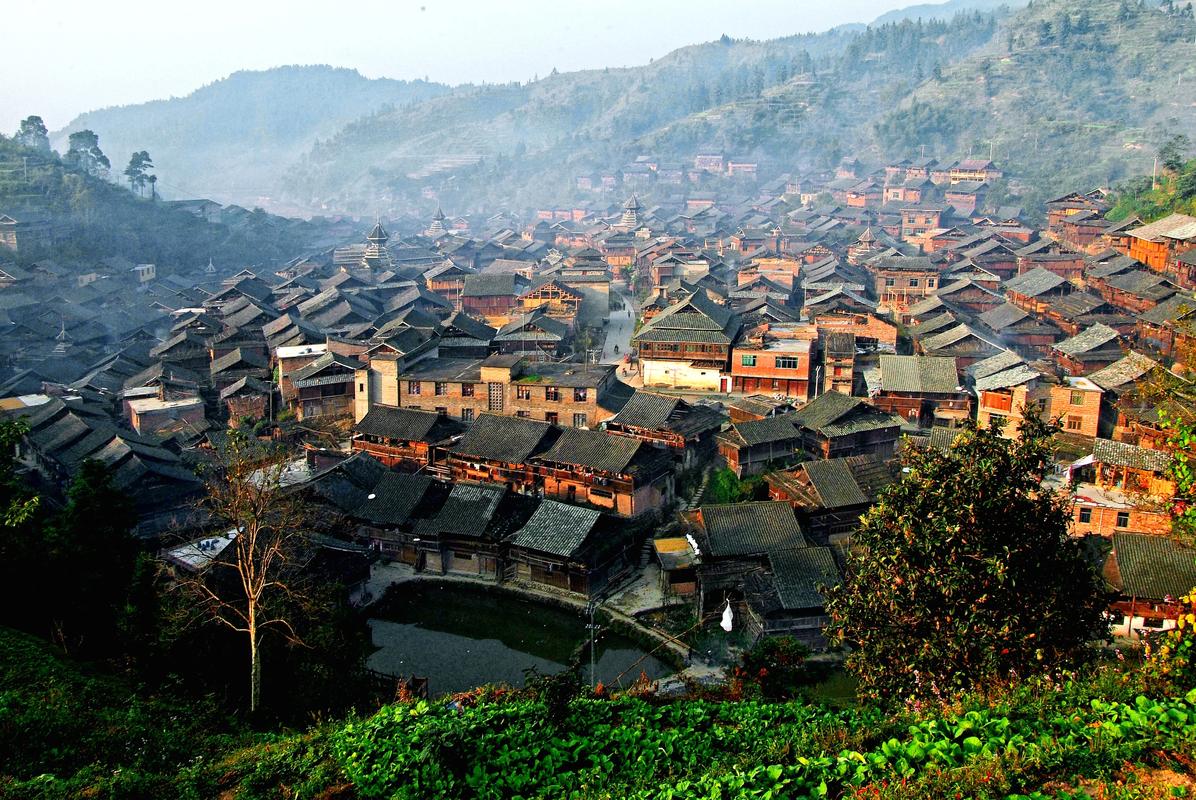
-
Huanggang Dong Village
Huanggang Dong Village, also known as Huanggang Village, is a pure Dong ethnic village located in Shuangjiang Town, Liping County, Qiandongnan Miao and Dong Autonomous Prefecture, Guizhou Province. The village was first built in the Song Dynasty and has a history of over 800 years. It preserves a large number of traditional Dong ethnic buildings such as stilted houses, drum towers, and flower bridges. Huanggang Dong Village is the birthplace and inheritance site of the "Male Dong Song" and enjoys the reputation of being the "Hometown of Male Dong Song". Its Dong Song is a polyphonic, unguided, and unaccompanied choral art. The village has a rich variety of folk activities, including unique intangible cultural heritage festivals such as "lifting officials" and "shouting for heaven", and preserves the globally important agricultural cultural heritage of "rice fish duck" compound breeding.
Huanggang Dong Village was founded in the Song Dynasty and has a history of over 800 years. It is a pure Dong village with more than 1800 people. Due to its location in the deep mountains and limited transportation, the village has long maintained its traditional way of life from a hundred years ago. In 2012, Huanggang Village was included in the first batch of the "List of Traditional Chinese Villages".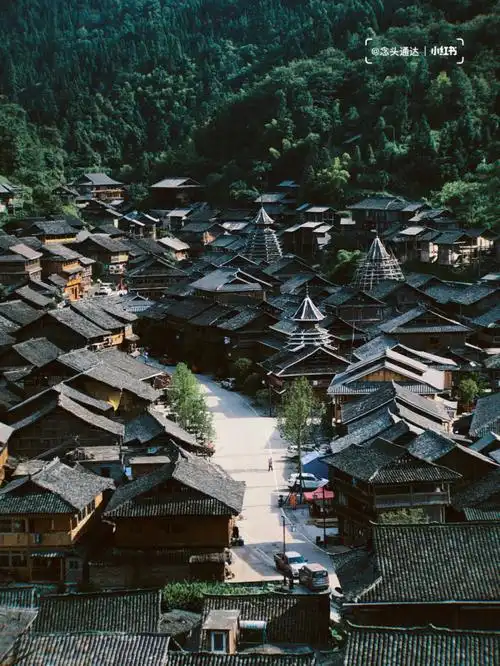
- Breakfast , Lunch
- Private Van
- English-speaking guide services as per itinerary
-
Tang'an Terraced Fields
Tang'an Terraced Fields are located in Tang'an Village, Zhaoxing Town, Liping County, Qiandongnan Miao and Dong Autonomous Prefecture, Guizhou Province. It is one of the most well preserved ecological and cultural landscapes in the Dong ethnic region of China. Terraced fields are characterized by stone embankments, using a unique construction technique of "stone filling and soil filling" to form a layered and stepped distribution, winding and undulating like green waves along the mountain terrain. The landscape is distinct in four seasons: after the spring water storage, the waves shimmer like mirrors, the rice seedlings are lush and lively in summer, the golden rice ears in autumn show a scene of harvest, and the white snow cover in winter presents a sacred beauty. The terraced fields, along with the stilt houses and drum towers of Tang'an Dong Village, constitute the living heritage of Dong farming civilization. In 2011, it became the core area of an ecological museum jointly established by China and Norway
The four season landscape in spring (March May) presents a mirror effect after the terraced fields are filled with water, forming a shimmering silver texture under sunlight. In summer (June August), rice seedlings grow and form green blocks of varying shades, blending with morning mist to create a visual effect similar to ink painting. In autumn (September November), when the rice ears mature, the golden rice fields form a strong contrast with the dark stone ridges, and the harvested rice stubble shows a reddish brown gradient in the sunlight. The terraced landscape presents a sacred beauty in winter (December February).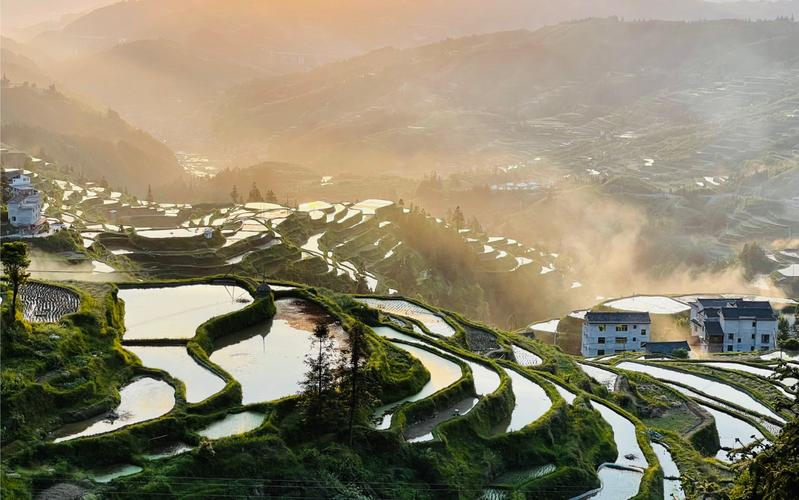
- congjiang to guiyang by Bullet Train
- Breakfast , Lunch
- Private Van
- English-speaking guide services as per itinerary
-
Huangguoshu Waterfall
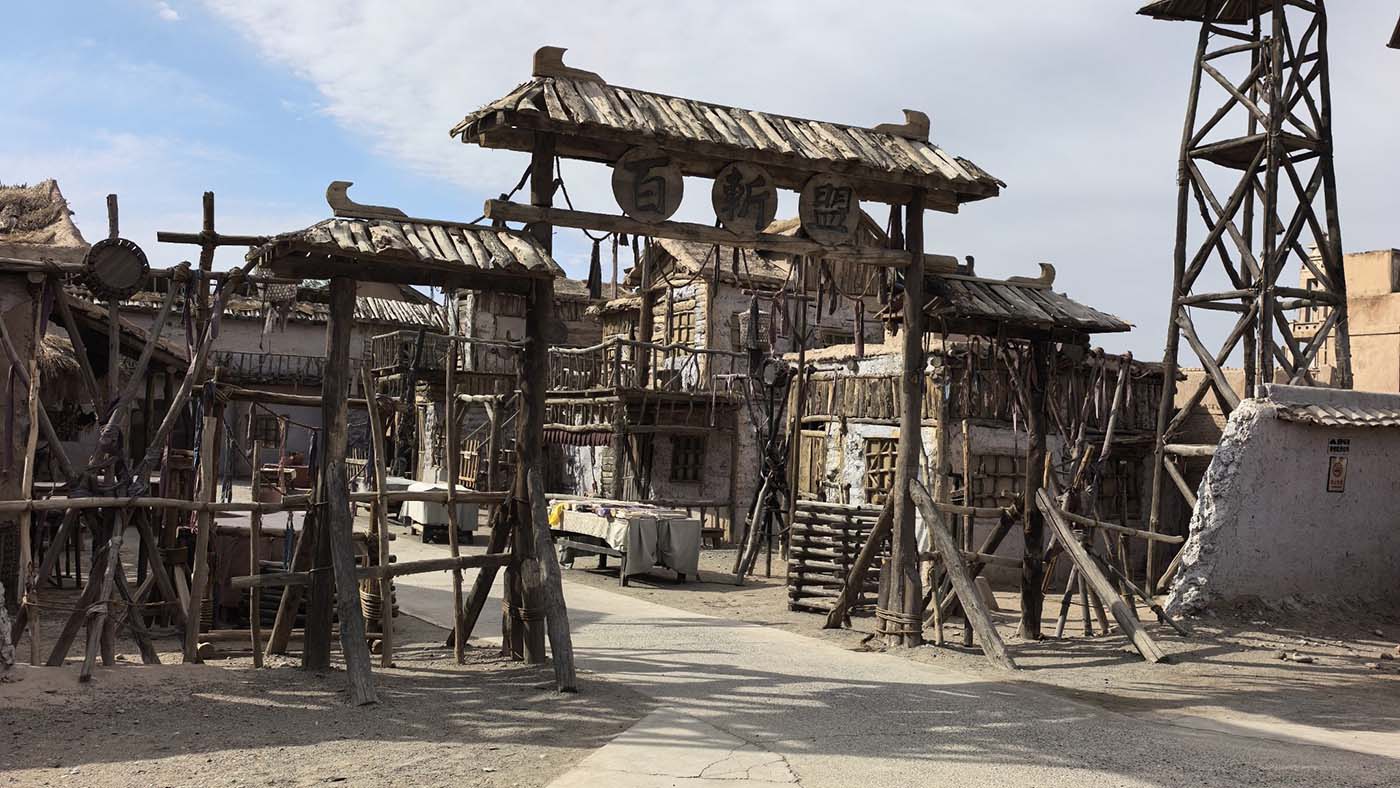
Huangguoshu Waterfall, also known as Huangguoshu Waterfall. Formerly known as Baishuihe Waterfall, also known as "Huanggeshu" Waterfall or "Huanggeshu" Waterfall, the myth of Huangguoshu Waterfall has been passed down among the people of Guizhou since ancient times. The name Huangguoshu Waterfall comes from the tree that bears the "yellow fruit" in this myth. It is located in Zhenning Buyi and Miao Autonomous County, Anshun City, Guizhou Province, China. It belongs to the water system of Baishui River section at the lower reaches of Kebu River, a tributary of Dabang River, a tributary of Beipan River, a tributary of the Pearl River water system. It is the largest first-class waterfall in Huangguoshu Waterfall Group and one of the world famous waterfalls. Known for its vast water flow. The height of the waterfall is 77.8 meters, of which the main waterfall is 67 meters high; The waterfall is 101 meters wide, with the main waterfall top being 83.3 meters wide. Huangguoshu Waterfall belongs to the erosion fissure type waterfall in karst landforms.
The fame of Huangguoshu Waterfall began with the Ming Dynasty traveler Xu Xiake, and through the travels and dissemination of famous figures throughout history, it has become a well-known scenic spot.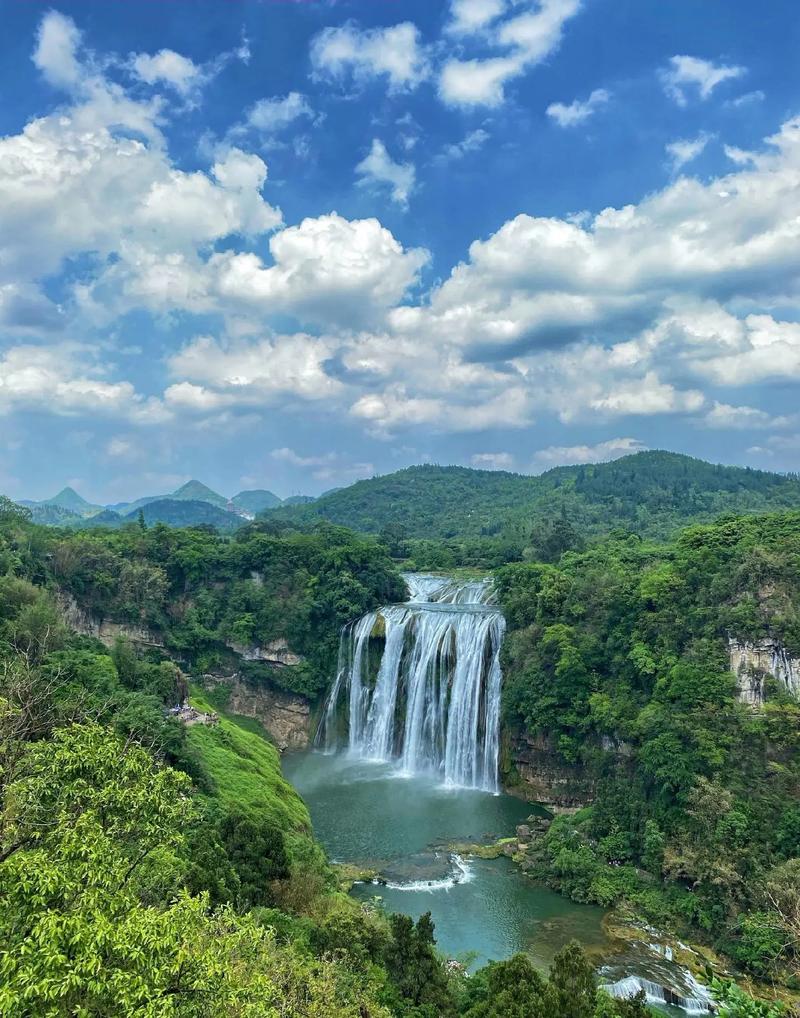
-
The Tianlong Tunbao Scenic Area(Tianlong Tunpu Ancient Town)
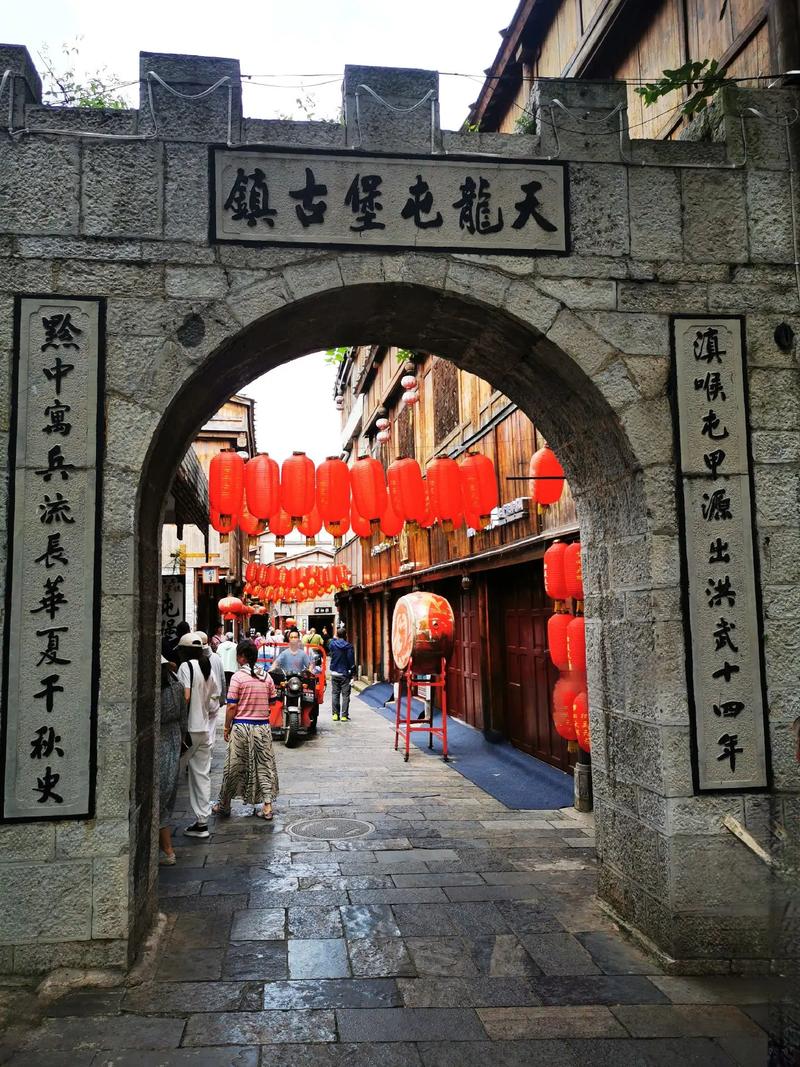
The Tianlong Tunbao Scenic Area is located in Tianlong Town, Pingba District, Anshun City, Guizhou Province, about 60 kilometers away from Guiyang City, 30 kilometers away from Anshun City, and 13 kilometers away from Pingba City. It is a living relic of the Ming Dynasty Tunbao culture and has a long history of 600 years. Its history can be traced back to the early Ming Dynasty's military campaign of "transferring north to conquer south". Descendants of border guards and civilians preserved the Jianghuai architectural style and customs, forming defensive settlements represented by stone houses, watchtowers, and cat windows. Women wear Fengyang Han costumes and three strand headpieces, continuing the characteristics of Ming Dynasty clothing; Di Xi uses plays such as "The Three Kingdoms" and "Yang Family Generals" as carriers, retaining the military Nuo performance form. The Yuan Dynasty was an important post station on the Shunyuan Ancient Post Road. The existing main street runs through the core village, connecting ancient buildings such as gatehouses, Yanwu Hall, Tea Post Station, and Shen Wansan's former residence. The layout of the alleyways still has military defense functions
- Breakfast , Lunch
- Private Van
- English-speaking guide services as per itinerary
-
Dali Ancient Town
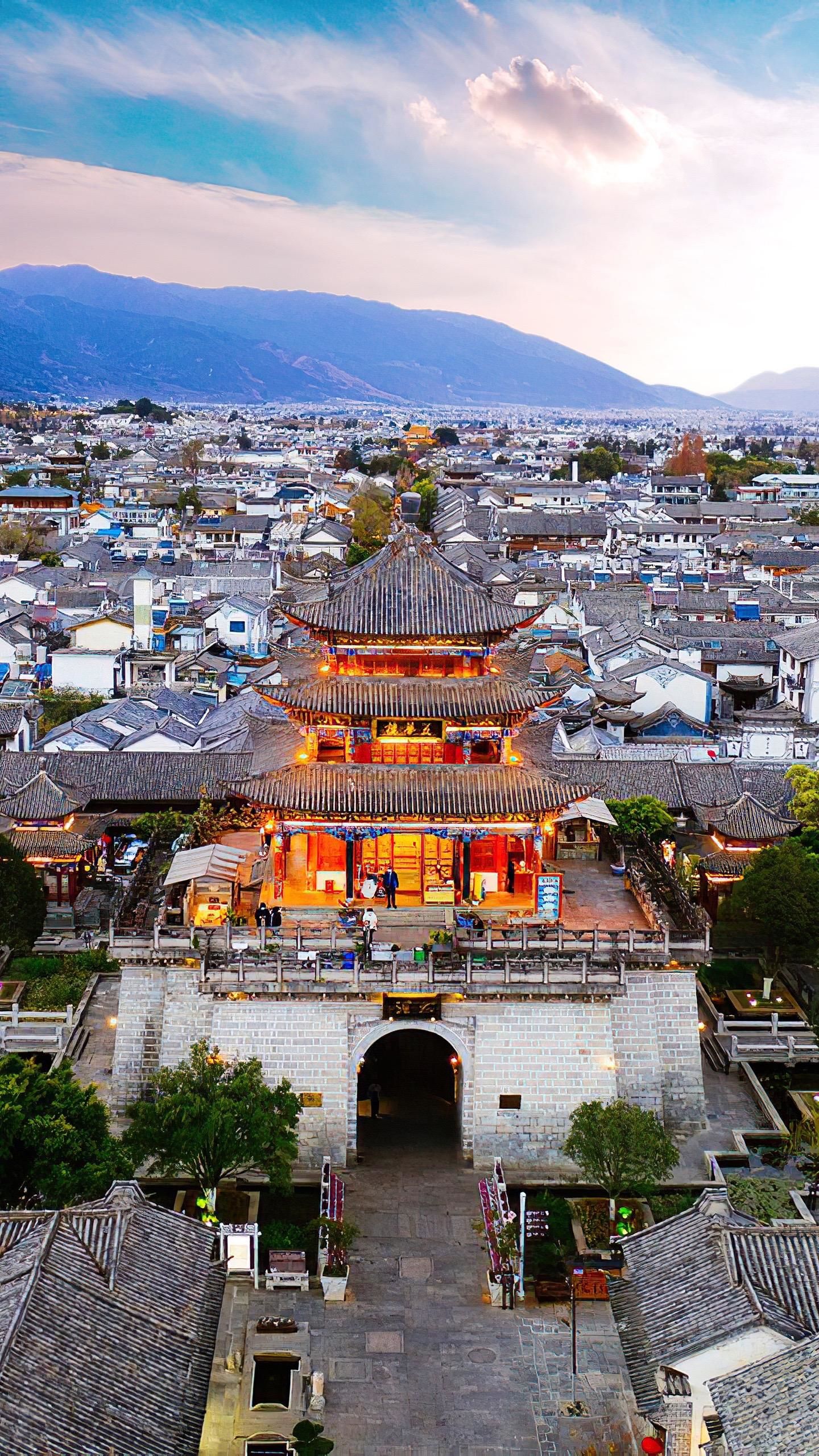
Dali Old City is located in the west of Yunnan Province, also known as Yeyucheng and Zicheng. The history of the ancient city can be traced back to the Tianbao period of the Tang Dynasty. The Yangju Mie City built by the Nanzhao Wang Ge Luo Feng was its new capital. The ancient city was founded in the 15th year of the Hongwu reign of the Ming Dynasty (1382), covering an area of 3 square kilometers.
- Guiyang to Dali by Bullet Train (Guiyang to Dali)
- Breakfast
- Private Van
- English-speaking guide services as per itinerary
-
Xizhou Ancient Town
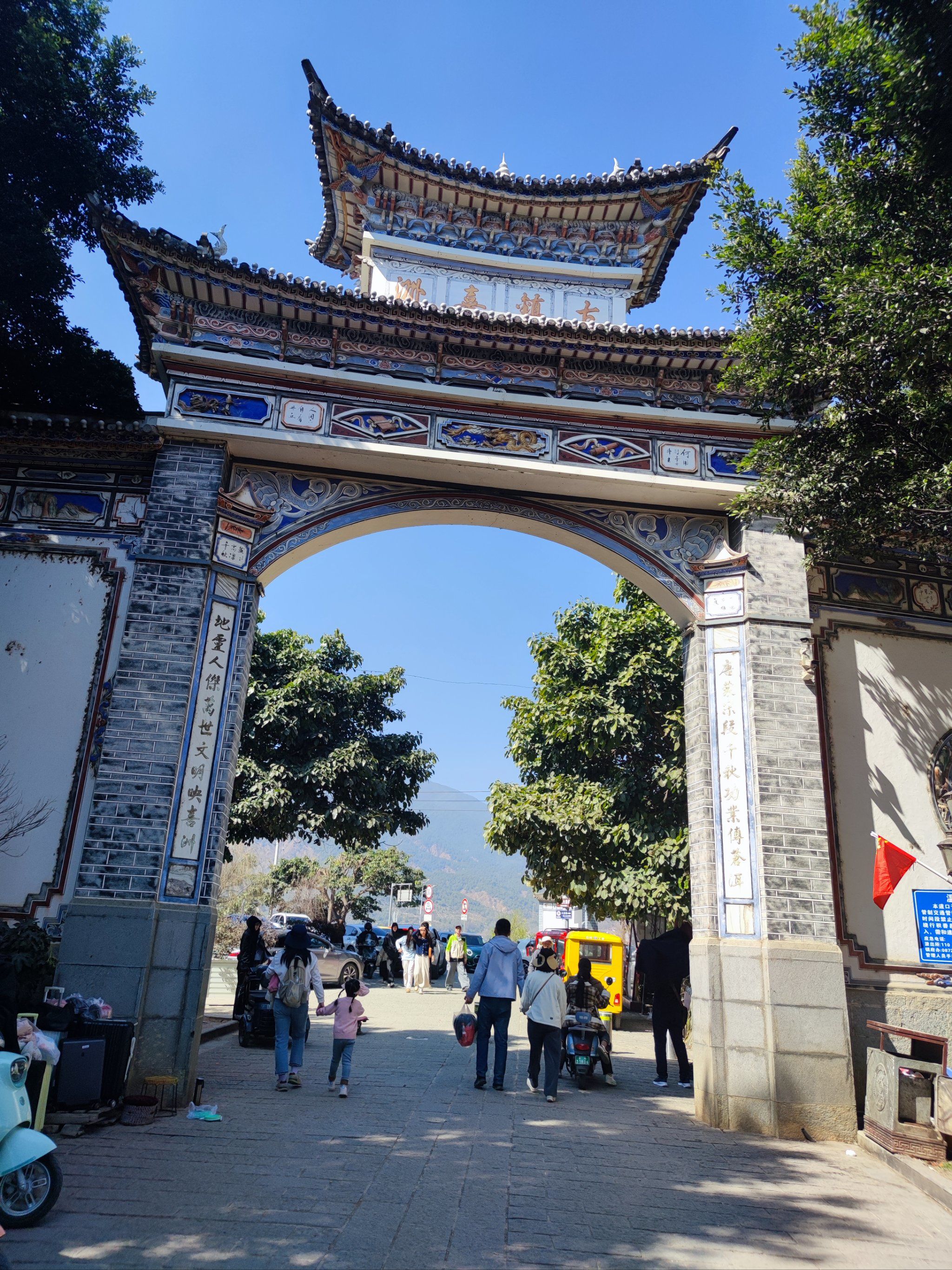
Xizhou Ancient Town was once the first ancient capital of Nanzhao Kingdom in the Tang Dynasty, and there are still key courtyards such as Yan Family Courtyard and Dong Family Courtyard. Implement projects such as the protection and renovation of Zhao Mansion and the renovation of Cangyi Library, and build the Jiajie Ji Agricultural Culture and Art Museum and the Jiangzhi Ji Folk Art Museum. In 2020, we received approximately 2 million tourists and developed intangible cultural heritage experience projects such as tie dyeing and clay sculpture, forming an annual output value of over 70 million yuan in the tie dyeing industry chain. Planting organic crops such as rice and rapeseed around the ancient town, creating ecological agricultural product brands such as "Xi Mi" and "Xi You"
-
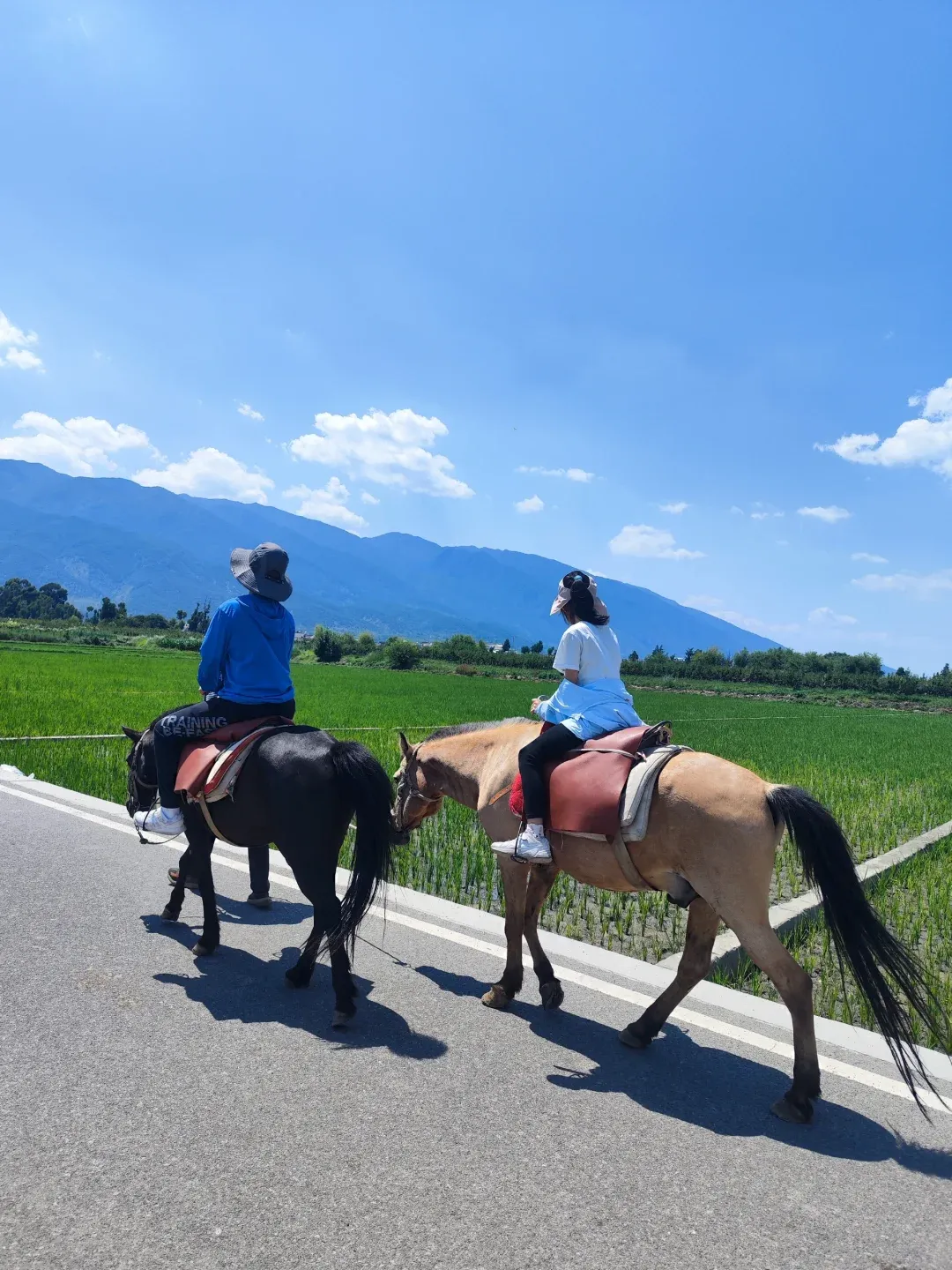
Horse Carriage Ride
Take a 1-hour horse carriage ride to Haishe Wetland Park, enjoying the natural scenery of Erhai Lake and the surrounding countryside.
-
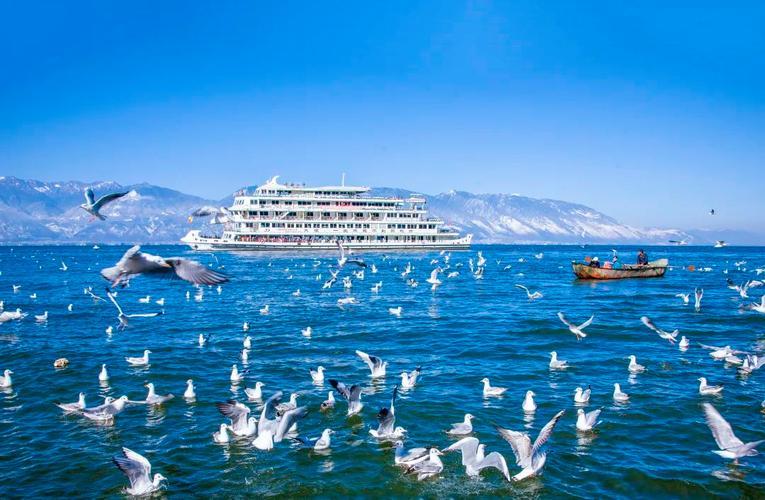
Erhai Lake Cruise
Erhai Lake is a beautiful plateau freshwater lake, and is one of the four scenic spots in Dali, known as the "Erhai Moon". Erhai Lake is famous for its clear lake water and beautiful mountain scenery, and the occasional passing of white egrets on the surface of the lake adds a vivid natural atmosphere. By taking a cruise ship to Erhai Lake, tourists can enjoy the pastoral scenery on both sides of the river and the beautiful scenery of Cangshan Mountain in the distance. They can also see the Little Putuo Island from afar, the Nanzhao Style Island from afar, and the White Marble Guanyin Statue from a close distance.
- Breakfast , Lunch
- Private Van
- English-speaking guide services as per itinerary
-
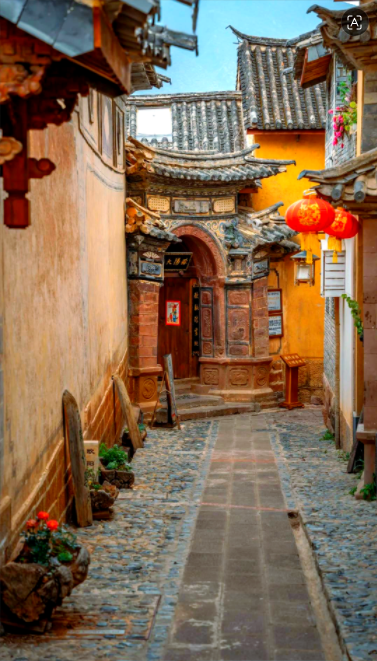
Shaxi Ancient TownShaxi Ancient Town, a well-preserved relay station on the ancient Tea and Horse Road. The white walls and gray-tiled buildings along the river showcase a distant historical memory. The ancient stone roads and bridges connect the stores, highlighting simplicity and antiquity.
- Breakfast , Lunch
- Private Van
- English-speaking guide services as per itinerary
-
Lijiang Ancient Town(The Old Town of Lijiang)
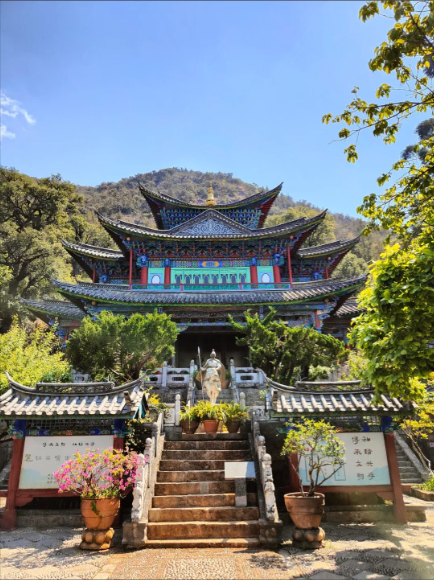
The Old Town of the Old Town of Lijiang, located in the ancient city district of Lijiang City, Yunnan Province, is located in Bazi, the Old Town of Lijiang. In a narrow sense, it refers to Dayan Ancient City. The world cultural heritage "the Old Town of Lijiang" includes Dayan Ancient City (including Black Dragon Pond), Shuhe Ancient Buildings, and Baisha Ancient Buildings. The Old Town of Lijiang covers an area of 7.279 square kilometers.
The Old Town of Lijiang was built at the end of the Song Dynasty and the beginning of the Yuan Dynasty. The ancestors of Lijiang Mu family moved their ruling center from Baisha Ancient Town to Shizishan, and began to build a housing city, called "Daye Market". In the Ming Dynasty, the establishment, consolidation and improvement of the chieftain system made the Old Town of Lijiang enter the first brilliant period in its history. In the Qing Dynasty, with the improvement of agricultural productivity and the development of handicrafts, the Old Town of Lijiang gradually developed into a commercial center. Since the Republic of China, there have been more than 1200 businesses in the Old Town of Lijiang. In December 2002, the State Council officially approved the removal of land from the Old Town of Lijiang and the establishment of Lijiang as a city. The Old Town of Lijiang has integrated the essence of Han, Bai, Yi, Tibetan, Naxi and other ethnic groups from the overall layout of the city to engineering and architecture. There is no regular road network and strict city walls in the city. The streets within the ancient city of Dayan are built along the mountains and waters, paved with red breccia. There are attractions such as the Wangu Tower, Mufu, Wufeng Tower, Heilongtan, Wenchang Palace, Fang Guoyu's former residence, Puji Temple, Sifang Street, Kegongfang, and Xueshan Academy. In April 2026, the Old Town of Lijiang was named by the Ministry of Culture and Tourism due to management services and other issues.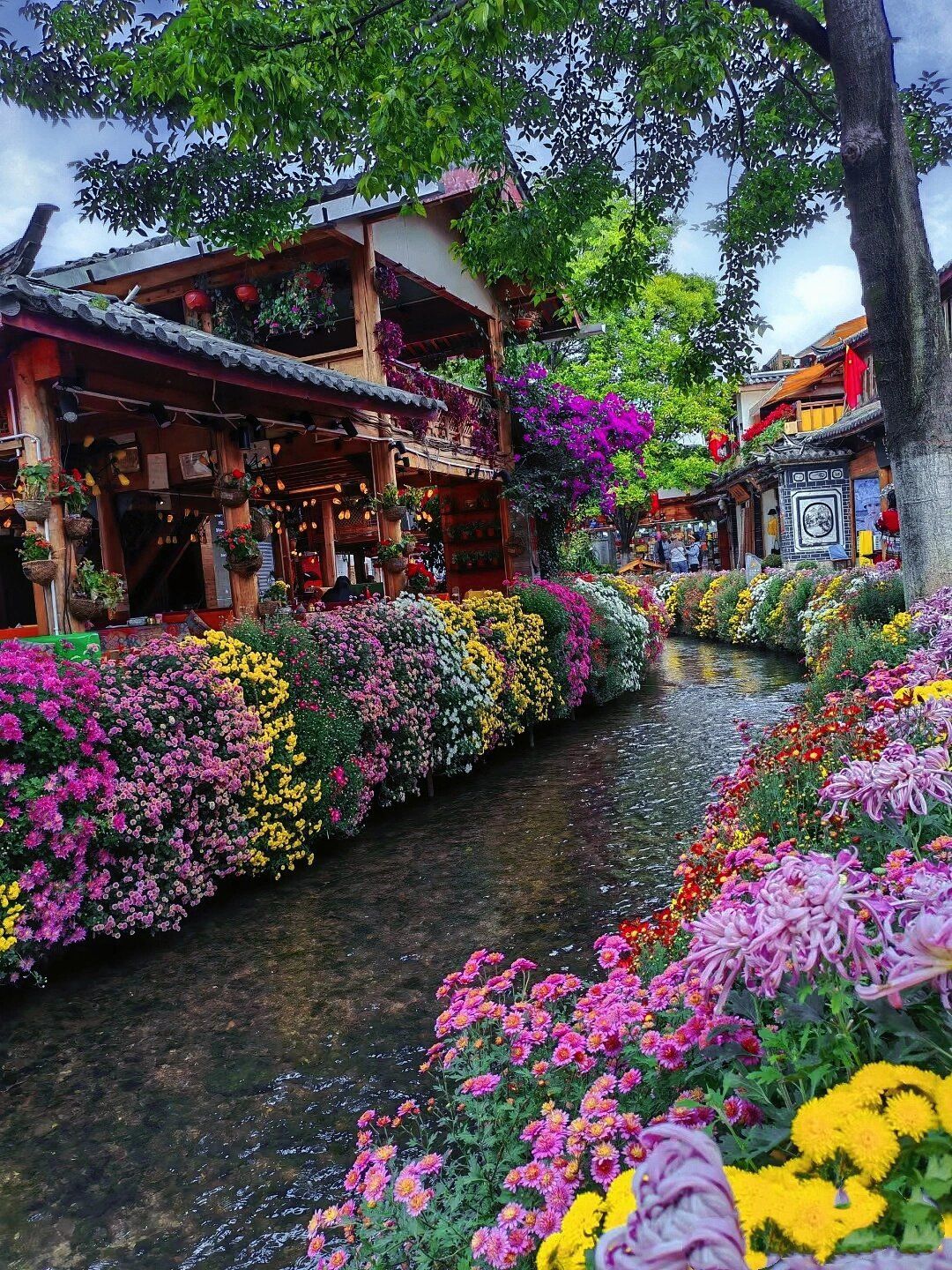
-
The Lijiang Naxi Dongba Cultural Museum
The Lijiang Naxi Dongba Cultural Museum was established in 1984, formerly known as the Lijiang County Museum, and is the first county-level museum in Yunnan Province. The museum is located next to Heilongtan Park in Lijiang City, Yunnan Province, covering an area of 7 acres. The building adopts the traditional Naxi layout of "three squares and one screen wall" and "four in five courtyards". There are over 12000 cultural relics in the collection, including 67 national first-class cultural relics and nearly 3000 Naxi Dongba cultural relics. It is an important Dongba cultural relics collection institution. Permanent exhibitions such as the "Naxi Dongba Culture Exhibition" and the collection of Dongba ancient books and documents were included in the Memory of the World Heritage List in 2003
- Breakfast , Lunch
- Private Van
- English-speaking guide services as per itinerary
- Lijiang to Lhasa by Flight (Lijiang to Lhasa)
Recommended activities
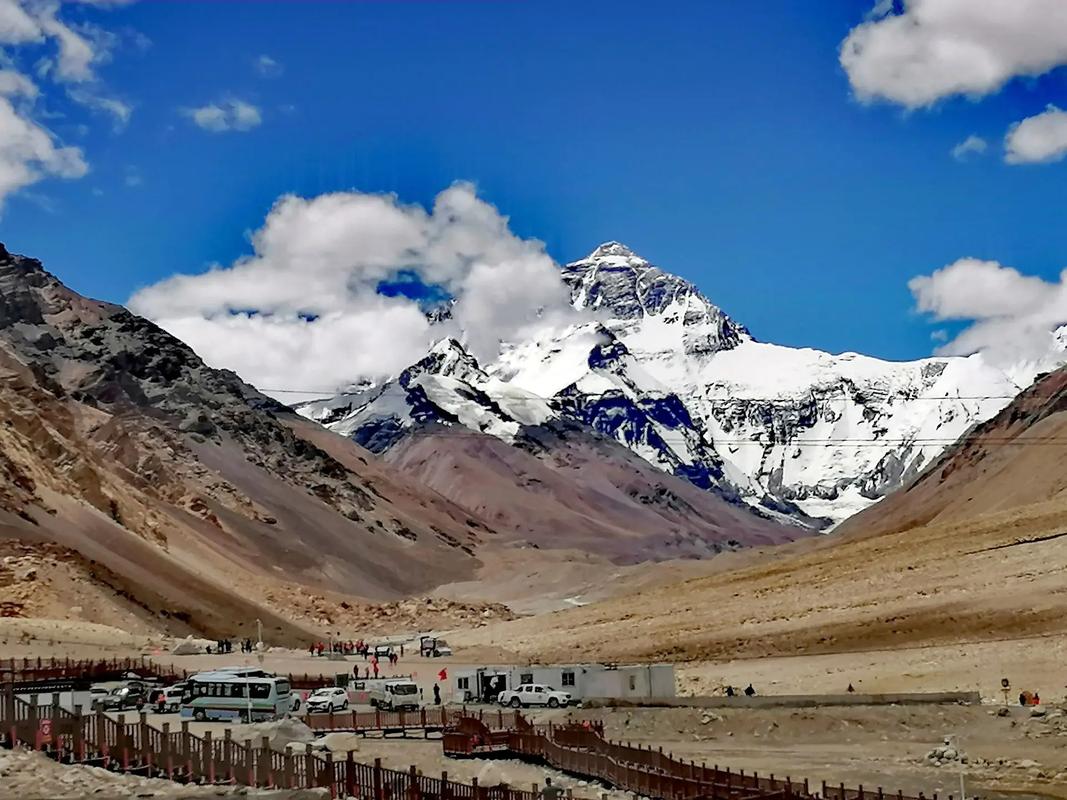
- Breakfast
- Private Van
- English-speaking guide services as per itinerary
-
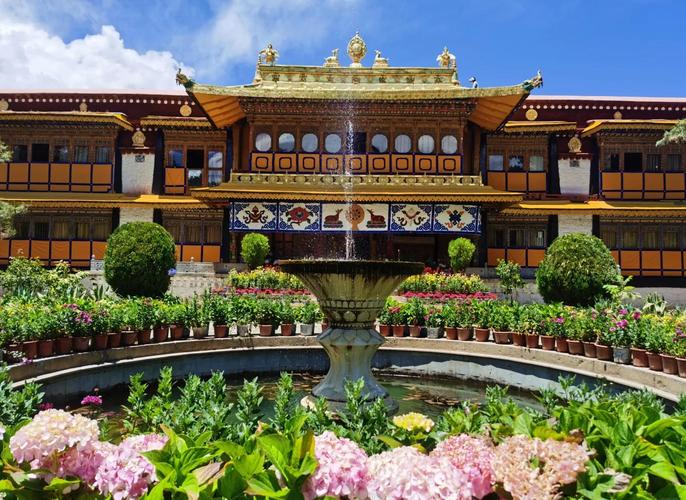
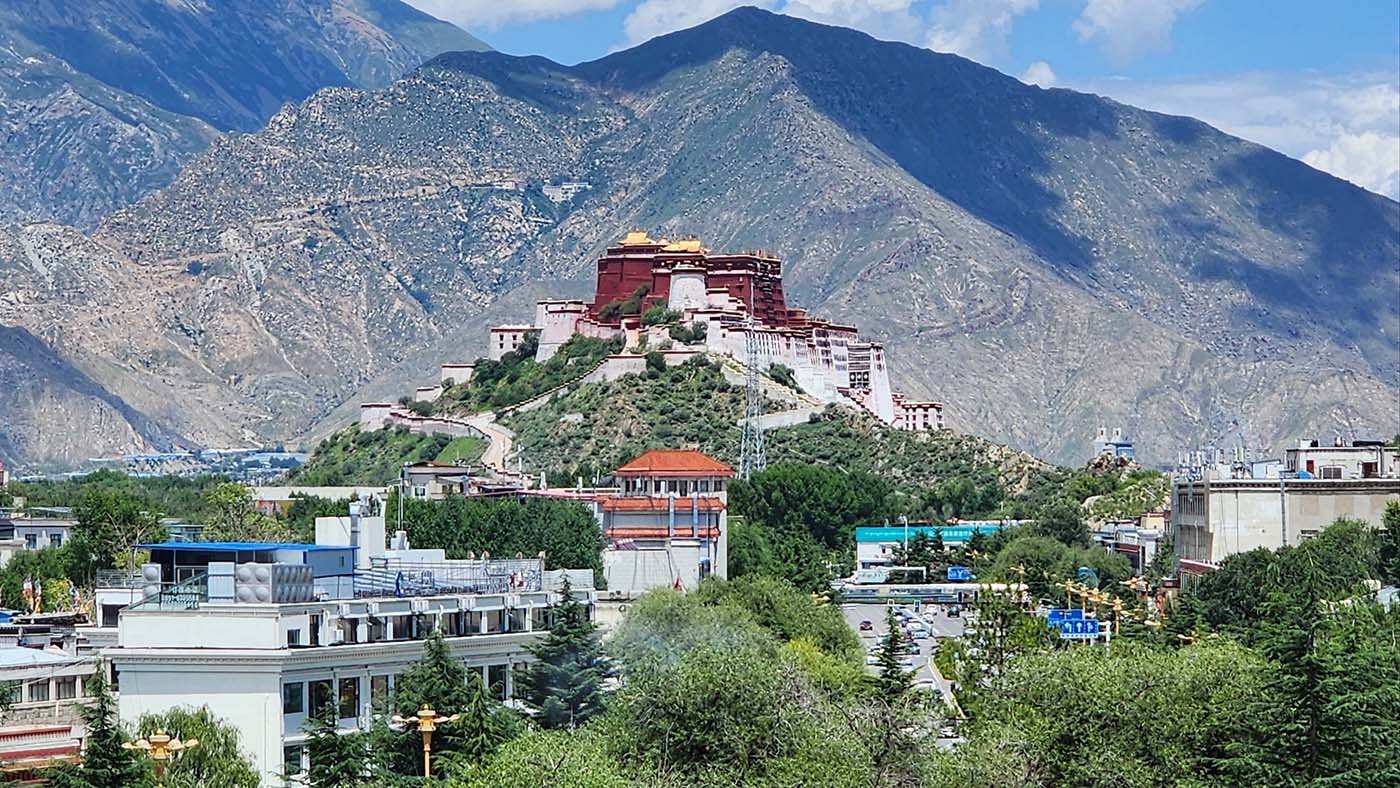
The Potala Palace
Visit the Potala Palace, the iconic winter residence of the Dalai Lama. This UNESCO World Heritage site houses intricate shrines, palaces, and museum exhibits showcasing Tibetan history. Explore its grand halls and spiritual relics while enjoying panoramic views of Lhasa, making it a highlight of any Tibetan cultural tour.
-
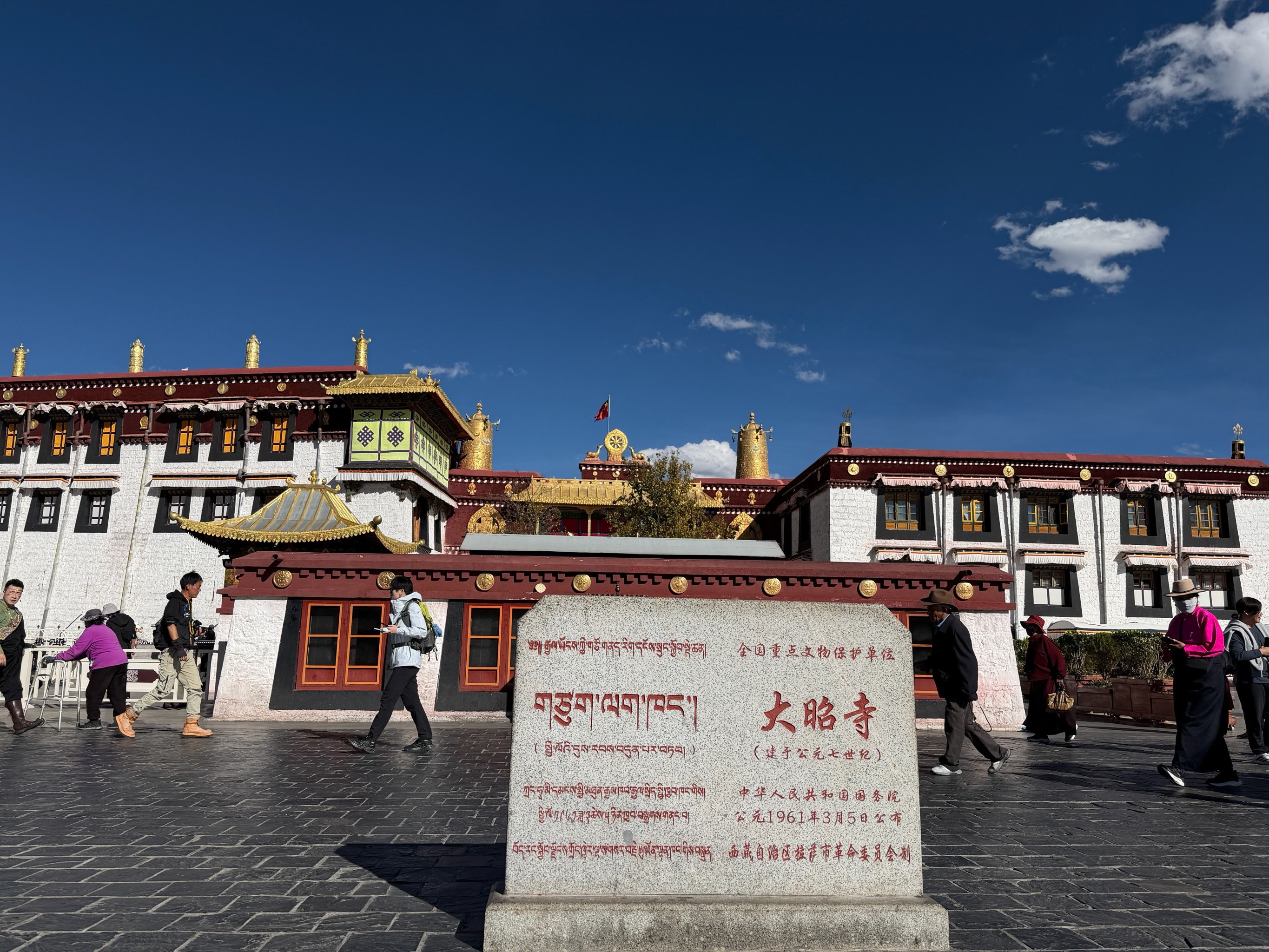
Jokhang Temple
Discover Jokhang Temple, the spiritual heart of Tibet, dating back to the 7th century. This sacred site blends Indian, Chinese, and Nepalese architecture, adorned with vibrant murals and intricate carvings. Located in Lhasa’s Barkhor area, it serves as a pilgrimage center and offers visitors an intimate look at Tibetan Buddhist rituals and history.
-
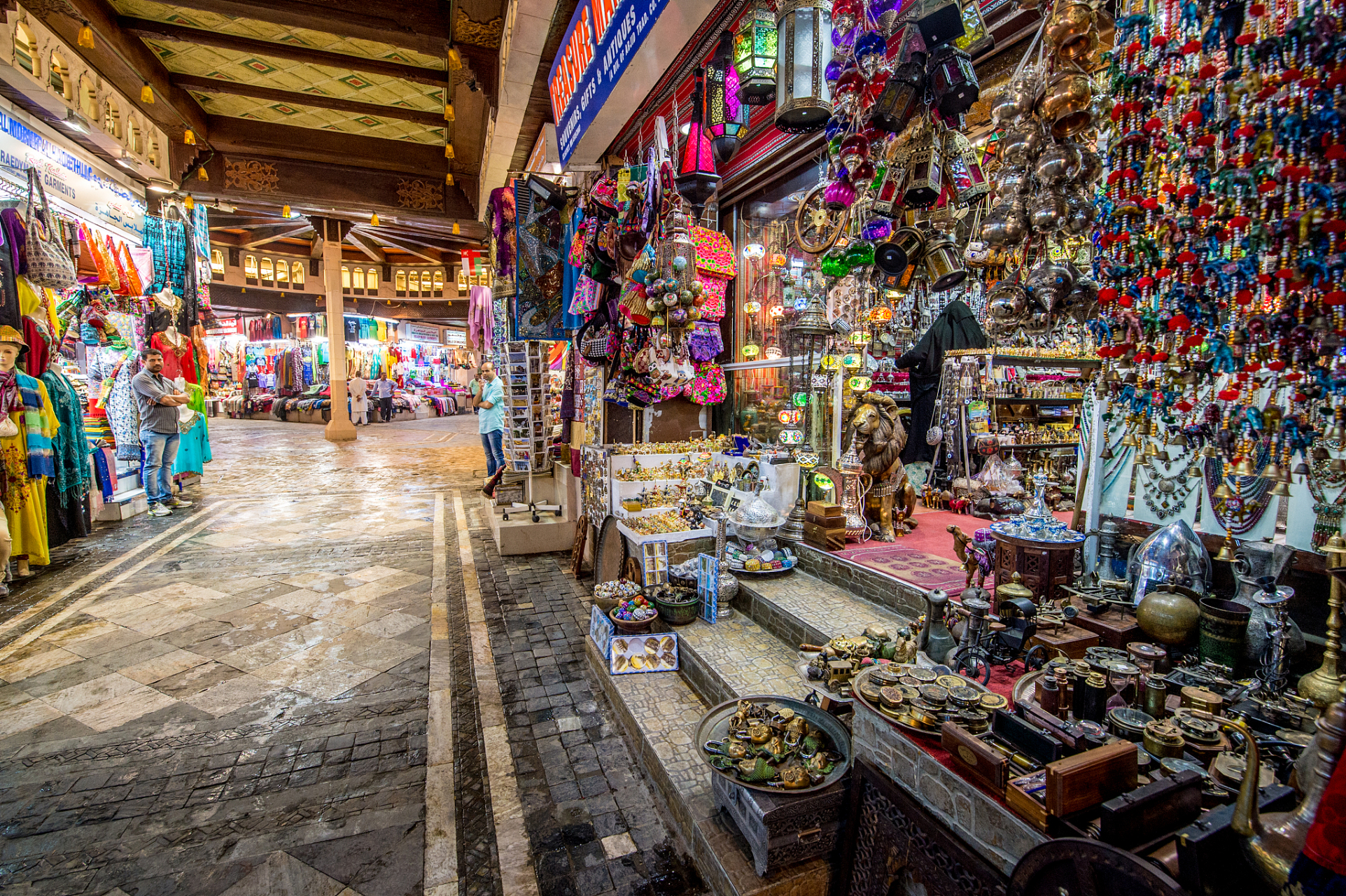
Barkhor Street
Stroll along Barkhor Street surrounding Jokhang Temple, a vibrant market selling handmade crafts, prayer wheels, and souvenirs. This narrow, historic circuit allows travelers to experience local life, observe pilgrims’ devotion, and enjoy a lively cultural atmosphere—ideal for photography and authentic Tibetan experiences.
-
Sera Monastery
Visit Sera Monastery on Lhasa’s outskirts, home to around 600 monks of the Gelugpa sect. Named for the wild roses covering the hill, it is famous for lively monk debates in the afternoons. Witness Tibetan Buddhist education and community life in an engaging, picturesque setting.
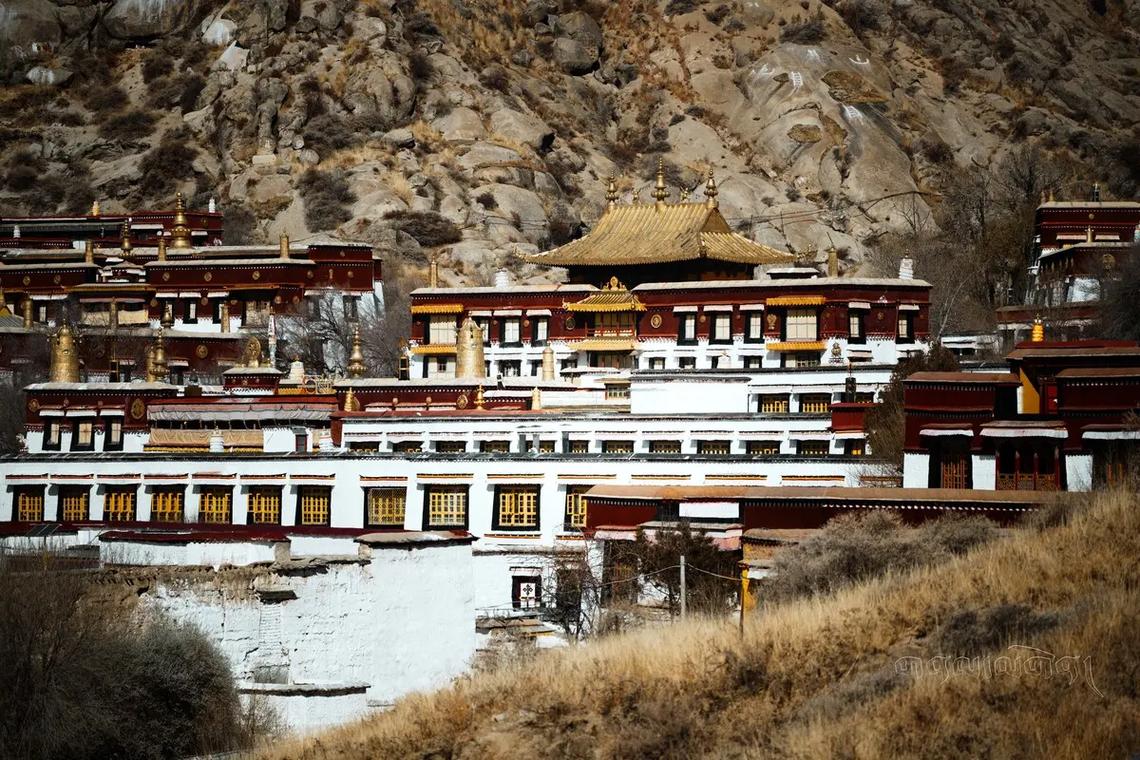
- Breakfast , Lunch
- Private Van
- English-speaking guide services as per itinerary
-
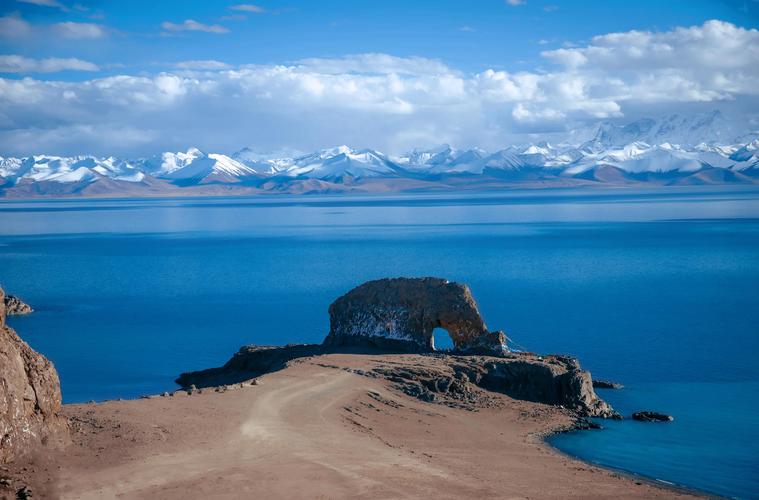
Yamdrok Lake
Head to Yamdroktso Lake, one of Tibet’s three holy lakes, surrounded by snow-capped mountains. Admire turquoise waters fed by glacial streams, with stunning natural vistas reflecting Tibetan mythology. This sacred site offers serene scenery and unforgettable photographic opportunities.
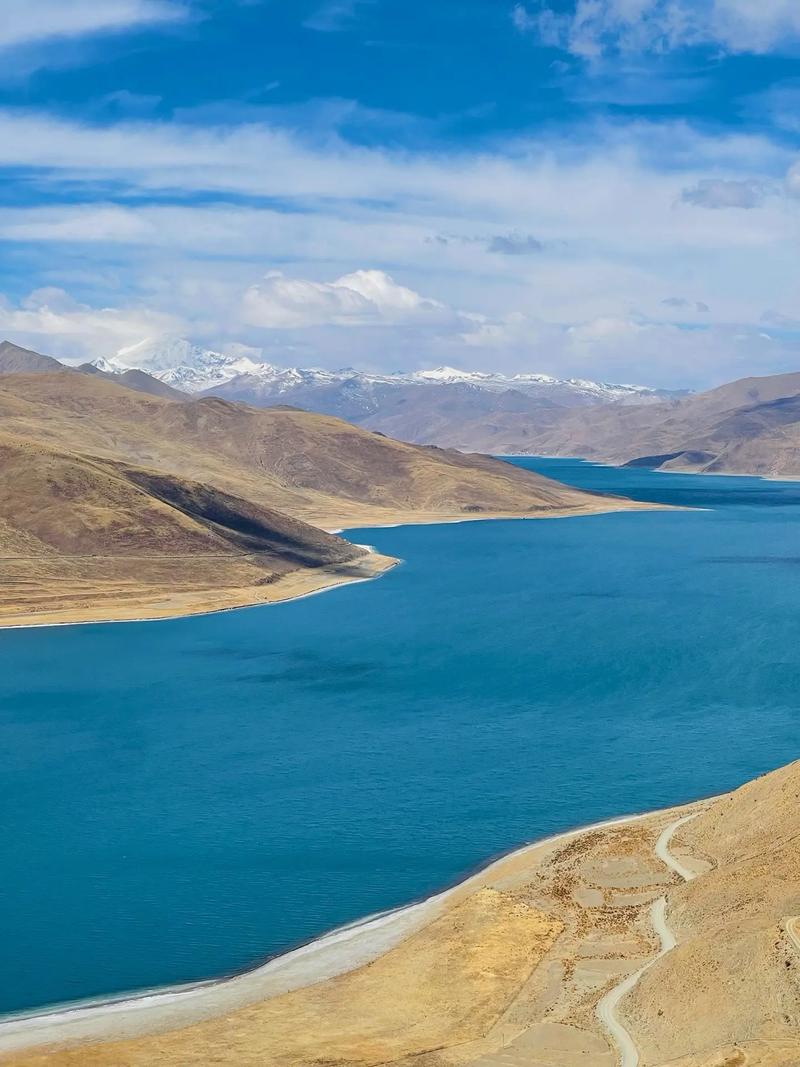
- Lhasa to shigatse (Lhasa to Shigatse)
- Breakfast , Lunch
- Private Van
- English-speaking guide services as per itinerary
-
Shigatse Free Market
The "Free Market" in Shigatse usually refers to the open-air traditional market located on Bangjiakong Road in Sangzhuzi District (about 80 meters south of Xueqiang Road and Zhashilunbu Temple), also known as the "Bangjiakong Free Market". It mainly sells Tibetan handicrafts, religious artifacts, thangkas, Tibetan knives, beeswax, copperware, Tibetan incense and other tourism products, supports bargaining, and is often visited by locals and tourists
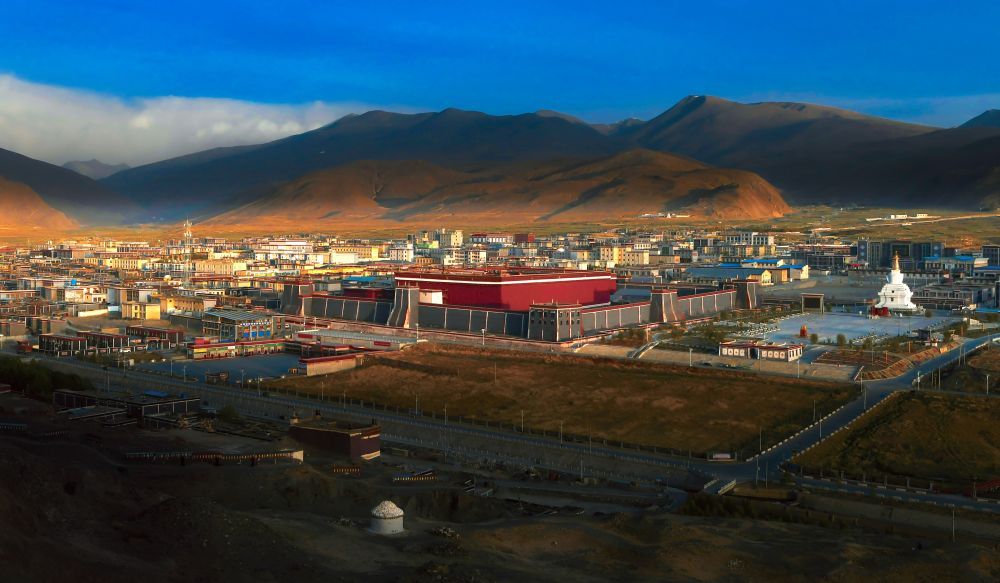
-
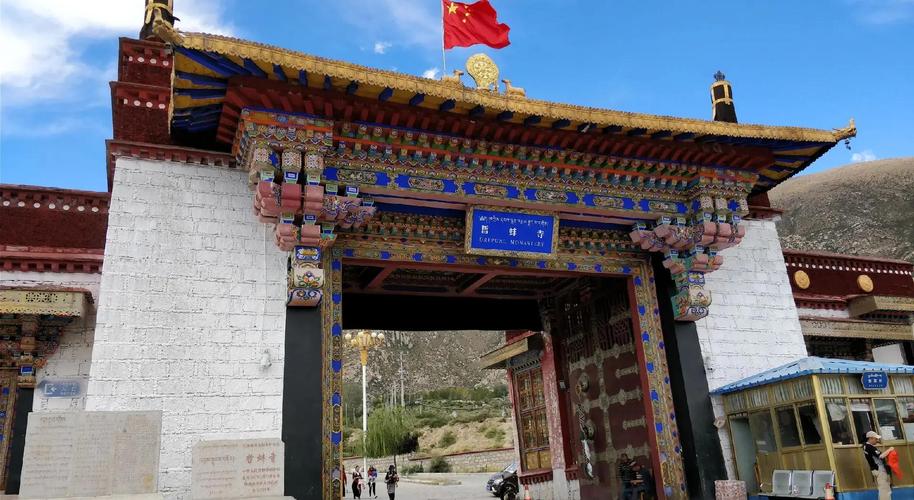
Tashilhunpo Monastery
Founded in the 15th century, Tashilhunpo is Tibet’s largest active monastery. Join pilgrims performing Kora, a meditative circumambulation, around sacred structures. Visitors experience vibrant religious rituals, intricate architecture, and Tibetan Buddhist spirituality at one of the region’s most important religious sites.
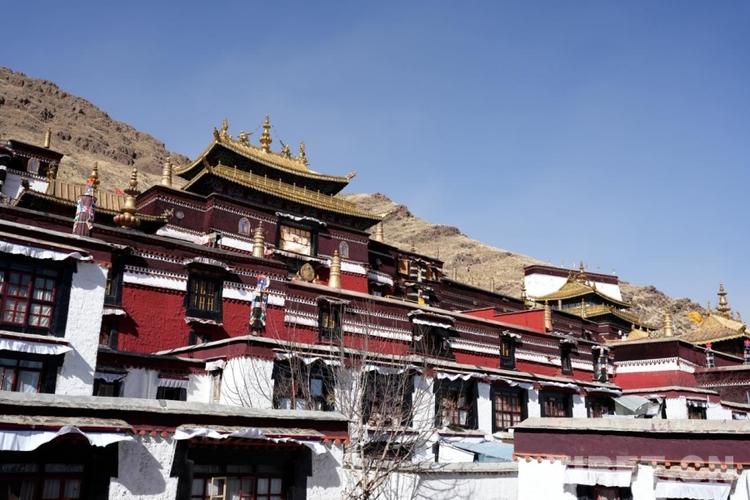
- Shigatse to Lhasa (Lhasa to Shigatse)
- Breakfast , Lunch
- Private Van
- English-speaking guide services as per itinerary
- Enjoy a private drop-off from your hotel, with a guide accompanying you and assisting throughout the transfer to your airport/train station.
- Breakfast
- Private Van
- English-speaking guide services as per itinerary
Accommodation
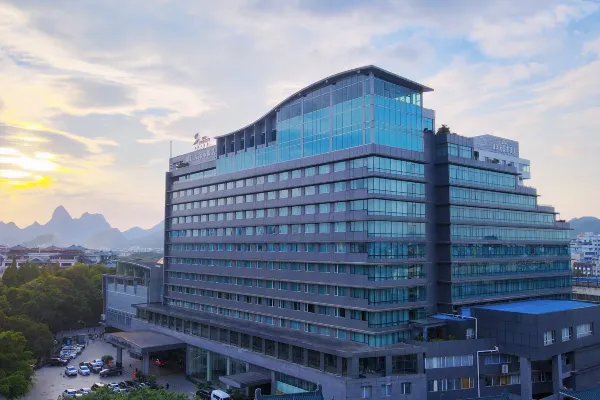
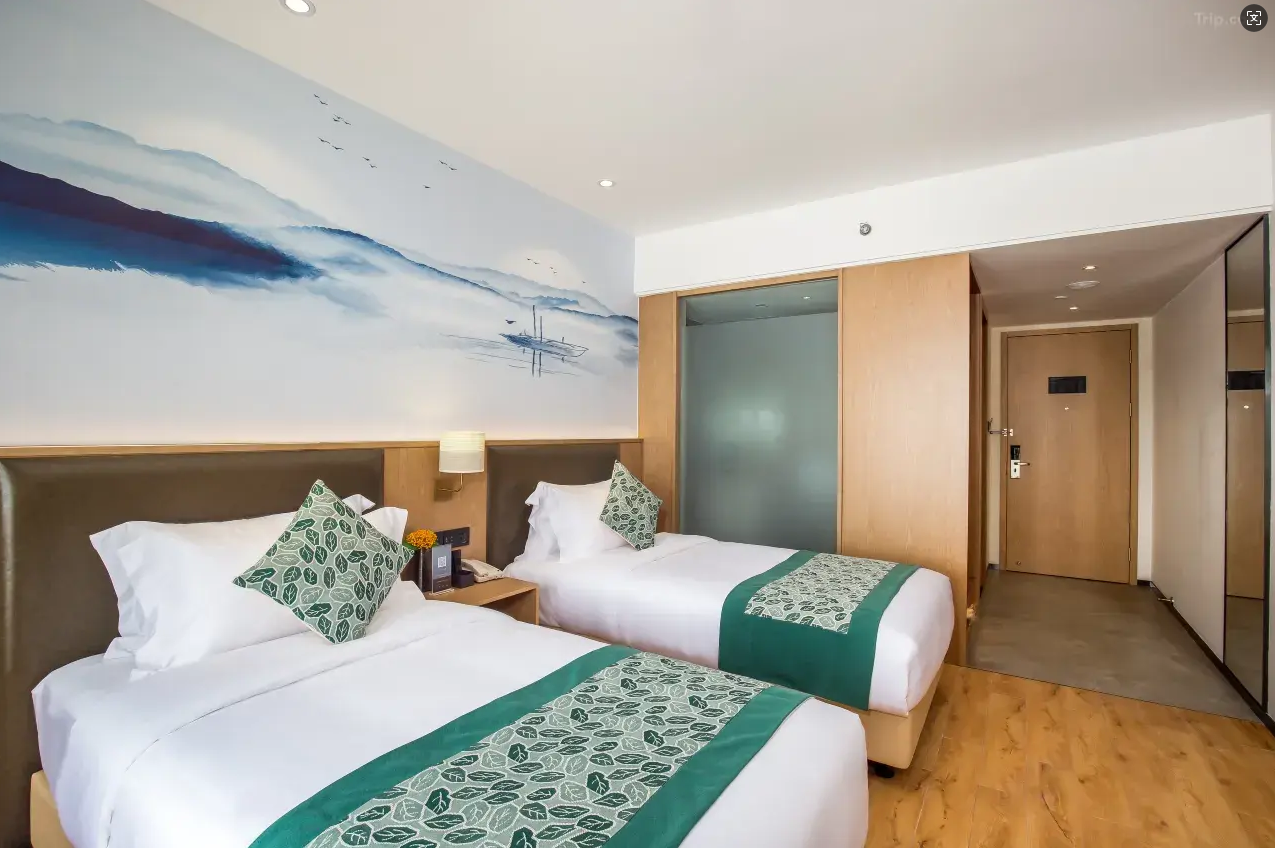
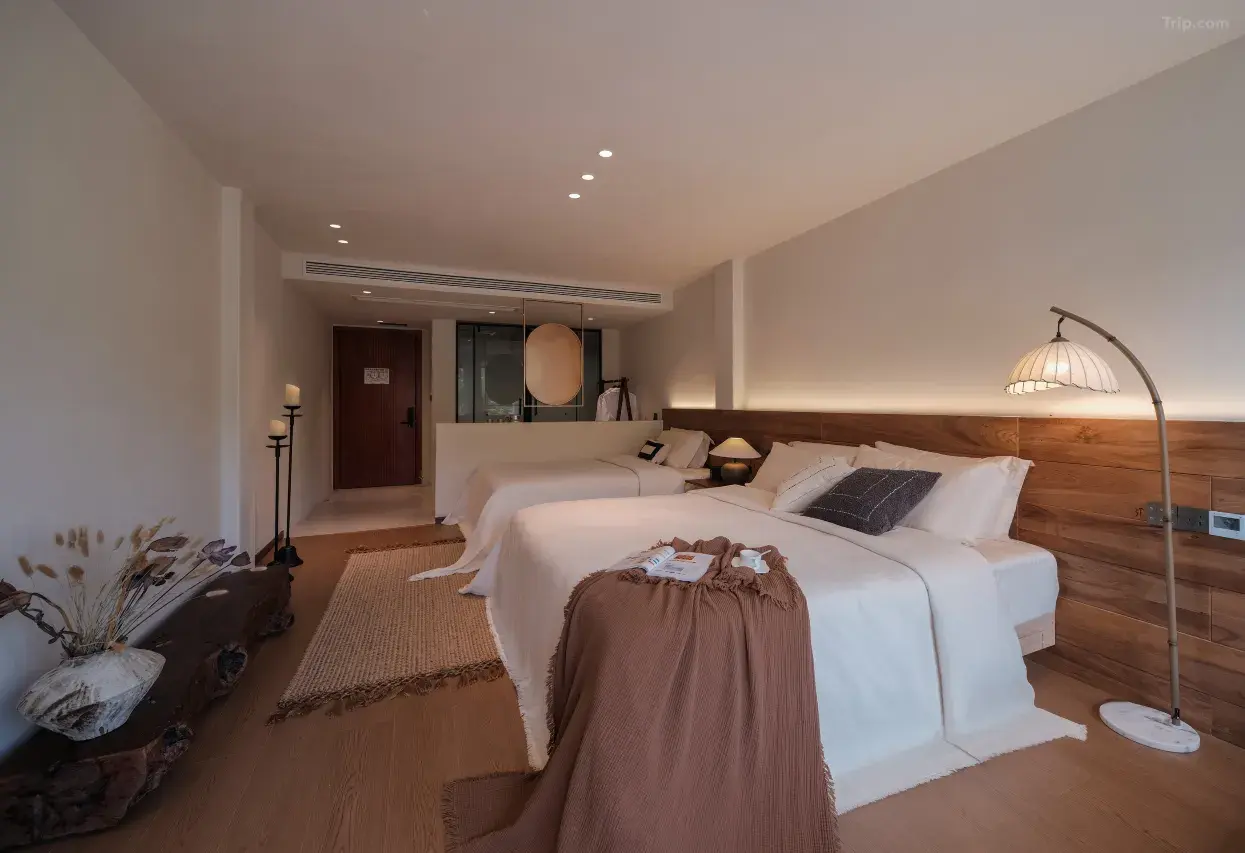
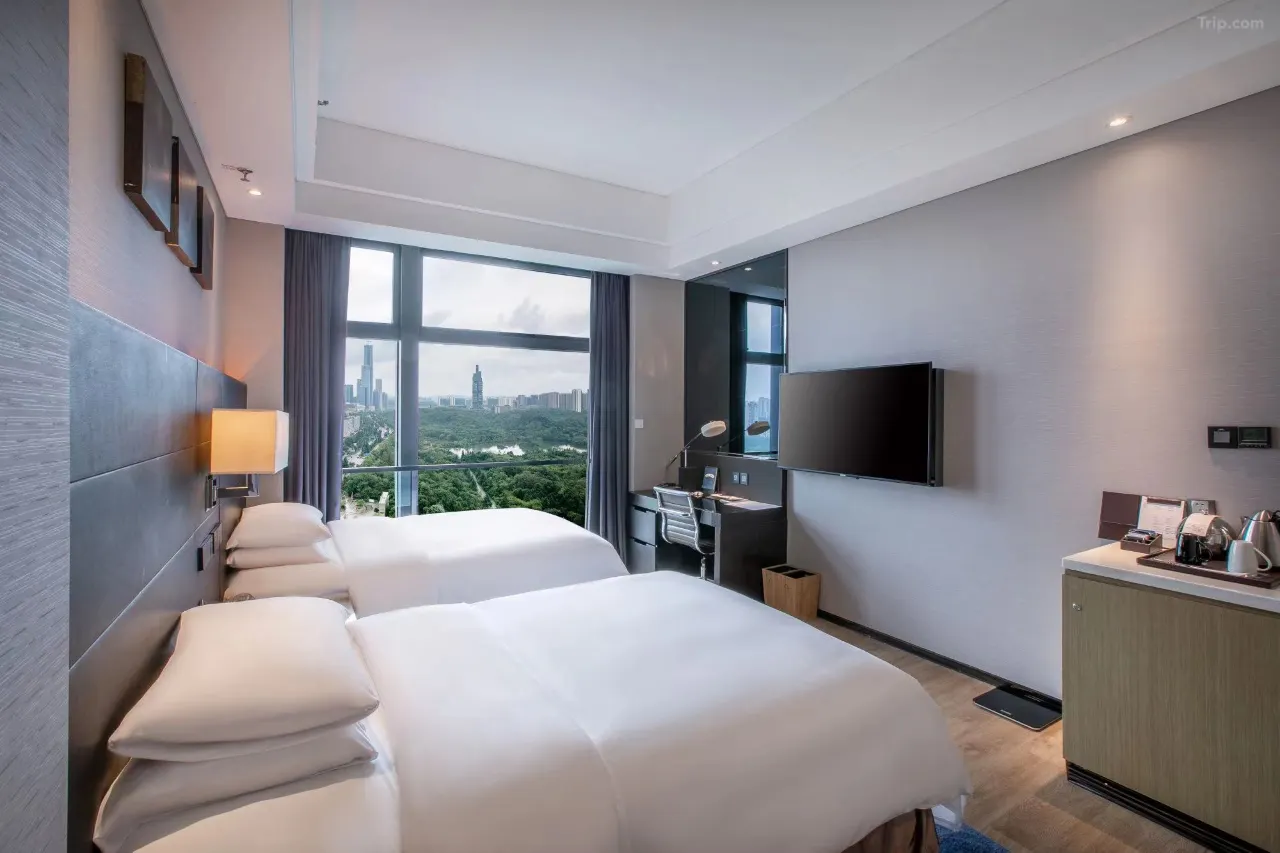
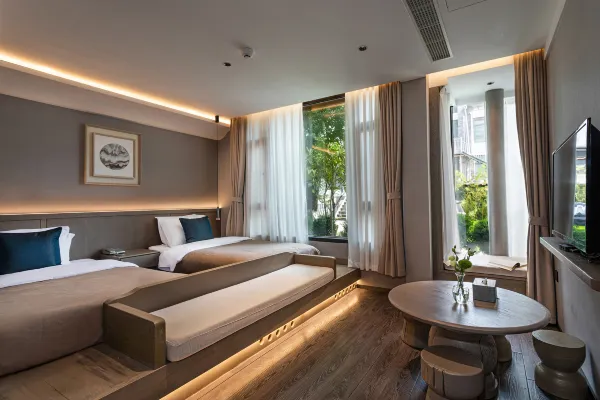
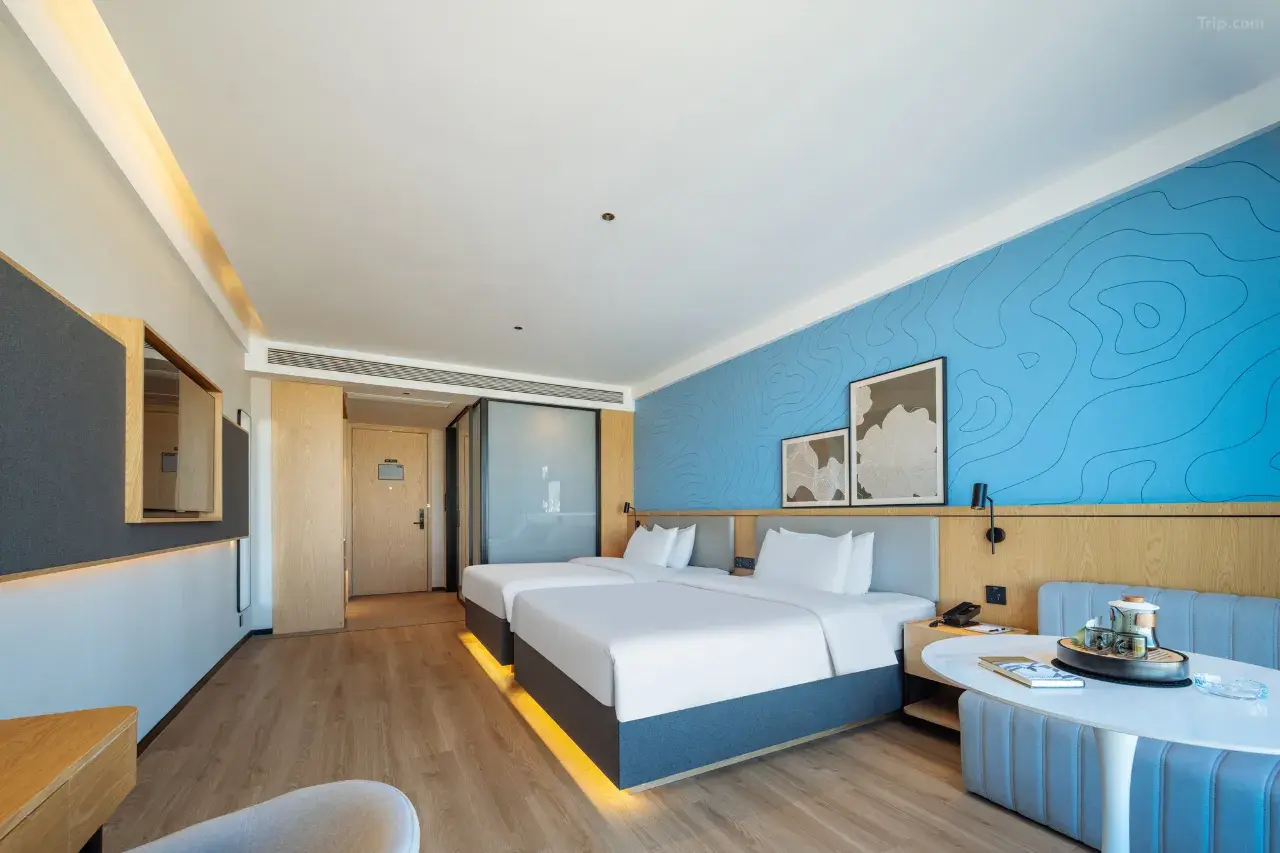
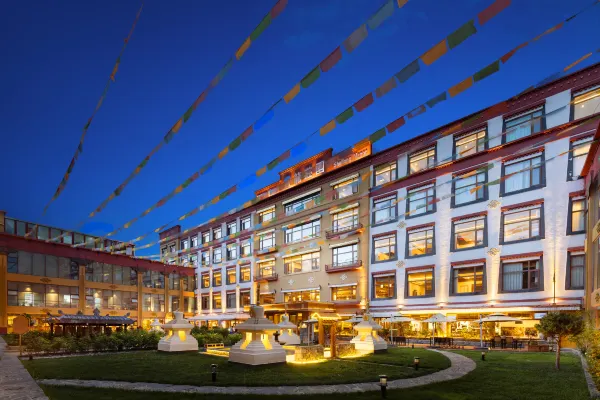
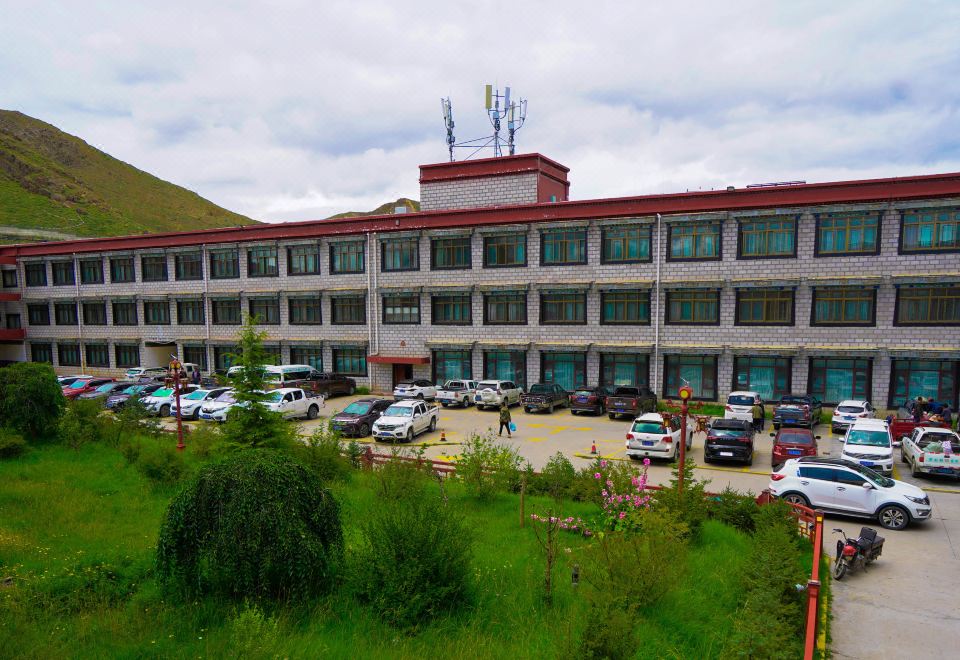
We draw from a wide range of hotels on our holidays, each one is chosen to suit the tour you are travelling on meaning your accommodation can range from a smart business hotel in one city to a family run guesthouse in a smaller town. Here are some examples of the type of hotel you can expect to find on this tour.
Tour Price
From AU$ 5,900 pp
Based on a private tour for 2 people including accommodation, local transportation and guided sightseeing/activities. Price may vary depending on the itinerary, travel date, number of travellers and selected hotel category.
Price Excludes:
- International flights
- The meals not mentioned in the trip plan
- Personal expenses
- Travel insurance, and repatriation insurance
- Optional excursions, activities, and optional tours
- Reservations marked as "reserved by traveler" are reservations that the traveler is responsible for directly.These items are not reserved or supported by Three Bears Travel and are included in the trip plan just for completeness.
- Any charges due at the hotel include local city taxes
Clients Reviews
★
★
★
★
★
We had an absolutely amazing trip!!! Every detail was meticulously planned by Ben. From our great drivers and guides to having the last seat of the bullet train reserved for our extra luggage. I never would have thought of doing that but it was a huge help since we bought a lot of souvenirs! Peter was our guide in Tokyo and Mt Fuji and he took the most beautiful photos of my daughter and I. It was so nice to be in the pictures instead of behind the camera and I am so thankful for those memories.We ate at several local restaurants that were fantastic and we were the only tourists there. I would never have found these places without my guides Peter and Takizawa.Peter and Takizawa went above and beyond my expectations as guides and Ben was so accommodating to my teenage daughters many requests and planned everything out so perfectly. The drivers were always on time and let me know their plate numbers and names on WhatsApp. They always offered to carry our luggage and were very polite. The cars were always clean and they drove safely. I was so happy that I didn't have to drive in that insane traffic!I could never have planned this on my own and I am so happy that I chose Three Bears Travel!

Miriam P.
May 02, 2026
★
★
★
★
★
I worked with Ben for a number of months to personalize a very special trip to Japan. He could not have been more accommodating, and he answered every question in a timely manner. He made wonderful suggestions, and we weren't disappointed anywhere along the line. We had three different guides, Ursula, Sorata, and Pitt - each lovely and knowledgeable. We enjoyed spending our days with them very much. Everything promised was delivered, and even more. Ben even arranged for a birthday cake for me - a delightful surprise. Our time in Japan was filled with wonderful memories, beautiful experiences, and gracious interactions. We can’t wait to come back!
Karen K.
May 02, 2026
★
★
★
★
★
We had such a memorable time in Japan. Ben really understood what my family's interests were and chose fantastic locations and experiences for a first trip to Japan. Our guid in Tokyo, Yoko was very knowledgeable and efficient at zigzagging us all over the city.In Kyoto, Ursula was amazing and was able to sneak in a few extra stops to maximize the sakuras at their peak. She was also helpful in giving us some tips on where to go in Osaka.
Lauren M.
Apr 26, 2026
★
★
★
★
★
THANK YOU for the trip, it was SO well planned, and clearly a LOT of thought went into it. We are so grateful, and we are now big Three Bears Travel fans! We travel a LOT, to all kinds of crazy places! It is unrealistic to travel across the world and expect things to NOT go wrong. What matters, and why we work with travel professionals like you, is to have support and back up when things DO go wrong – THAT is what matters! Three Bears Travel seamlessly fixed an issue on our travels, and they are THE BEST, and you can travel worry-free! Our planner Ben was remarkable - attentive, knowledgeable and friendly, and our guides Roy, H and Piter were exceptional. 10/10, DO recommend! Thank you, team Three Bears Travel, for an amazing experience and incredible 'whatever it takes' service!
John F.
Apr 23, 2026
★
★
★
★
★
My wife and I are celebrating our 10 year anniversary this July and I knew early on that a family of four trip to experience Japan for the first time together would be a once in a lifetime event. I knew well enough that I would not be able to plan and execute such an important trip myself so I feel so grateful that I stumbled upon Three Bears Travel and hit the ground running. Ben was my wonderful trip planner and from the first interaction, he was so extremely helpful and patient with my 1,000s of questions and itinerary changes. I wanted this Japan trip to be something that would be relatively stress free for me and my wife but also contain a variety of activities and experiences that our entire family would enjoy. Working with Ben to plan the entire trip was such a breeze. I felt completely at ease and comfortable with Ben's recommendations and suggestions. Every part of the trip was designed and planned wonderfully. From the meticulous selection of amazing hotels across the spectrum of Japanese styles (ryokan, onsens, apartment-style, mountain resorts) to all the fun hands-on activities for adults and kids alike (sushi-making, samurai museums, sumo shows, etc), this was a trip that none of us will ever forget. And I would be remiss without mentioning our incredible tour guides, Peter and Ursula. Peter was so on task and schedule with us during our Tokyo days and he was so patient and gracious with our children throughout the tours. I can't count how many times he and I would be carrying my napping daughter still in her stroller up and down various train station steps over multiple stations and transfers. He never failed to take care of our every need in this unfamiliar place. We had zero stress with Peter around that allowed us to soak up the joy of the experience 100%. Ursula was our amazing tour guide (and pseudo member of the family) in Kyoto/Osaka. Our family hit it off with Ursula right from the get go and she was always so flexible with our minor changes in scheduling and events as we did our best to adapt to our children's energy levels and attention spans. The extremely hot weather in Japan also put added pressure on everyone but both Ursula and Peter were always ready to lend a hand and make sure we all stayed healthy and happy throughout. This trip was planned as perfectly as I could have imagined and I owe Ben/Peter/Ursula/Kimkim a huge thank you on behalf of my entire family. The next time we want to take another adventurous trip, I would not hesitate for one second to work with Three Bears Travel again. I also highly recommend to anyone who wants to plan a milestone trip like ours without the hassle and stress. Thank you again Three Bears Travel team! Until we meet again!
Eric, Wanee, Easton, and Esther
Mar 10, 2026
★
★
★
★
★
Everything went off just as planned, and we were all pleased. Our guides were all great and went out of their way to see that we saw more, especially when they found out that we were not interested in the more highly crowded places. They patiently answered our questions and saw to our needs. Ben, our specialist, could not have been more attentive to our frequent questions and concerns. He was able to change events based on our interests even as the date of our departure approached. The only thing I would have changed is deleted some of the more crowd-impacted locales such as Nikko and put in more off the beaten path trips like our monastery stay in Minobu and the marvelous animated Festival Float museum in Takayama that our guide added in when he picked up on our interest. We learned and enjoyed much more in the less crowded venues, but this is Japan where it is truly hard to avoid the hoards of tourists. Overall, it was a wonderful trip. This is the second time Ben has helped us with a trip, and I will certainly turn to him again for any future trips.
Susan
Mar 05, 2026
★
★
★
★
★
Both of our guides were good. One we were with shortly and was a more focused day of getting to many places. He did a good job of coming up with some additional day of options and a great lunch rec. Young we had for 4 days and we really liked her. She was a bit soft spoken /quiet but very nice and knowledgeable and we found if we asked lots of questions we got lots of history and current info about not only the places she took us but also modern Japan life. Really enhanced our trip to learn about the history, shrines and temples. Getting around by train /bus was great for us and she had to work harder than if we had driver to navigate public transport for sure. Hotels were all nice. It was great. The only note is to warn guides we will want lots of restaurant recs (as where we’ll be is not always areas they’ve eaten. We had good luck using tablelog and AI ) and the food at the Hakone onsen was not very good. But we went out for great meals nearby.
Debbie J.
Mar 01, 2026
★
★
★
★
★
We just returned from our anniversary trip to Japan, and I can say with complete confidence that booking through Three Bears Travel was one of the best travel decisions we’ve ever made. In fact, this is our third trip using Three Bears Travel. From the very first planning email to the final farewell in Osaka, the entire experience was seamless, personal, and unforgettable.Ben, our travel specialist, was phenomenal. He helped us build the perfect itinerary—listening to everything we wanted, adding thoughtful suggestions, and tweaking the schedule along the way to fit our style. Thanks to him, our trip struck the perfect balance of culture, food, adventure, relaxation, and those “wow” moments we’ll be talking about for years.And then there were our guides: Peter and Ursula.These two were an absolute gift to our journey.Peter, our Tokyo & Hakone guide, made navigating Japan’s transportation system feel effortless. He taught us subway skills worthy of a Mario Bros. level-up, showed us how to experience Shibuya Crossing like locals, and gave us incredible historical context at temples and shrines. He even congratulated me on my sumo match at the lunch show (yes… I stepped into the ring and no, my training was not focused enough 😂).Ursula, our guide through Kyoto, Nara, and Osaka, was equally fantastic. From sake tastings in Fushimi to zen moments at the Golden Pavilion, she blended humor, storytelling, and deep cultural knowledge in a way that made every day feel like traveling with a friend. She helped us navigate the language barrier, made sure we didn’t get lost on trains, and offered endless tips to help us blend in better than we probably deserved. Both guides were great to pack in as much adventure each day while still leaving us with free time to roam and explore on our own.Every single day was packed with memorable highlights, many of which Three Bears Travel helped coordinate:✨ Sushi-making with a 4th-generation master (we are now “certified” Nigiri makers and have enough footage for a full-length documentary).✨ A tea ceremony and learning to whisk our own matcha at a university.✨ Visiting a capybara at a café—one of Emily’s bucket list items.✨ Riding the bullet train to Kyoto with snacks in hand and Mt. Fuji peeking through the clouds.✨ Walking through Arashiyama’s bamboo forest and a rickshaw ride through its historic streets.✨ A full cultural immersion day in Fushimi Inari, weaving through the famous vermilion torii gates.✨ A relaxing soak and stay in Hakone with incredible views of Mt. Fuji.✨ Exploring Osaka Castle and ending our trip at the Umeda Sky Building with panoramic nighttime views.And beyond the excursions, the guides helped us handle everything—from ordering meals to using the Suica card. They answered every question, solved every hiccup, and made us feel completely supported the entire way.Three Bears Traveldidn’t just plan a trip—they helped create a collection of memories that feel like a chapter from our own personal, globe-trotting storybook.If you’re considering a trip to Japan—especially if it’s a special occasion—book with Three Bears Travel. Ask for Ben, and if you’re lucky, you’ll get Peter and Ursula too. They helped make our anniversary adventure everything we dreamed of…and then some.Arigatou gozaimasu, Three Bears Travelteam.We’re already thinking about following the green light to our next chapter.—Ray & Emily
Ray & Emily
Feb 22, 2026
★
★
★
★
★
We wanted a customised trip instead of a standard tour group, and Three Bears Travel delivered exactly that. Norman took the time to understand what we liked and built an itinerary around food, shopping, and local experiences. It felt personal and flexible, not like a cookie cutter package.
Tom Harris
Feb 01, 2026
★
★
★
★
★
A huge thank you to Louise and Three Bear Travel for crafting such a fantastic Japan itinerary! Every moment was well thought out - whether it was the serene temples of Kyoto, the bustling streets of Tokyo, or the delicious food tours. The guides were knowledgeable, and the accommodations were excellent. We couldn’t have asked for a better travel experience!
Emily Carter
Feb 01, 2026
Travel Inspiration for Your Journey
Handpicked stories, guides and insights to help you shape your personalised trip. More...

Enquire Now