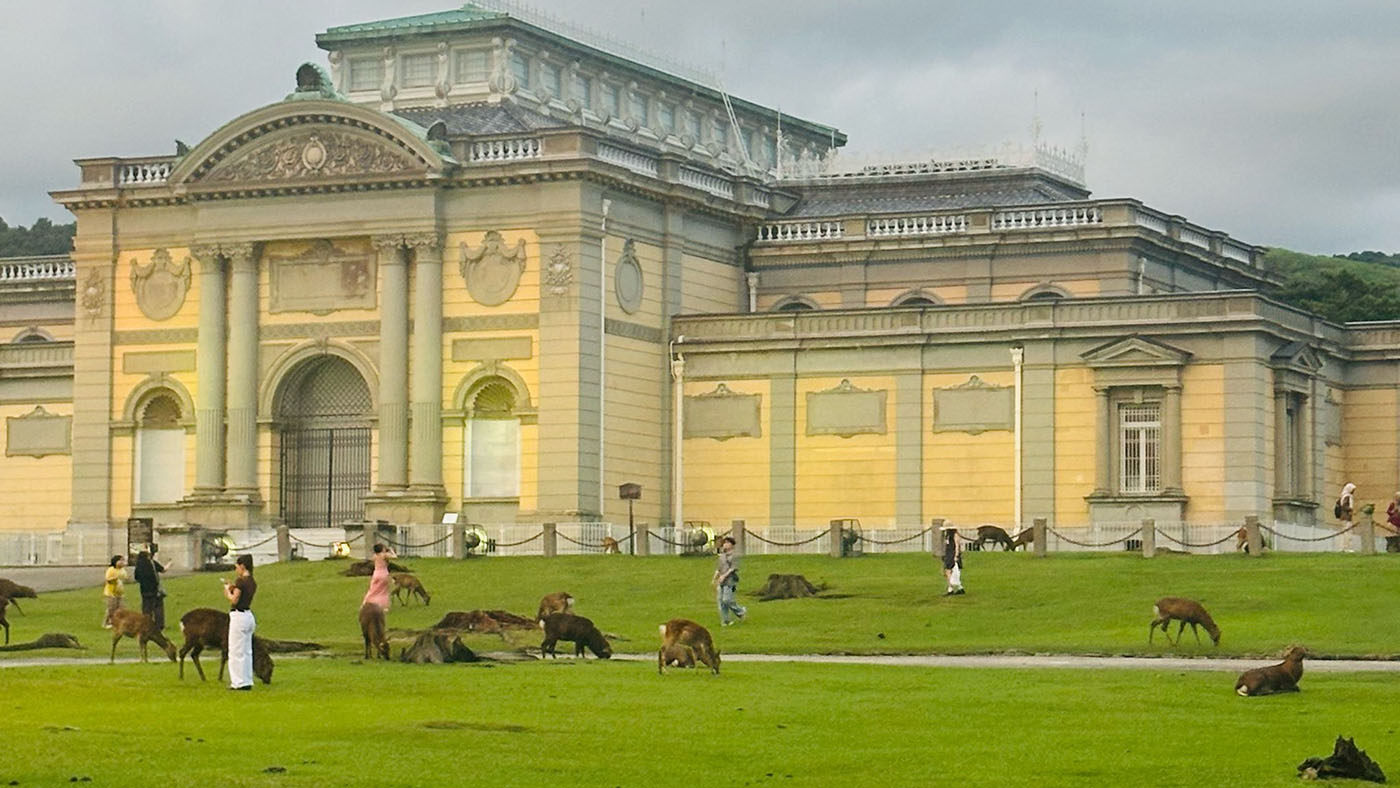
The first time you hear a deer bow back at you in Nara, it feels a bit like magic. Morning light slips through old pines, a temple bell hums across the lawns, and a curious pair of ears swivels your way. Hand the shika senbei to your new friend, step back, and watch the centuries fold into a very present moment. That is the gift of Nara Japan Deer Park, a place where wildlife and culture share the same open air.
Three Bears Travel recommends arriving early, and they’re right. The park feels calm at sunrise, the animals are alert, and the city hasn’t properly woken up yet. It’s the best window for families, photographers and anyone who prefers a quieter pace.
Nara Deer Park: A Unique Experience
The deer park Nara is famous for sits at the foot of storied temples and shrines, linking nature with the spiritual heart of old Japan. In folklore the deer are messengers of the gods from nearby Kasuga Taisha, a relationship that helped protect them across centuries. While the deer are now officially classified as wild, their comfort around people is part of the park’s living tradition.
Many visitors come for a simple ritual. Buy a stack of shika senbei from a street vendor, hold it high, bow politely, and the deer will often bow back. It’s playful and oddly formal at the same time, a cultural exchange you won’t find anywhere else. The crackers are made especially for the deer, so resist the urge to hand over biscuits or fruit from your pack.
Safety and respect set the tone. These are not pets, and even gentle animals can get pushy when snacks appear. Keep food visible only when you intend to feed, and move away if a crowd of deer gathers around you or your kids. Watch tiny fingers, remove dangling scarves, and never tease a deer with food. If a deer tugs at your bag, step back and turn away calmly.
Before you start exploring, here are a few quick facts to help you plan smoothly.
Quick park basics:
-
The park is free to enter and always open.
-
Shika senbei cost around 200 yen per bundle.
-
Public toilets, vending machines and rest spots are scattered along the paths.
-
The terrain is mostly flat with some gentle slopes, fine for prams and wheelchairs.
-
Rubbish bins are scarce, so bring a small bag and pack your litter out.
Practical etiquette with deers in Nara:
-
Feed only the designated crackers.
-
Do not touch fawns, and avoid petting deer around the face or antlers.
-
Give extra space during the autumn rut and when mothers have young in spring.
-
Keep photos quick and low stress for the animals. If the ears flatten or the deer steps away, you’re too close.
-
Secure plastic items, maps and tickets. Deer often nibble paper.
A full morning can be spent wandering under cedars, pausing beside lantern-lined paths, then drifting towards one of the region’s great temples for late breakfast and oolong tea. The park is not just a lawn with animals. It is a cultural landscape that invites slow steps and small, careful observations.

Exploring Surrounding Attractions
Everything in Nara Park seems to draw you toward the old capital’s grand landmarks. The scale of the history sits right next to the deer, and you can cover a lot of ground on foot. Map out your day: all major attractions are within 20–30 min walking distance.
-
Todai-ji and the Great Buddha: Walk through the massive Nandaimon gate flanked by muscular guardian statues, then into Daibutsuden where the 15-metre bronze Buddha rests in a hush of incense and murmurs. It’s hard to overstate the presence of this building. Even the deer appear to tread more softly near its steps.
-
Kasuga Taisha: Follow a forested path dotted with stone lanterns, and you’ll arrive at a Shinto shrine blushed with vermilion. Lantern festivals here create flickering rivers of light, and the surrounding woods feel like a haven for both people and animals.
-
Kofuku-ji: The five-storey pagoda mirrors itself in the pond near Sarusawa Ike, a peaceful place to sit when your feet ask for a break. The National Treasure Hall holds Buddhist art that rewards close attention.
-
Isuien and Yoshikien Gardens: Carefully framed views and quiet ponds make these neighbouring gardens a welcome counterpoint to the park’s broad lawns. Consider a tea break within earshot of carp nudging at the lily pads.
-
Nara National Museum: A short wander brings you to an excellent collection of Buddhist sculpture and ritual objects. The building alone is worth a look, blending classic and modern lines.
-
Naramachi: Stroll through old merchant streets lined with latticed homes, small galleries and cafes. Try hand-pounded mochi near the arcade or pick up a simple bento for a picnic back under the pines.
-
Heijo Palace Site (Nara Palace): A little farther out by bus or bike, the former imperial palace sits on vast grounds with rebuilt gates and a museum that brings the courtly city to life. It rounds out the picture of Nara beyond the park’s core.

A suggested walking loop:
-
Start at Kintetsu Nara Station.
-
Enter the park near Kofuku-ji, then push on to Todai-ji before the big crowds arrive.
-
Cross towards Kasuga Taisha along the lantern path.
-
Break for lunch in Naramachi, then finish with a garden visit at Isuien or Yoshikien.
-
Circle back through the lawns where the afternoon light turns golden and the deer settle again.
Seasonal Experiences
Different times of year bring distinct moods and colours to the park, each with its own rewards.
-
Nara Winter: A hush falls over the lawns. Breath clouds the air and the deer’s coats look thicker and more textured in the cool. With fewer visitors, you can savour long stretches of quiet. The Wakakusayama Yamayaki in January sends a line of fire across the hillside followed by fireworks, a dramatic spectacle best watched from a sensible distance.
-
Spring: Cherry blossoms frame temples and line the paths. Mornings sparkle after a light shower. Fawns begin to appear, so be thoughtful near family groups and keep hands to yourself. It’s an easy time to fill a camera card.
-
Summer: Lush greens take over, cicadas buzz, and the shade under cedar groves becomes prime real estate. Humidity can be high, so carry water and take more breaks than you think you need. Hydrangeas and lotuses add colour in nearby gardens.
-
Autumn: Maple and ginkgo trees ignite in reds and golds. Photographers line up for dawn mist and late afternoon glow. October brings the traditional antler cutting ceremony at Rokuen, done for safety and care. During the rut, males can be more assertive, so extra space and caution help everyone.
Seasonal snapshot
|
Season |
What stands out |
Tips for comfort |
|
Winter |
Quiet paths, crisp air, clear views |
Coat, gloves, warm drink, late sunrise for easy golden hour |
|
Spring |
Blossoms, mild temperature, fawns |
Early starts, gentle distance from family groups |
|
Summer |
Deep green canopy, long days |
Water, hat, sunscreen, light lunch and shaded breaks |
|
Autumn |
Fiery foliage, festivals |
Book ahead, watch rutting behaviour, afternoon light for photos |
No matter the month, dawn and late afternoon are the sweetest times. That’s when the park shifts into softer tones, the deer graze calmly, and the city around you blurs to a pleasant hush.

Planning Your Visit from Kyoto or Osaka
Getting to the park is straightforward from both Kyoto and Osaka. Trains are frequent, and the walk from station to deer is short enough for families.
Transport choices for a day trip Kyoto to Nara or from Osaka to Nara Park:
|
Route |
From |
To |
Time |
Cost (approx) |
Notes |
|
Kintetsu Limited Express/Express |
Kyoto Station |
Kintetsu Nara |
35 to 45 min |
1,200 to 1,700 yen |
Closest station to the park, 5 to 10 min walk |
|
JR Miyakoji Rapid |
Kyoto Station |
JR Nara |
45 to 50 min |
720 yen |
Covered by JR Pass, 15 to 20 min walk or short bus |
|
Kintetsu Nara Line |
Osaka-Namba |
Kintetsu Nara |
40 min |
570 to 1,300 yen |
Frequent trains, easy access to the park |
|
JR Yamatoji Rapid |
Osaka Station |
JR Nara |
50 to 60 min |
820 yen |
Direct, steady service |
-
IC cards like ICOCA, Suica and PASMO work on both rail networks and local buses.
-
From Kintetsu Nara Station, enter the park via Sanjo-dori and you’ll meet deer within minutes.
-
locker facilities are available at both stations, handy if you’re on a kyoto and nara day trip and travelling light.
How long to spend
-
A crisp half-day works if you focus on the lawns and Todai-ji.
-
A full day lets you add Kasuga Taisha, a garden, and lingering photo time.
-
An overnight stay gives you the pale light of early morning, the warm hues of evening, and fewer crowds.
Food and drink
-
Picnic culture fits the park, just tidy up afterwards.
-
Try yomogi mochi or a simple set lunch in Naramachi.
-
Vegetarians will find tofu and vegetable dishes in small cafes, though menus can be concise. Picture menus and a few words of polite Japanese help.
Family and accessibility tips
-
Wide pram-friendly paths, with occasional patches of dirt or gravel.
-
The main attractions have clear signage in English and Japanese.
-
Hand sanitiser and wet wipes are handy after feeding.
-
Keep small children in front of you during feeding so you can move together if needed.
Photography etiquette
-
Step back to include both deer and temple architecture.
-
Keep flash off near animals.
-
Early and late light beats midday glare.

Accommodation Options Nearby
Staying in Nara changes the rhythm. Sunrise walks are easy, evenings are unrushed, and the park feels like your local backyard. Nara accommodation ranges from traditional inns to contemporary stays, and prices are often friendlier than in Kyoto.
Options include traditional ryokan with tatami rooms and cedar baths, mid-range hotels conveniently located near the park and local attractions, and a selection of international brands offering premium comfort. Whether you prefer a classic Japanese experience or modern amenities, Nara’s diverse accommodation ensures a relaxing stay for every traveller.
Booking advice
-
Spring and autumn sell quickly. Reserve weeks or months ahead if your dates are fixed.
-
If you’re keen on photography or quieter animal encounters, choose a hotel within a 10 to 15 minute walk of the lawns.
-
Families might prefer connecting rooms or triple setups, which are more available in Nara than in some denser cities.
A night in the city gives you a smoother start for a day trip Kyoto to Nara plan as well. You can arrive from Kyoto in the afternoon, enjoy twilight with the deer, sleep in comfort, then take a relaxed morning before heading back to Kyoto or on to Osaka.
The best memory often comes from an unscripted minute. A deer pauses at your shoulder, the pagoda peeks through fresh leaves, and the whole day lines up just right. If you time your visit for early morning, as Three Bears Travel suggests, you’ll see the park at its most alive, with the city stretching into a new day while the deer nose the grass for breakfast. That quiet balance between people and nature is why this place lingers long after you leave.

FAQ: Visiting Nara Deer Park
Unlock the mesmerising experience of Nara Deer Park through these frequently asked questions, designed to assist you in making the most of this harmonious blend of wildlife and heritage.
Is Nara Deer Park in Kyoto or Osaka?
Nara Deer Park is located in Nara, a city easily accessible from both Kyoto and Osaka. It makes for a convenient day trip from either city, with direct train routes available.
Is Nara Deer Park free entry?
Yes, entry to Nara Deer Park is completely free, and the park welcomes visitors throughout the year.
What time is best to see deer at Nara Park?
The best time to see the deer is in the early morning when they are most active and the park is quieter. Late afternoon can also be pleasant, especially outside peak tourist hours.
What is Nara Deer Park known for?
Nara Deer Park is famous for its friendly, free-roaming deer, which are considered messengers of the gods in local tradition. The park is also renowned for its beautiful scenery, proximity to historic temples, and its unique blend of wildlife and cultural heritage.
Can I feed the deer in Nara Deer Park?
Yes, you can purchase shika senbei, special crackers safe for the deer, from vendors within the park.
Is the park accessible for families and those with disabilities?
The paths are mostly flat and pram-friendly, but some uneven terrain should be noted.
Can I have a picnic in the park?
Picnics are encouraged, but please ensure you clean up and take your litter with you.
Want more Japan travel itineraries? Click here
If you have any other questions, feel free to click here and get in touch with us.
If you need a personalized travel plan, feel free to click here and let us help you.